 English
 Arabic
 Chinese (Simplified)
 Dutch
Dutch French
 German
 Italian
 Portuguese
 Russian
 Spanish
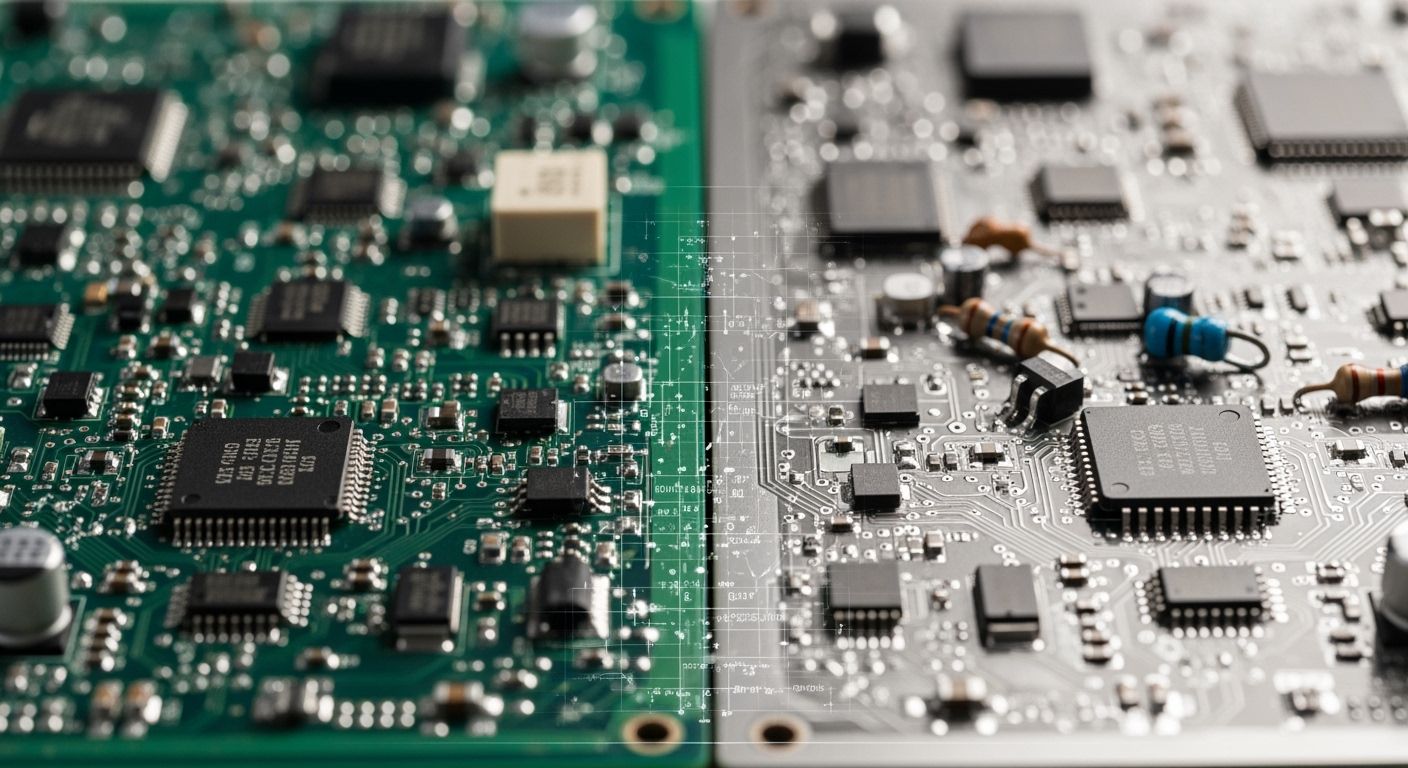
Picking the right turnkey pcb assembly method controls your timeline, part supply, inventory control, and total build cost. The main difference depends on who buys the parts and how much you help during the build process.
| Feature | Full Turnkey PCB Assembly | Partial Turnkey PCB Assembly |
|---|---|---|
| Sourcing Responsibility | Builder buys every single part | You send main parts; builder buys remainder |
| Operational Involvement | Low daily effort | Active part counting |
Full turnkey offers easy project management because one vendor handles everything from start to finish. On the other hand, partial turnkey allows you to buy special microcontrollers and custom chips yourself. Here is a clear comparison of both services to help make your pcb assembly project easier.
Key Takeaways
- Full turnkey assembly lets one factory buy every part and build your circuit boards quickly.
- Partial turnkey assembly lets you provide custom chips while the builder buys standard parts.
- Full turnkey services save your team more than three hundred engineering hours each year.
- Partial turnkey services let you directly manage your costly or hard-to-find electronic components.
- Pick full turnkey to get your project done faster, or choose partial turnkey to manage your costs more closely.
What Is Turnkey PCB Assembly?
Turnkey PCB assembly means a complete factory method where one builder handles every step of making your boards. You send your design files, and the company ships you ready-to-use circuit boards. Learning how PCBA differs from a regular PCB helps you pick the best build strategy. A basic PCB is just a plastic board with copper traces, while a PCBA includes all the attached electronic parts.
Sourcing Models and Customer Role
Electronic factory services generally use three main ways to buy parts. Full turnkey PCB assembly lets the factory buy components, make the boards, and run final tests. Your team only needs to check technical details and approve cost estimates. This method saves time and offers great convenience for busy engineering groups.
Partial turnkey options split these duties between your team and the factory. You order rare microcontrollers or custom chips, and the builder buys common items like resistors. Complete consignment means you must find and purchase every single part yourself. You mail all raw components to the factory, where workers attach and solder them.
| Model | Component Sourcing | Supply Chain Management | Risk Distribution |
|---|---|---|---|
| Full Turnkey | Manufacturer sources all parts | Managed entirely by manufacturer | Lower risk for customer |
| Partial Turnkey | Customer supplies some parts, manufacturer sources rest | Shared between customer and factory | Shared responsibility |
| Consignment | Customer supplies all components | Managed entirely by customer | Higher risk for customer |
Consignment vs Turnkey Services
Consignment work seems less expensive at first because you only pay for factory labor. However, extra hidden costs quickly add up for your company. Your staff loses time packing parts, checking stock counts, and setting up special shipping. You also risk slow production if you ship incorrect components or wrong amounts.
By comparison, complete turnkey options make your supply setup much simpler. Builders use large group orders to get lower prices on electronic parts. These suppliers store components, run quality tests, and replace any missing materials. Using full turnkey assembly keeps one vendor responsible and cuts down on your office paperwork. Modern assembly teams protect your budget by removing extra internal buying work. Manufacturing partners handle every single task from board creation to final testing.
Full Turnkey PCB Assembly Explained

Full turnkey PCB assembly offers a total building option for your electronic projects. If you choose to outsource the entire assembly process, the builder handles all technical steps. This method removes daily supply issues and lets your design team focus on creating products.
Complete Turnkey Workflow
The full turnkey process changes your basic files into finished, tested boards through one simple system. You email your files to the shop, and the maker starts working on everything right away.
- Design File Review: Experts check your Gerber files and part list to fix design mistakes.
- Component Sourcing: Buyers order every single chip, board, and part directly from approved vendors.
- Circuit Board Fabrication: The shop creates your custom plain boards to match your precise layer rules.
- SMT and Through-Hole Assembly: Smart machines put parts on boards before hot ovens melt the solder.
- Final Testing and Inspection: Workers use cameras, X-rays, and power tests to confirm high board quality.
Summit Interconnect offers full turnkey PCB assembly with standard turns of 3-4 days, combining procurement, fabrication, and assembly into one managed workflow.
This single setup speeds up delivery compared to using separate vendors for different steps. You do not need to send parts between factories, which cuts down shipping wait times.
Pros and Cons of Full Turnkey
Picking full turnkey work gives great business benefits, but you must check the main trade-offs first. The top perks of full turnkey manufacturing focus on quick builds, easy steps, and clear vendor focus.
| Advantage | Full Turnkey Impact | Traditional Fragmented Impact |
|---|---|---|
| Prototype Lead Time | 5–10 business days | 6–8 weeks |
| BOM Management Time | Eliminated (parallelized) | 10–15 hours per BOM |
| Vendor Coordination | 80% reduction | 20+ hours/month |
You work with one responsible company that answers for the total quality of your boards. If you choose to outsource the entire assembly process, you lower office work, save management time, and sign fewer papers. You also save over 300 engineering hours every year on tracking tasks.
While turnkey may not always appear cheapest upfront, it reduces total cost by eliminating inefficiencies and hidden overhead.
Still, you need to review the downside of complete builds before starting actual board production. You pay more money early on because the builder takes care of shopping, part storage, and vendor shipping. You also see less detail about the exact prices of individual small components. You should watch for added charges like setup NRE fees, metal stencils, complex assembly rates, and extra testing.
| Hidden Cost Category | Description |
|---|---|
| NRE Fees | One-time charges for setup, programming, and engineering review |
| Stencil and Tooling Costs | Standard stencils cost $20–$100+, with higher costs for special stencils |
| Sourcing Fees | Handling charges, price fluctuations, and minimum order quantity rules |
Full turnkey choices work best when you plan to outsource the entire assembly process for fast delivery. Knowing these shop steps and extra fees helps you manage your overall building costs easily.
Partial Turnkey PCB Assembly Overview
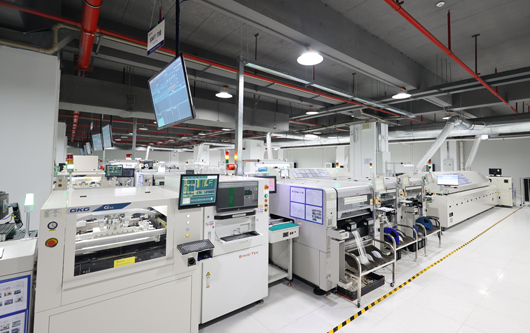
Partial turnkey pcb assembly gives your tech team a smart middle choice. Instead of passing off full project control, you split buying tasks with your factory builder. This teamwork strategy mixes your inner parts management with outside shop strength. Your staff manages high-value tech parts, but the builder supplies basic hardware and handles factory work. Lots of expanding companies use this process to move from first designs into full builds. Learning these shared steps lets your crew protect your funds while keeping builds moving fast.
Hybrid Component Sourcing
Hybrid buying splits part management into two distinct production paths. Your team orders pricey or custom hardware from known vendors and mails those parts to the shop. At the same time, your builder uses standard vendor networks to get everyday passive items like capacitors and diodes. This split plan reduces shop extra fees on low-cost parts while keeping key items under your own watch. The build team places the parts, but you keep control over primary chips.
According to industry practice for partial turnkey pcb assembly, customers most frequently supply the following types of components:
- Pricey board connectors
- Specialized IC chips and high-cost silicon
By getting these exact items on your own, you drop added shop charges on expensive part lists and lower total material rates. This move also lets your engineers lock in rare processors during global supply shortages. Next, you must pack, mark, and guard your shipped parts to stop water harm during transit. The factory orders thousands of small surface parts, saving your team tons of time. Modern shops use this open method to speed up builds without giving up material checks.
Pros and Cons of Partial Turnkey
Reviewing partial turnkey choices means balancing real money savings against added extra tasks. Most builders offer partial options so clients can guard custom ideas, but you also handle complex shipping steps.
The key benefits of partial turnkey assembly focus heavily on budget efficiency and component management:
- Direct inventory utilization: You use up extra shop stock by mailing stored parts directly to the board assembly line.
- Lower material markups: Buying expensive custom chips yourself cuts out extra vendor handling charges.
- Inventory control: You keep full check over rare processors, special silicon, and secret company modules.
- Direct cost savings: You trim overall build expenses by pairing bulk factory rates on tiny parts with direct buying power for core chips.
However, you must also prepare for the limitations of partial turnkey assembly before beginning actual board production. Splitting material duties brings clear daily problems to your build calendar:
- Shipping coordination: You have to run many deliveries and check that all your sent parts arrive at the plant on schedule.
- Delivery delays: One wrong part or late box will pause the entire line and delay your finished circuit boards.
- Shared liability: Quality arguments get messy during board errors, so finding if your shipped parts or factory solder failed is tough.
Picking partial turnkey pcb assembly guards your design money and keeps critical chips under your watchful eye. You balance overall build risks by working with adaptable shop teams. Choosing a partial turnkey option allows your team to expand board manufacturing while keeping tight control over total project cost.
Choosing Full vs Partial Turnkey
Selecting the best production model requires a clear plan for your project. You must learn how to choose between manufacturing options by evaluating your internal capabilities, schedule, and budget limits.
Cost, Lead Time, and Control Factors
Your choice between full turnkey and partial turnkey directly changes your final cost, build timeline, and component management. Full turnkey speeds up early production by assigning purchasing duties to one team. You pay one predictable price, which removes administrative overhead and shipping hassles. You save valuable engineering hours because the vendor tracks parts, handles suppliers, and resolves stock issues.
Partial turnkey pcb assembly gives you direct financial control over expensive items. You capture real cost savings by supplying high-value integrated circuits or custom components yourself. You also eliminate vendor material markups on specialized parts. However, managing separate shipments can introduce unexpected delivery delays. If a single customer-supplied part arrives late, factory assembly stops completely.
Project Scale and Supply Chain Criteria
Your project stage and team size influence which turnkey services best fit your operational needs. A startup or small engineering group often prefers full turnkey pcb assembly to maintain momentum without hiring procurement specialists. As your company scales to volume production, operational simplicity becomes critical for maintaining low defect rates and consistent delivery schedules.
| Decision Factor | Choose Partial (Consigned) Turnkey When… | Choose Full Turnkey When… |
|---|---|---|
| Inventory & Components | You have existing inventory or need proprietary/customized components you source directly. | Your Bill of Materials (BOM) consists mainly of standard, readily available components. |
| Internal Capabilities | You have strong in-house procurement expertise to secure better costs or terms. | You lack a dedicated procurement team or do not want to manage supplier relationships. |
| Project Priorities | Your project is cost-sensitive on specific BOM lines, requiring direct budget control. | Your priority is minimizing time-to-market and reducing internal management overhead. |
| Cost Structure | You want to manage costs for specific components. | You want a predictable, all-inclusive cost with no hidden fees or logistical hassles. |
| Project Stage & Scale | You are prototyping or in low-volume runs, testing components before commitment. | You are a startup, small team, or scaling to volume production where operational simplicity is critical. |
In essence, choose partial turnkey to leverage existing assets and maintain control. Choose full turnkey to maximize efficiency, predictability, and speed. Many companies use partial for prototypes or low-volume runs and switch to full turnkey for scaling to volume production.
Matching your supply chain strength with the right pcb assembly approach secures high product quality. Knowing these trade-offs helps you protect your project budget while hitting critical release deadlines.
Selecting an assembly path guides your project direction. Full turnkey offers fast speeds and ease by managing every buying step. On the other hand, partial builds lower expenses and keep key component control in your hands.
Your engineering and buying teams must review inner supply chain strength first. Check your team risk limits before picking a factory plan. Partial sourcing works best when you own custom chips or extra stock. Small teams needing quick board builds benefit directly from total factory management.
Ready to launch your next factory project? Send your Gerber files and Bill of Materials today to make a turnkey pcb assembly order online and receive a fast price quote.
FAQ
What is the main difference between full and partial turnkey assembly?
Full turnkey allows the factory to buy all parts, make boards, and run checks. Partial turnkey needs you to send special or custom items, while the builder gets basic parts. You decide between total daily ease and personal control over unique items.
How does turnkey pcb assembly affect lead times?
Full turnkey pcb assembly speeds up work by cutting out extra shipping between different shops. This single system lowers prototype wait times down to 5–10 business days. Handling single orders stops factory delays created by late customer parts.
Can you switch from partial to full turnkey for volume production?
Yes, you can use partial sourcing during early testing to check custom chips. Many engineering groups change to full turnkey options when moving to larger builds. This shift simplifies your supply network and lowers office work as orders get bigger.
Which model offers better cost savings for your pcb assembly project?
Partial builds cut costs on expensive chips by dropping extra vendor fees. However, full pcb assembly reduces office tasks and saves more than 300 engineering hours annually. You should check your internal team limits to choose the cheapest plan.