 English
 Arabic
 Chinese (Simplified)
 Dutch
Dutch French
 German
 Italian
 Portuguese
 Russian
 Spanish
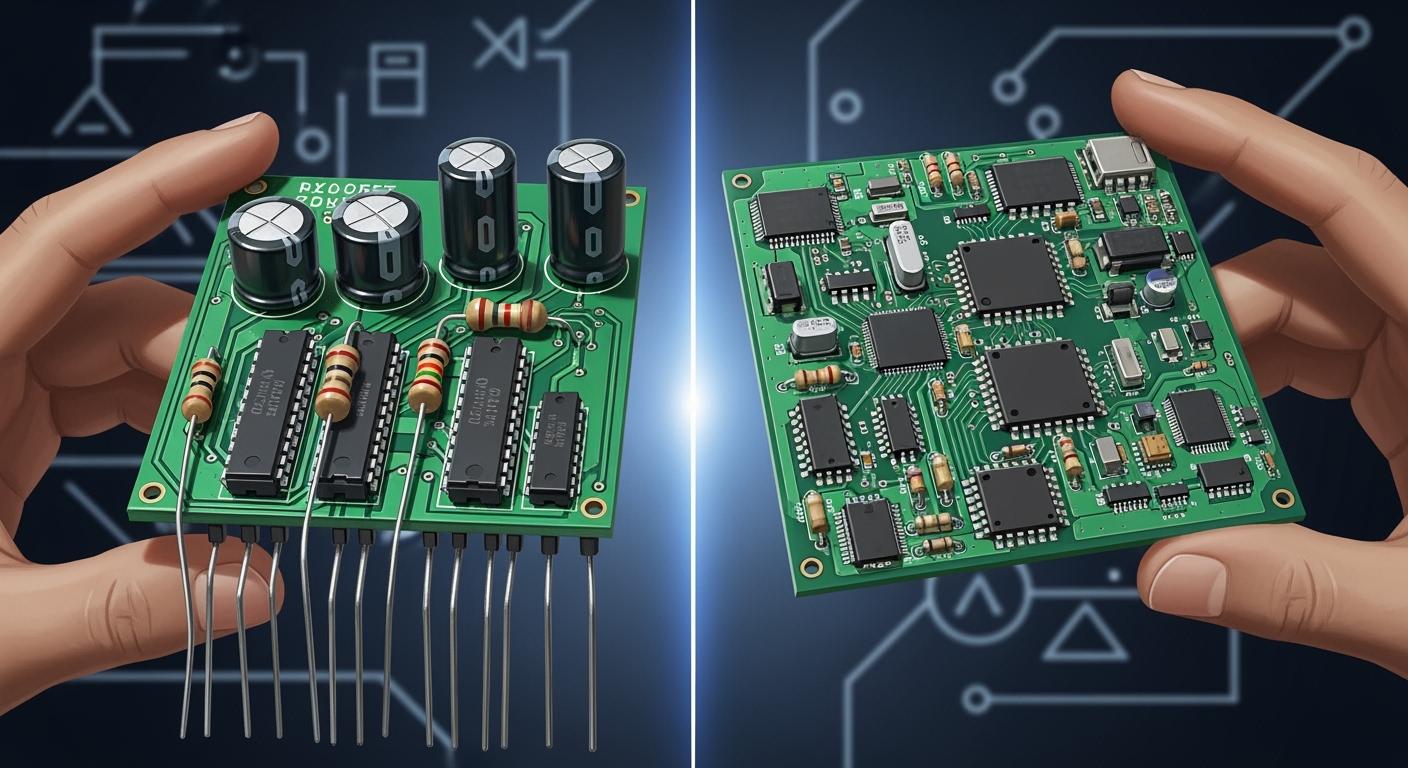
You might wonder whether Through-Hole or SMT Assembly is the better choice for your printed circuit board. SMT Assembly, or surface mount technology, uses smaller components and allows for higher part density on the board. Through-Hole mounting, on the other hand, provides stronger and more reliable connections. SMT Assembly is ideal for compact devices and high-volume production runs, while Through-Hole is preferred when durability and reliability in harsh environments are required. Check out the table below to compare Through-Hole and SMT Assembly:
| Feature | Surface Mount Technology (SMT) | Through-Hole Mounting (THM) |
|---|---|---|
| Size | Smaller, higher density | Larger, more space needed |
| Mounting Method | Direct on PCB surface | Leads through holes |
| Durability | Less for tough uses | More durable |
Both Through-Hole and SMT Assembly play vital roles in modern electronics manufacturing.
Key Takeaways
- Pick SMT assembly for small devices and big production jobs. It lets you use tiny parts and makes things faster.
- Use Through-Hole assembly when you need things to last. It gives stronger links, so it works well in tough places.
- Think about what your project needs. SMT saves money for big batches, but Through-Hole works best for test models and strong power uses.
- Try using both ways for the best results. Put SMT on most parts, and Through-Hole on connectors or heavy pieces to get good performance and strength.
- Look at things like how strong, how big, and how many you need before you choose. Each way has special benefits for different projects.
What Is Through-Hole & SMT Assembly
Through-Hole Technology Explained
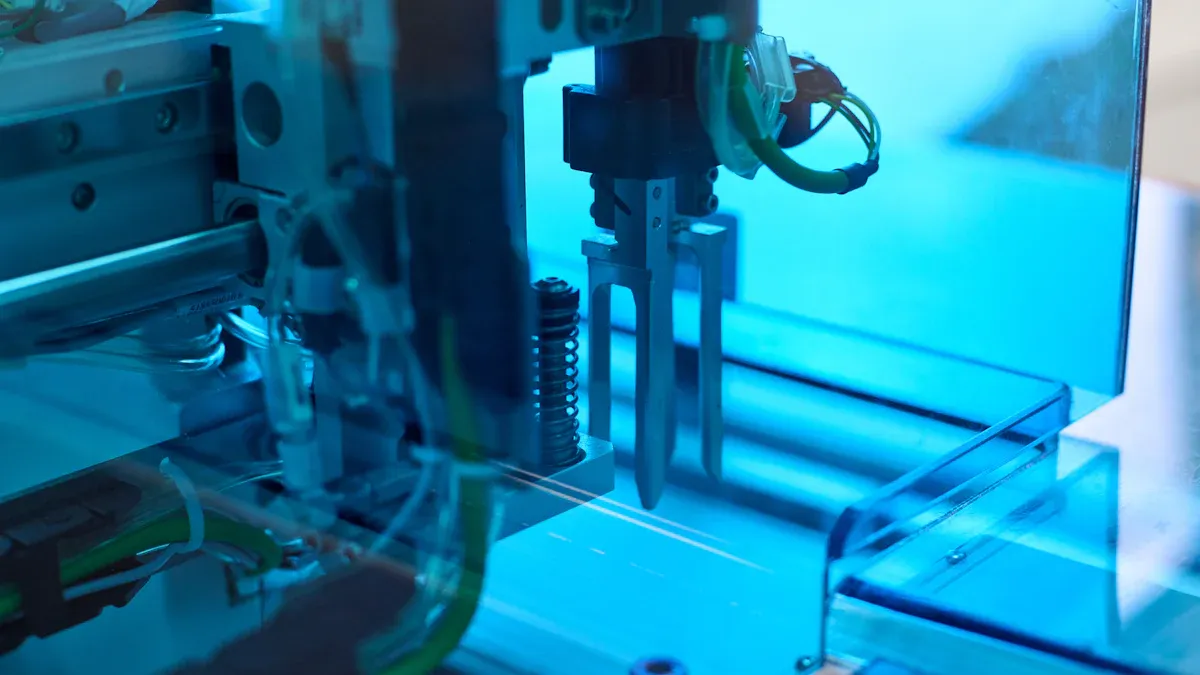
Through-hole technology is used when you need strong connections in your pcb. You put leaded parts into holes that are drilled in the board. Then, you solder these parts on the other side. This makes a tough bond that holds the parts in place. Through-hole works well for bigger parts and projects that must be reliable. It is often used in military and aerospace electronics because it lasts long and stays strong.
- Good for bigger parts
- Gives strength and toughness
- Used for important jobs like military and aerospace electronics
SMT Assembly Overview
Surface mount technology lets you put small parts right onto the pcb surface. Machines do this job quickly and help make the pcb faster. This way, you can fit more parts in less space. Shorter leads help the board work better. SMT assembly costs less to make and helps products be better.
Tip: SMT assembly lets you build boards faster and fit more parts.
| Feature | SMT Characteristics |
|---|---|
| Component Size | Smaller than through-hole parts |
| Assembly Density | More parts fit because of compact design |
| Automation | Machines work fast to build the board |
| Electrical Performance | Better because leads are shorter |
| Manufacturing Cost | Lower than older ways |
| Product Quality | Products are better overall |
| Challenges | Harder to assemble, parts can break, repairs are tough |
Key Differences Between Through-Hole and SMT
There are clear differences between through-hole and smt assembly. Through-hole uses bigger parts and makes stronger bonds. SMT uses smaller parts and machines to build boards quickly. Through-hole is chosen for products that face lots of stress or shaking. SMT is best for small, fast devices.
| Feature | Surface Mount Technology (SMT) | Through-Hole Assembly (THA) |
|---|---|---|
| Component Placement | Parts sit on top of the pcb. | Leads go into holes in the pcb. |
| Mechanical Bonding | Bonds are not as strong as through-hole. | Bonds are stronger because leads go through the board. |
| Production Speed | Machines make boards faster. | Making boards is slower and often done by hand. |
| Component Size | Small parts are good for tight spaces. | Bigger parts are easier to work with. |
| Application Suitability | Best for small, fast devices. | Best for tough jobs where parts must stay strong. |
Both pcb assembly methods have their own good points. You pick the best one for your project.
Pros & Cons of Through-Hole and SMT
Through-Hole Assembly Advantages
- Through-hole assembly gives strong mechanical strength. The parts go through the pcb, so they can handle shaking and bumps.
- Through-hole technology works well with high power. Bigger leads and better heat flow let you use more current and voltage.
- It is easier to test and fix boards with through-hole. You can use breadboards and solder parts by hand when building.
- Solder joints in through-hole assembly make good connections. This helps stop problems in important systems.
Note: Through-hole assembly is best when you need your pcb to be tough and last a long time.
Through-Hole Assembly Disadvantages
- Through-hole uses more space on the board. Bigger parts and holes mean you cannot fit as many components.
- You need more time and work to put parts in. Soldering by hand and placing parts takes longer.
- It is harder to use machines with through-hole. Machines cannot place these parts as fast as with surface mount technology.
- The cost is higher for making lots of boards. More work and longer build times make it more expensive.
SMT Assembly Advantages
- SMT assembly lets you use smaller parts. You can fit more things on your pcb and save space.
- Machines put parts on fast with surface mount technology. This makes building quicker and costs less for work.
- Shorter leads help the board work better. Your board can handle faster signals and work well in new devices.
- SMT assembly is good for making lots of boards. You can make more boards without much trouble.
SMT Assembly Disadvantages
- SMT assembly makes weaker bonds. The parts sit on top, so they do not handle stress as well as through-hole.
- Fixing and changing parts is harder. Small parts and tight spaces make repairs tough.
- Some parts, like connectors or heavy pieces, do not work well with SMT assembly.
- Checking for problems is harder. Small solder joints are not easy to see for quality.
Tip: Pick SMT assembly for small, fast, and machine-made projects. Choose through-hole if you need your board to be strong and reliable.
Cost & Process Comparison

Material and Component Costs
When you compare material costs, you see a big difference between through-hole and SMT assembly. Through-hole parts cost more because they are larger and need extra materials. SMT parts are smaller and cheaper. You also pay less for the board when you use surface mount technology. Look at the table below to see how much you might spend on common pcb parts:
| Component Type | SMT Cost per Unit | Through-Hole Cost per Unit |
|---|---|---|
| Resistor | $0.01 | $0.05 |
| Capacitor | $0.05 | $0.10 |
| PCB Assembly Cost | $0.80 per board | $1.50 per board |
You can save a lot on large projects by choosing SMT. Through-hole assembly cost adds up quickly, especially when you need many boards.
Assembly Labor and Automation
You will notice a big change in labor costs and automation between the two methods. SMT assembly uses machines to place parts, so you need less manual work. Through-hole assembly needs people to put each part into the pcb, which takes more time and money. The table below shows how labor and automation affect your costs:
| Assembly Type | Automation Level | Average Labor Costs per Board |
|---|---|---|
| SMT | Highly automated | Reduced significantly for high-volume orders |
| Through-Hole | Manual labor | Adds $1 to $5 per board, depending on complexity and region |
Through-hole assembly cost increases with more boards because you pay for more labor. SMT assembly keeps costs low when you make many boards.
Production Speed and Scalability
You want your pcb project to finish fast and scale up easily. SMT assembly gives you this advantage. Here is what you can expect:
- SMT uses pick-and-place machines that put down thousands of parts every hour.
- The whole board goes through reflow soldering, so you can solder hundreds of parts at once.
- SMT assembly reduces labor costs and boosts output, making it great for big orders.
- Through-hole assembly is slower. You need to drill holes and insert each part by hand.
- Through-hole assembly cost rises because it takes more time and people.
- SMT works better for large-scale projects. For example, making 10,000 boards with SMT costs $8,000, while through-hole technology costs $15,000 for the same number.
Tip: If you need to make many boards quickly and save money, SMT assembly is the better choice. Through-hole assembly cost makes sense only for special projects that need extra strength.
Choosing Between Through-Hole and SMT Assembly
Project Type & Application Needs
Pick your assembly method based on your project. Some projects need through hole mounting. Others work better with surface mount technology. The table below shows which method fits different projects and why:
| Assembly Type | Best Suited For | Key Advantages |
|---|---|---|
| SMT | High-Volume Production | Cost-effective pcb assembly for mass production, compact designs, high-speed electronics |
| Compact Devices | Enables tiny, lightweight designs for wearables and IoT | |
| High-Speed Electronics | Reduced signal interference for fast data transfer | |
| THT | Prototyping and Testing | Easier manual assembly and modifications |
| High-Power Applications | More robust for high currents and voltages | |
| Harsh Environments | Superior durability in extreme conditions |
Choose through hole mounting if your project needs strong bonds or must survive tough places. If you build small, fast devices or need lots of boards, smt assembly is a better choice.
Volume, Budget, and Durability
Think about how many boards you need. Also, consider your budget and how tough your product must be. Through hole mounting takes longer and costs more for big orders. It gives strong, reliable connections. This matters for products that face shaking or heat. Surface mount technology saves money and space for high-volume pcb assembly.
- Through hole mounting is best for small batches and reliable projects.
- SMT is good for big batches and cheaper pcb assembly.
- If your product faces lots of shaking or heat, through hole mounting is more durable.
The table below compares durability:
| Assembly Type | Durability Aspect | Description |
|---|---|---|
| SMT | Pad Adhesion | More vulnerable to mechanical stress due to reliance on pad adhesion |
| THT | Mechanical Strength | Provides a stronger anchor, handling forces up to 10 times greater than SMT |
Note: Through hole mounting can handle much more force than SMT. This makes it the right choice for products that must last a long time in tough places.
When to Use Through Hole Mounting
Use through hole mounting in certain cases. These include:
- Power electronics and high-current applications: Through hole mounting is needed for parts like transformers and big capacitors. The leads help move heat away and keep the part steady.
- Prototyping and development: Through hole mounting lets you change and test your design easily. You can swap parts by hand and fix things fast.
- Connectors and mechanical interfaces: Use through hole mounting for connectors that people plug in and out. The strong bond keeps the connector from breaking.
- High power and high-temperature applications: Through hole mounting works well in places with lots of heat or power.
Through hole mounting gives strong anchoring. The leads go through the board and hold parts tight. This helps your board resist shaking, shock, and stress. The process takes more time, but it gives extra support for important parts.
Mixed Technology Approaches
Many boards use both through hole mounting and SMT. This mixed way lets you get the best of both methods. You can use SMT for most parts to save space and money. Add through hole mounting for connectors, power parts, or anything that needs extra strength.
| Benefits | Challenges |
|---|---|
| Improved overall performance | Logistical complexities in production |
| Higher assembly density | Thermal management issues |
| Potential cost savings | Need for meticulous planning |
Most boards today use a mix of both methods. You often see SMT parts for chips and resistors. Through hole mounting is used for connectors or heavy parts. Usually, SMT assembly comes first, then through hole mounting is added at the end. Sometimes, you need to solder by hand or fix small problems.
Tip: If you want cheap pcb assembly and strong boards, try a mixed approach. You can get high performance and durability by using each method where it works best.
If you are not sure which method to pick, ask a pcb expert. They can help you choose the right assembly for your project’s needs, space, and budget.
Pick the assembly method that matches your project needs. Through-hole is good when you want strong and reliable boards. SMT is better for small designs and quick production. Think about these important things before you choose:
| Factor | Why It Matters |
|---|---|
| Durability | Can handle shaking and stress |
| Size | Works well in tight spaces |
| Production Scale | Makes lots of boards quickly |
Look at your environment, budget, and what you want your board to do. Ask PCB experts if you need help. Check industry guides to learn more about assembly choices.
FAQ
What is the main difference between Through-Hole and SMT assembly?
Through-Hole assembly uses components with leads that go through holes in the PCB. SMT assembly places parts directly on the board’s surface. You get stronger connections with Through-Hole, but SMT lets you build smaller, faster devices.
Can I use both Through-Hole and SMT on the same board?
Yes, you can mix both methods. Many modern PCBs use SMT for most parts and Through-Hole for connectors or heavy components. This approach gives you the benefits of both strength and compact design.
Which assembly method is better for beginners?
Through-Hole assembly is easier for beginners. You can handle larger parts and solder them by hand. SMT parts are smaller and need special tools, so they are harder to work with if you are just starting out.
Does SMT assembly always cost less than Through-Hole?
SMT usually costs less for large production runs because machines do most of the work. For small batches or prototypes, Through-Hole might be more affordable since you can assemble boards by hand.
When should I choose Through-Hole assembly?
You should pick Through-Hole assembly when your project needs strong, reliable connections. It works best for products that face stress, heat, or vibration, like power supplies or industrial equipment.