 English
 Arabic
 Chinese (Simplified)
 Dutch
Dutch French
 German
 Italian
 Portuguese
 Russian
 Spanish
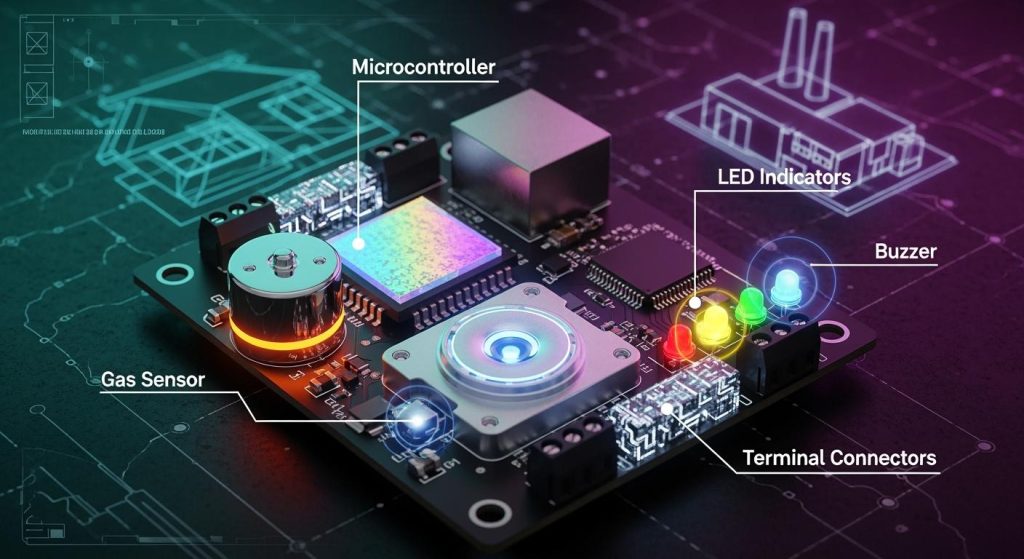
You use a gas alarms pcba to keep your environment safe from dangerous gas leaks. This device brings together sensors and electronic parts to spot gas and sound an alert. You trust it to protect your home or workplace. Each main part of the system works to find gas quickly and help you avoid harm. Understanding these parts helps you make smart choices for safety. When you know how gas detection works, you boost your safety and lower risks from gas.
Key Takeaways
- Gas alarm PCBAs help find dangerous gas leaks. They give early warnings to keep you safe.
- Knowing the main parts, like sensors and circuits, helps you pick the best gas detector for your needs.
- Calibrating gas detectors often makes sure they read gases correctly. It also helps them work well to find harmful gases.
- Remote monitoring lets you check gas levels from anywhere. This makes safety better and helps you respond faster.
- Putting gas detectors in important places at home or work keeps you safer. It lowers the risks from gas leaks.
Gas Alarms PCBA Overview
What Is a Gas Alarm PCBA
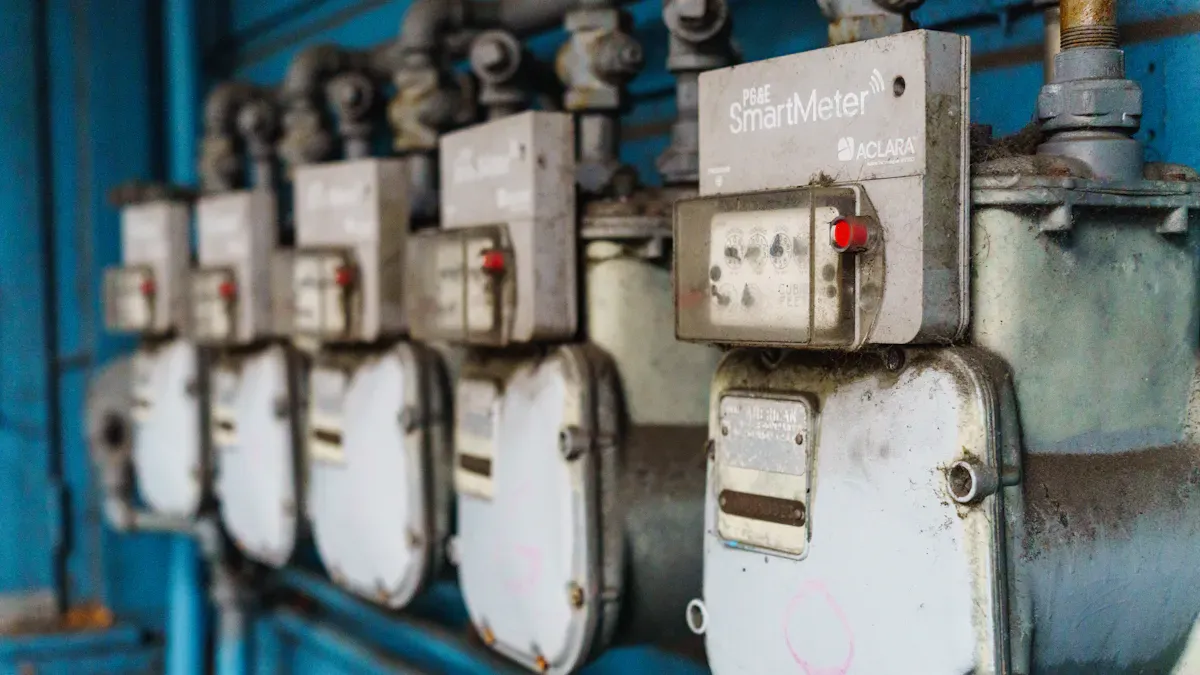
You count on a gas alarms pcba to keep you safe. This device is like the main part of a gas detection system. It puts sensors and circuits together on one board. You can find it in many devices that check air quality. The board’s main job is to spot dangerous gas and send warnings. People use it in homes, factories, and cars. Each sensor looks for certain gases. The table below shows which sensors find which gases:
| Sensor Type | Gases Detected |
|---|---|
| MQ-2 | LPG, alcohol, propane, hydrogen, carbon monoxide (CO), methane |
| MQ-3 | Alcohol, benzene, CH4, hexane, LPG, CO |
| MQ-4 | Methane, natural gas |
| MQ-135 | Air quality, hazardous gases |
| MQ-7 | Carbon monoxide (CO) |
How Gas Alarms PCBA Work
You depend on the gas alarms pcba to find dangerous gas fast. The sensors check the air for bad gas levels. If a sensor finds gas, it sends a signal to the circuits. The circuits look at the signal and decide if the gas is unsafe. If there is danger, the board makes an alarm sound. You get a warning right away, so you can act quickly.
Tip: Watching gas levels all the time helps you stop leaks before they get worse.
You get many benefits from sensors and circuits working together:
- The board checks gas levels and sends data right away.
- You get alerts fast, so accidents can be stopped.
- The sensors react quickly, so you know about gas right away.
- Fast circuits make sure alarms sound without waiting.
You trust the gas detection system because it works all the time. It keeps you safe by checking for gas every second. You know that quick action and good detection help you stay safe.
Gas Alarm PCBA Components
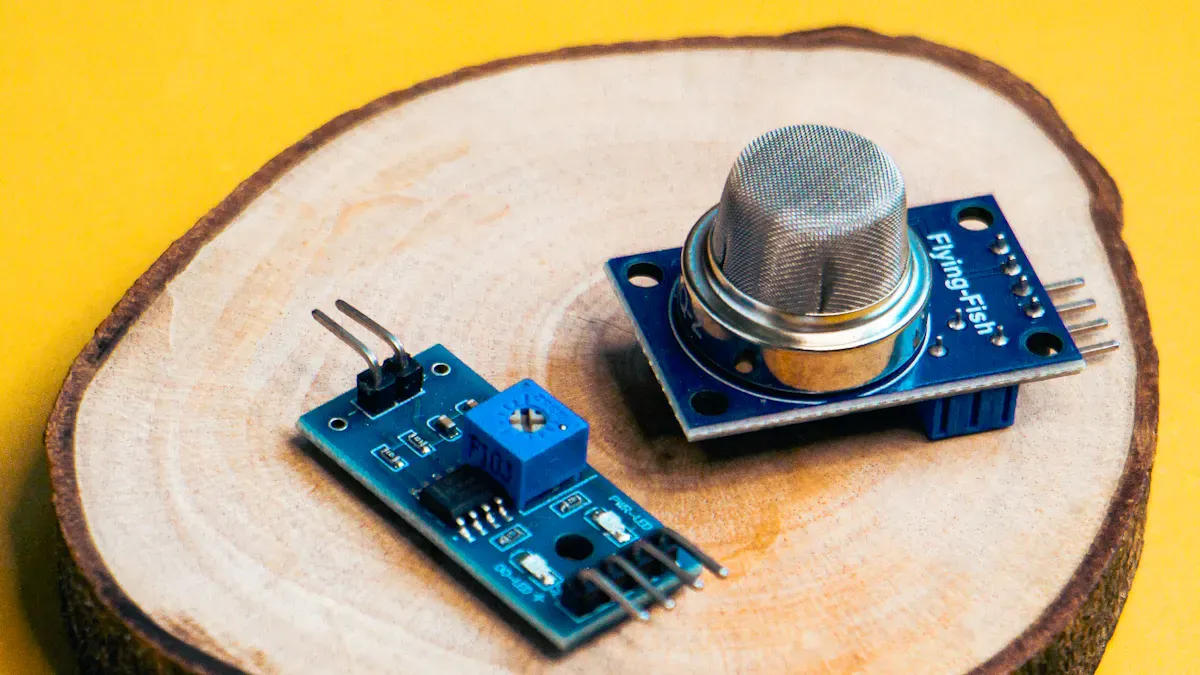
When you open a gas alarms pcba, you see many parts. Each part helps the system keep you safe. Let’s look at the main parts and learn how they protect you from dangerous gases.
Gas Detector Sensor
The gas detector sensor pcb is your first shield. This sensor checks the air for bad gas. It is very sensitive and finds even small amounts. You get a fast warning if there is gas. The sensor only reacts to the right gas, so you do not get many false alarms. The table shows how a good gas detector works:
| Feature | Details |
|---|---|
| Detection Range | Up to 10 km |
| Response Time | Less than 3 seconds |
| Sensitivity | High sensitivity and specificity for gases |
| Selectivity | Responds only to target gas |
| Anti-Interference | Good ability to ignore other gases |
The gas detector sensor pcb lasts a long time. You get strong and steady protection. The sensor’s quick action means you do not wait for warnings. You can trust it to keep you safe every day.
Signal Processing Circuit
After the sensor finds gas, the signal goes to the signal processing circuit. This part of the gas detector sensor pcb cleans the signal. It uses filters and amplifiers to make the data clear. You get good results because the circuit removes noise and makes weak signals stronger. Here is how the circuit works:
| Operation Type | Components Used | Purpose |
|---|---|---|
| High-Pass Filtering | 80 kΩ resistor, 0.2 μF capacitor | Set cut-off frequency at 10 Hz |
| Demodulation | IC chip (AD630) with gain of 2 | Obtain demodulated signal |
| Low-Pass Filtering | 100 kΩ resistor, 4.7 μF and 10 μF capacitors | Set cut-off frequency at 0.23 Hz |
| Signal Amplification | Operational amplifiers (op-amps) | Amplify the filtered signal |
| Final Output | DC component extraction | Remove random noise and output clean signal |
You get great gas detector results because the circuit uses smart programs. Neural networks and deep learning help tell gases apart. Real-time work gives you quick answers. The detector always tries to give you the best results.
Control Unit (MCU)
The control unit is the brain of the gas detector sensor pcb. You find microcontrollers like PIC or ESP8266 in many systems. The MCU checks the sensor data all the time. When gas is found, the MCU decides what to do next. It can turn off the gas, sound alarms, or send you a message. You get fast action and real-time checks. The MCU also connects to the internet for remote alerts. You always know what is happening with your gas detection systems.
- The MCU works with the MQ-2 sensor for gas detection.
- It uses a relay to close the solenoid valve and stop gas flow.
- The MCU sends alerts to your phone or computer.
- You get protection from both gas leaks and fire.
Alarm Output System
When danger is found, the alarm output system warns you right away. You get sound and light alerts. The system uses loud buzzers and bright LEDs. You can see and hear the warning, even if it is noisy. Some systems let you get alerts on your phone. The table shows what you get from a good gas detector alarm:
| Feature | Description |
|---|---|
| Alarm Type | Combination of audible and visual alerts |
| Sound Output | High output with adjustable volume levels |
| Visual Output | Omni-directional light coverage with high output LEDs |
| Certifications | EN54-3, AS 7240.3, AS7240.23, CWSS-RR-S5, CWSS-RR-W5, CWSS-RR-S3 |
You get steady protection because the alarm system works all the time. It checks itself for problems and keeps working in tough places. The detector gives you a fast warning, so you can act before things get worse.
Note: A good alarm output system keeps false alarms low and works for years with little maintenance.
Power Supply
The power supply keeps your gas detector sensor pcb working. You need steady power for the system to work right. The design uses special parts to handle power spikes and keep things safe. A strong power supply means your detector works in all conditions. You get steady gas checks and long-lasting protection.
| Evidence Description | Explanation |
|---|---|
| Power supply design must support peaks without violating safety limits. | Stability in power supply is crucial for maintaining safety and performance in gas alarm systems. |
| Designers use components like series resistors and current limiters to ensure safety. | Power supply stability is managed through design choices that directly affect the performance of gas detectors. |
| Durability supports safety by preventing changes in internal resistance. | Stable power supply contributes to the reliability of gas alarms under various conditions. |
Communication Interface
You can connect your gas alarms pcba to other systems using the communication interface. This part lets you check gas levels from far away. You get options like Modbus RTU, Modbus TCP, Bluetooth, and IoT modules. These interfaces help you link your detector to building safety networks. The table shows how the system connects:
| Communication Interface | Description |
|---|---|
| Modbus RTU | RS485 protocol for communication |
| Modbus TCP | TCP/IP protocol for communication |
| Bluetooth | Wireless technology for remote monitoring and settings modification |
| FGFD FieldServer IoT | Enables remote monitoring and notifications for off-site connectivity |
You get better protection because the detector works with other gas detection systems. The interface helps you find the exact spot of a leak. You can also connect to fire alarms and other safety devices. This makes your gas detector part of a full safety network.
Tip: Use remote monitoring to check your gas detector sensor pcb from anywhere. This gives you peace of mind and fast response time in emergencies.
By learning about these parts, you can see how a gas alarms pcba keeps you safe. Each part works together to give you high sensitivity, fast warnings, and steady gas detection for your safety.
Key Features of Gas Detector Sensor PCB
Sensitivity and Accuracy
Your gas detector sensor PCB must be very sensitive. It can find even small amounts of gas. The sensor changes the output current into a voltage signal. This makes it easier to detect gas. High sensitivity helps you find dangerous gas early. You can trust the sensor to work in many places. The sensitivity range is from 0.5 to 9500 nA/ppm. The sensor works well in cold and hot temperatures, from −40 °C to 85 °C. You get a steady voltage between 2.7 and 5.25 V.
- High sensitivity helps the sensor find tiny amounts of gas.
- The sensor works well even in tough places.
Accuracy is also important for your sensor. You check accuracy by looking at resistance and impedance changes. You need to calibrate the sensor in a safe space. This makes sure the readings are right. Electrical noise and where you put the sensor can change the results. You get better accuracy if you put the sensor in a good spot and keep it clean.
Tip: Calibrate your gas detector sensor PCB often. This keeps it working well and gives you good results.
Fast Response and Low Power
You want your sensor to react fast. A quick response means you get a warning right away. You can stop gas from spreading. The sensor uses little power, so the battery lasts longer. Low power use keeps your system working in emergencies. You save energy and get steady safety.
- Fast response gives you early warnings.
- Low power means the battery lasts longer and needs less care.
Reliability and Certifications
You need your gas detector sensor PCB to work every day. Good parts and smart design make it reliable. Certifications show your sensor is safe and works well. These rules prove your gas detector sensor PCB meets high standards.
| Certification Standard | Description |
|---|---|
| ISO9001 | A worldwide rule for Quality Management Systems |
| AS9100 | A rule for Quality Management in the Aerospace field |
| ISO17025 | Rules for Testing & Calibration Lab skills |
| ANSI-Z-540-1 | Rules for testing and calibration lab skills |
You feel safe when your sensor has these certifications. You know your system will protect you and follow safety rules.
Note: Always look for certifications when you pick a gas detector sensor PCB. This helps you stay safe and follow the rules.
Applications of Gas Detector Sensor
Residential Gas Detection
Gas detector sensor PCBs help keep your home safe. They find leaks from natural gas and other dangerous gases. You can put them in kitchens, basements, or near gas stoves. MQ Series sensors can find methane, butane, carbon monoxide, and LPG. These sensors are not expensive and work well. You can change how sensitive the detector is. This helps you set it for your house. Early warning systems let you know about danger fast. You get time to fix the problem and keep your family safe.
- MQ Series sensors check the air and help stop accidents.
- You can use these sensors in many places at home.
- You can change the sensitivity to stop false alarms.
Tip: Put your gas detector sensor PCB close to gas sources for the best safety.
Industrial and Commercial Use
Factories and big buildings use gas detector sensor PCBs. These sensors help stop gas leaks and keep workers safe. You see them in chemical plants, water treatment, and the gas industry. The sensors watch for leaks all the time. You follow safety rules and avoid accidents. Fast alerts help you act quickly and keep everyone safe.
| Industrial Sector | Relevance to Gas Detector Sensor PCBs |
|---|---|
| Gas Industry | Uses PCBs to find and watch for gas leaks. |
| Natural Gas Industry | Uses PCBs to keep gas work safe. |
| Safety Applications | PCBs help find harmful things in the air. |
- Gas detector sensor PCBs find bad gases like ammonia, chlorine, and hydrogen sulfide.
- You make things safer and follow the rules with these sensors.
- Quick action helps you handle emergencies.
Automotive and Transportation
Gas detector sensor PCBs are used in cars, buses, and trains. These sensors check for leaks in fuel systems. You get a warning if gas leaks out. Early warnings help you act fast. Passengers and drivers stay safe in emergencies. Gas detector sensor PCBs help keep travel safe for everyone.
Note: Gas detector sensor PCBs are important for safety in homes, factories, and vehicles. They give you strong protection in many places.
You count on a gas alarm PCBA to keep you safe. It finds dangerous gas and starts safety steps. All the parts work together to help you stay safe. The system reacts fast and is very sensitive. You can trust it to work well every day. Knowing these features helps you pick the best system. You use safety devices in homes, jobs, and public places. Early warnings help you act quickly. The devices are easy to set up and last a long time. Always choose good products so your safety system works when needed.
- Main benefits are:
- Early warning keeps you safe
- Quick alarms help you act fast
- Reliable systems protect you all the time
FAQ
What is the main purpose of a gas alarm PCBA?
A gas alarm PCBA helps you find dangerous gases in the air. It warns you before gas levels get too high. This keeps you safe at home, at work, or anywhere gas leaks might happen.
How does gas sensor design affect safety?
A well-made gas sensor gives you quick and correct warnings. It can spot even tiny leaks. This means you get fewer false alarms and your safety system works well in many places.
Can a gas alarm PCBA detect explosive gases?
Yes, a gas alarm PCBA can find explosive gases like methane and propane. It warns you early so you can act fast. This helps stop accidents before they happen.
Why is environmental protection important for gas detectors?
Gas detectors help keep the air clean by stopping leaks. They lower the chance of fires and pollution. This makes your area safer for people and nature.
Where should you use gas alarm PCBAs in hazardous environments?
You should put gas alarm PCBAs in risky places like chemical plants or oil refineries. These areas have more danger, so extra safety helps protect workers and equipment.