 English
 Arabic
 Chinese (Simplified)
 Dutch
Dutch French
 German
 Italian
 Portuguese
 Russian
 Spanish
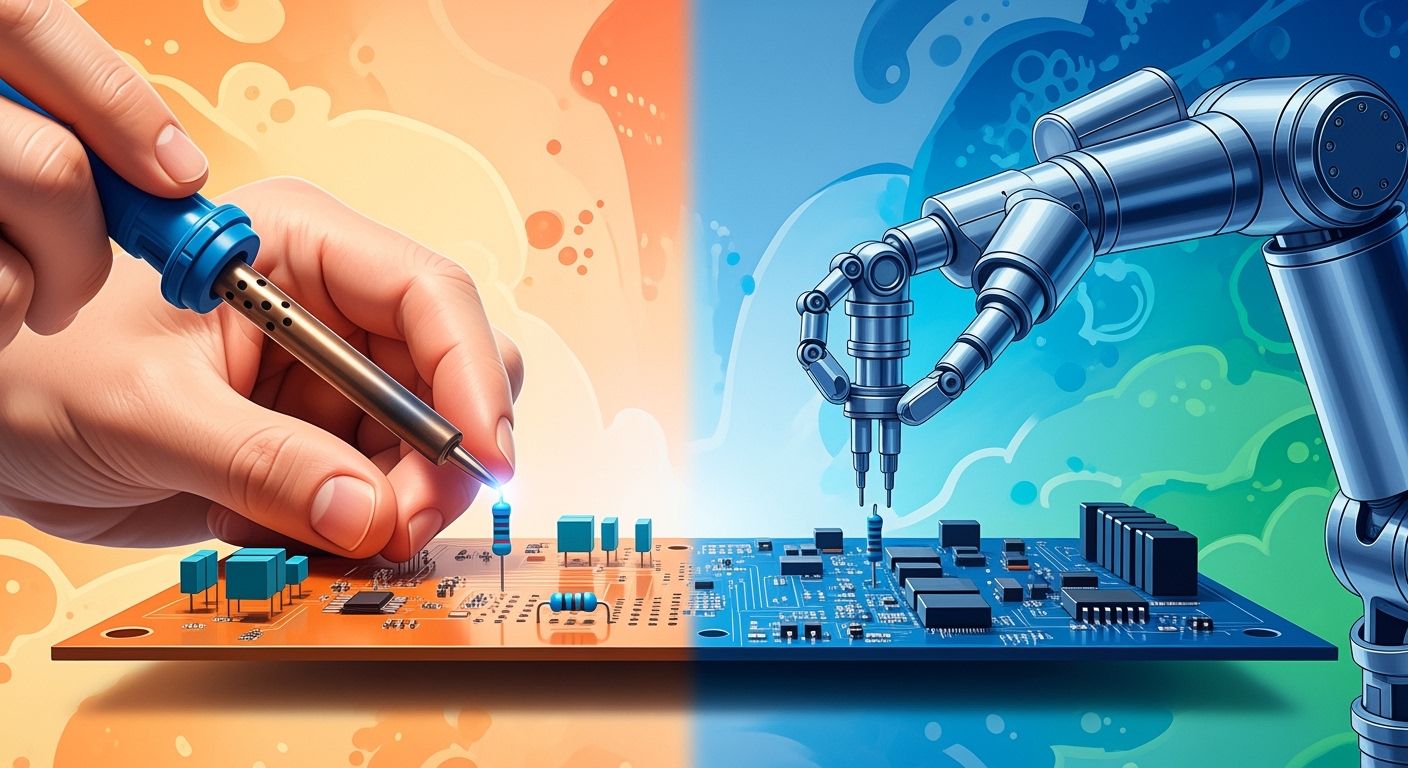
Are you trying to decide between manual vs automated through-hole assembly to make your project easier? You should consider some important factors before making your choice. Manual PCB assembly is ideal for small jobs, while automated through-hole assembly is better suited for larger projects. Here are some key points to think about:
- Cost is crucial. Manual assembly saves money for small jobs, whereas automated assembly can save costs for larger jobs.
- Speed is a significant factor. Automated through-hole assembly completes work more quickly.
- Batch size is important. Manual assembly works well for small batches, while automated assembly excels with larger batches.
- Project complexity matters. Manual assembly offers more flexibility for intricate or changing designs.
Key Takeaways
- Pick manual assembly for small projects and prototypes. It lets you change designs easily and gives you more control.
- Use automated assembly for big production runs. It saves time and keeps the quality the same for all boards.
- Think about costs. Manual assembly costs less for small batches. Automated assembly lowers costs for lots of boards.
- Look at how hard your project is. Manual assembly works better for tricky designs. Automated systems are faster and more accurate.
- Use the checklist to choose the right assembly method for your project. This helps you avoid expensive mistakes.
Key Factors in Manual vs Automated Through-Hole Assembly
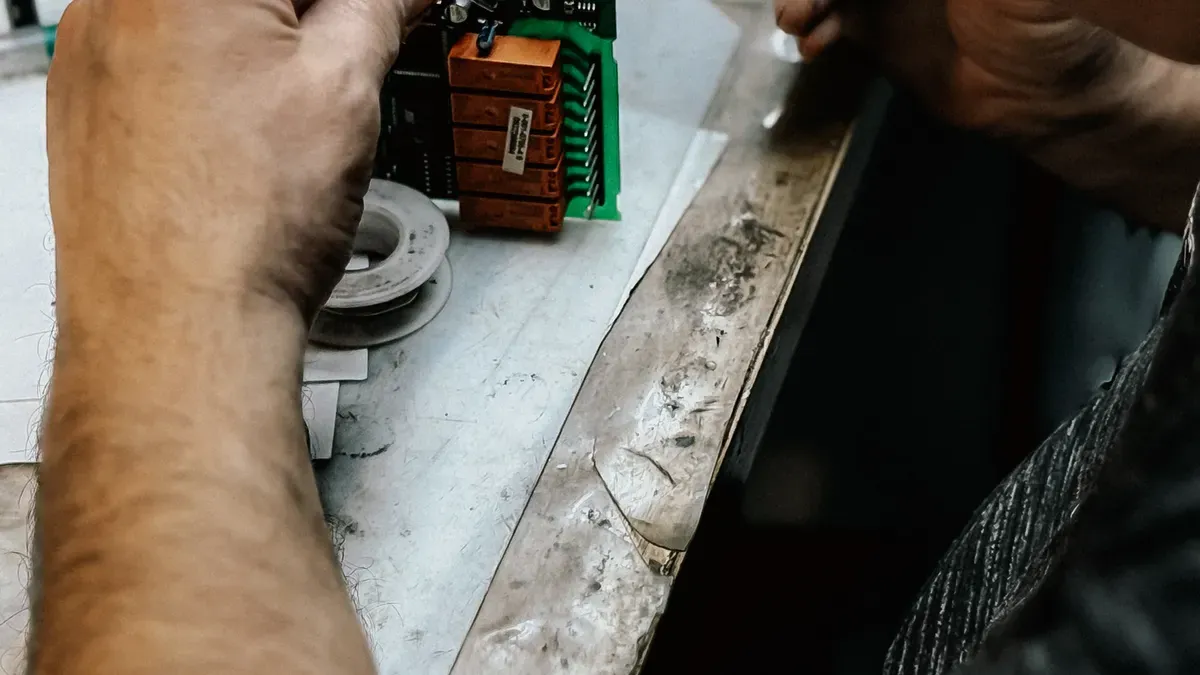
Project Size & Volume
Pick your assembly method based on your project size. Manual pcb assembly is good for small jobs and prototypes. Automated pcb assembly is best for big jobs and lots of boards. The table below shows how project size changes your choice:
| Type | Automated Assembly | Manual Assembly |
|---|---|---|
| Best for | High-volume production | Low-volume production, prototyping |
| Efficiency | High | Lower |
| Cost | Lower at scale | Higher |
Complexity & Flexibility
Manual pcb assembly gives you more flexibility. You can change your printed circuit board design quickly. It handles unique or tricky through-hole technology layouts without machine changes. Automated pcb assembly needs machine reprogramming for new designs. This slows down tht assembly and costs more.
- Flexibility for Customization: Manual assembly lets you adjust things fast during prototyping.
- Ideal for Complex Designs: Manual assembly works with special parts and placements.
- Less Flexibility in Automated Assembly: Automated methods need setup changes for new designs.
Budget & Cost
Cost depends on how many boards you make. Manual vs automated through-hole assembly has big cost differences for each batch. Automated pcb manufacturing is cheaper per board for big batches. Manual pcb assembly costs less for small batches.
| Production Volume | Manual Assembly Cost (Per Unit) | Automated Assembly Cost (Per Unit) | Setup Cost (Automated) |
|---|---|---|---|
| 1-10 Units | $50-100 | $200-300 | $1,000-2,000 |
| 100-250 Units | $15-30 | $10-20 | $1,000-2,000 |
| 1,000+ Units | $10-20 | $3-5 | $2,000-5,000 |
Think about equipment and labor costs too.
| Assembly Method | Initial Investment | Per-Unit Cost (Low Volume) | Per-Unit Cost (High Volume) |
|---|---|---|---|
| Manual Assembly | Under $1,000 | $50 – $100 | N/A |
| Automated Assembly | $50,000-$500,000 | N/A | $5 – $10 |
Speed & Turnaround
Automated pcb assembly is faster. You finish circuit board assembly quickly with machines. Manual assembly takes more time, especially for big batches. Getting through-hole technology parts fast helps avoid delays.
Tip: Keep your inventory updated and pick common parts to prevent slowdowns.
Quality & Reliability
Automated electronics assembly gives better quality and reliability. You get fewer mistakes and more accuracy with machines. Manual assembly needs skilled workers, but automated pcb assembly uses tools like AOI and X-ray tests.
| Assembly Type | Defect Rate (%) | Defect Rate (PPM) |
|---|---|---|
| Manual | 5–10% | 1,000-2,000 |
| Automated | <0.5% | 10-50 |
Automated pcb manufacturing meets strict rules for medical, automotive, and military jobs. Automation in through-hole technology gives you better efficiency and reliability.
Manual PCB Assembly: When to Choose
Advantages of Manual Assembly
Manual pcb assembly gives you many benefits. You can change your circuit board design fast. You use your hands to solder, so you control quality. You can fix special problems like tombstoning by moving the soldering iron. You do not wait for stencils, so small jobs finish faster. You keep labor costs low for less than 100 units. You can work with tricky parts and placements. You get lots of flexibility to customize and try new ideas.
- You change designs quickly when prototyping.
- You control soldering for better quality in hard jobs.
- You fix defects easily.
- You avoid setup delays for small batches.
- You keep costs low for small pcb jobs.
- You work with unique or special parts.
Tip: Manual pcb assembly lets you control the process with your hands. You can change how you build your circuit board fast. This helps you make your boards more reliable and efficient.
Best Use Cases
Manual pcb assembly is best in some situations. You use it for prototyping because you can add and solder parts easily. You pick manual for debugging since you can test and change prototypes without problems. You use manual for strong connections in through-hole technology. You use manual in jobs that need tough connections and reliability.
| Industry/Application | Description |
|---|---|
| Automotive Electronics | Power modules, sensors, and connectors must handle shaking and high currents. |
| Aerospace and Defense | Rugged connectors are needed for perfect work in tough conditions. |
| Industrial Equipment | Heavy machines use through-hole assembly for strong connections with high voltages. |
| Prototyping and Education | Used in schools and prototyping because it is easy and parts can be replaced. |
You pick manual pcb assembly for small batches, prototyping, and school projects. You use it when you need flexibility and hands-on control. You choose manual when you want to test new designs or work with special parts.
Limitations
Manual pcb assembly has some downsides. You pay more for assembly because it needs lots of labor. You cannot make lots of boards quickly since you use your hands. You make boards slower than automated pcb assembly. You see more mistakes and less steady quality. You spend more for big jobs because labor costs go up. You lose efficiency when you need to make many boards.
- Higher assembly costs for big batches.
- Not much automation or scaling.
- Slower production speeds.
- More risk of mistakes.
- Less cost efficiency for big jobs.
| Aspect | Manual Assembly | Automated Assembly |
|---|---|---|
| Flexibility for Customization | High – Easy to change designs | Low – Needs machine changes |
| Lower Initial Costs | Yes – Good for small batches | No – Setup costs are high |
| Handling Complex Designs | Yes – Works with special parts | Limited – May have trouble with special parts |
| Production Speed | Slower – Not good for big jobs | Faster – Good for big jobs |
| Error Rates | Higher – More mistakes | Lower – Quality stays steady |
| Cost for Large Volumes | Expensive – Labor costs go up | Cheaper for big jobs |
You should use manual pcb assembly for small batches, prototyping, and jobs needing flexibility. You should not use manual for big jobs or when you need steady quality and speed. Automated electronics assembly and tht assembly are better for big jobs.
Note: Manual vs automated through-hole assembly depends on your project. Manual gives you control and flexibility, but automated is better for big jobs and steady quality.
Automated PCB Assembly: When to Choose
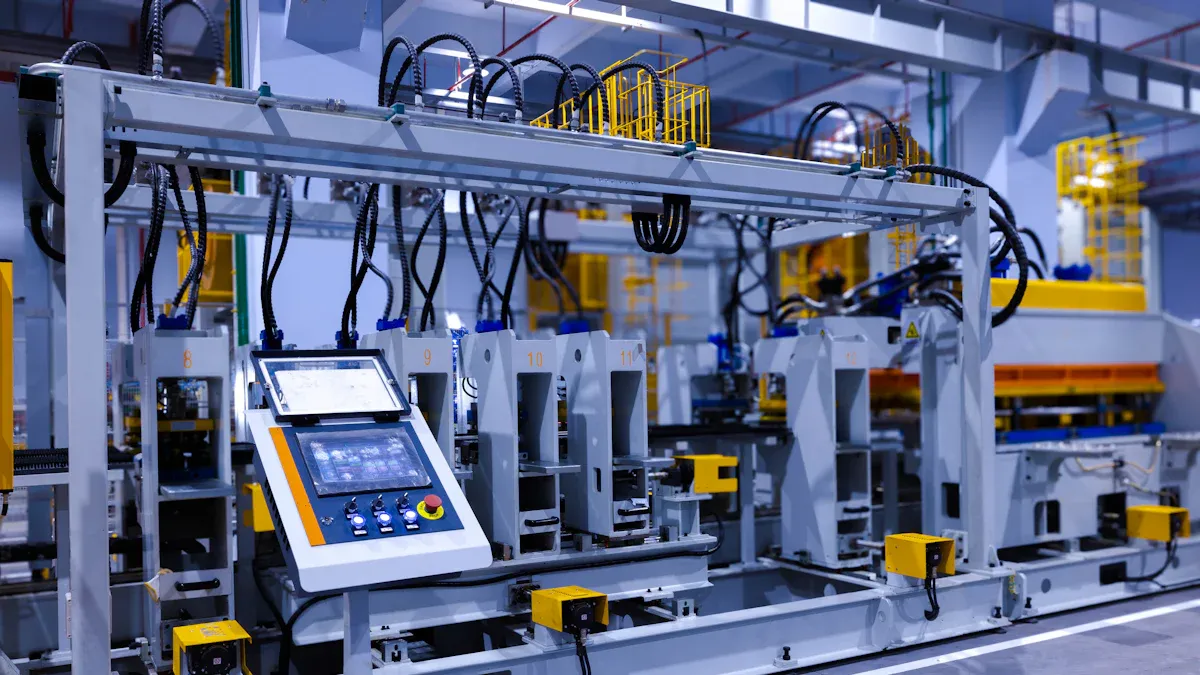
Advantages of Automated Assembly
You get many good things with automated pcb assembly. Machines do most of the work. This means you finish jobs faster and make more boards. Machines put parts in the right spot every time. They are very accurate, even down to tiny spaces. This is important for electronics that must work well all the time. You also get the same quality on every board. Automated electronics assembly uses special tools like AOI and X-ray. These tools find problems early and help you follow strict rules.
Automated pcb manufacturing makes things run smoother and faster. It cuts down setup time and helps move from one step to the next. Tooling holes can help you make more boards, up to 20% faster. You spend less money on workers, especially when making lots of boards. Automation makes each board cheaper when you build many at once. You also see fewer mistakes than with manual pcb assembly. This means you fix less and your boards work better.
- Machines put parts in the right place.
- You finish jobs faster and make more boards.
- Automated systems make boards better and more reliable.
- You save money on workers for big jobs.
- Special tools find problems early.
- You move smoothly from one step to the next.
Tip: Automated pcb assembly helps you make good boards fast. Machines do the same thing every time and keep quality high.
Ideal Scenarios
Automated pcb assembly is best for big jobs and tough rules. You see it used in cars, planes, and factories. These places need strong and safe printed circuit boards. Automated pcb manufacturing makes sure every board is good and works under stress.
| Industry | Description |
|---|---|
| Automotive | Needs strong and safe electronic parts. |
| Aerospace | Needs tough parts for safety and good work. |
| Industrial Electronics | Needs boards that work well in machines. |
You should pick automated pcb assembly when you need lots of boards fast. It is good for products that do not change much. Automated systems help you follow safety rules and keep quality the same. You do not have to wait long and you keep things running well.
Automated through-hole technology is still needed for strong boards. It helps with power and tough connections. New machines like automated insertion, wave soldering, and selective soldering make things faster and better. AOI and X-ray tools help you find hidden problems and make sure boards are good.
Drawbacks
Automated pcb assembly has some problems too. You pay a lot at first because machines cost a lot. Setting up machines takes time and skill. It is hard to change designs or make just a few boards. Automated systems are best for products that stay the same. You also need to fix and check machines often. If a machine breaks, you lose time and work stops.
| Drawback | Description |
|---|---|
| High Initial Costs | Machines for through-hole parts cost a lot. This is hard for small companies. |
| Complexity in Setup | Setting up machines for new jobs takes skill and time. |
| Limited Flexibility | Machines do not change fast for new designs or small jobs. |
| Maintenance Needs | You must check and fix machines often or work will stop. |
You may not want automated pcb assembly for small jobs or if you change designs a lot. Manual vs automated through-hole assembly shows manual is better for testing and custom work. Automated assembly is best for big jobs and products that do not change.
Note: Automated pcb assembly gives you speed, accuracy, and steady quality. But you need to think about cost and how easy it is to change things. Pick what fits your project best.
How to Decide: Manual vs Automated Through-Hole Assembly
Step-by-Step Checklist
You can make your choice easier with a checklist. First, look at what your project needs. If you have low volume pcb assembly, manual methods work best. For high volume production, automated assembly is more efficient. Think about the parts you use. Through-hole technology is good for heavy parts and power circuits. It also works well for connectors that get used a lot. If your project faces stress or tough environments, manual assembly gives better reliability.
Check the table below to help you decide:
| Criteria for Through-Hole Assembly Decision | Description |
|---|---|
| Mechanical Stress or Harsh Environments | Choose through-hole for tough conditions. |
| Power Circuits with Large Components | Use for big parts like transformers. |
| Prototype or Low-Volume Production | Manual fits small jobs and prototypes. |
| Aerospace Equipment | Manual suits aerospace builds. |
| Connectors with Repeated Mating | Use for connectors that need frequent changes. |
| High-Voltage Components | Needed for safe spacing in high-voltage jobs. |
| Heavy Components | Manual handles heavy parts better. |
| Field-Replaceable Items | Manual makes rework easier. |
Ask yourself these questions:
- Do you need fast changes or custom designs?
- Is cost important for your project?
- Do you want steady quality and reliability?
- Will you build many boards or just a few?
If you say yes to custom designs or small batches, manual assembly is best. If you need speed and steady quality for lots of boards, automated assembly is better.
Common Mistakes to Avoid
You can avoid problems by watching for mistakes. Some people pick automated pcb assembly for small jobs and lose money on setup. Others use manual assembly for big jobs and face slow speeds. Some forget to check if their parts need through-hole technology for reliability. You should not skip quality checks in both manual and automated pcb builds.
Tip: Always match your assembly method to your project size, cost, and quality needs. Do not rush your choice. Take time to review your needs.
You can save money and time by avoiding these mistakes. Choose manual for low volume pcb assembly and custom jobs. Pick automated for high volume production and steady results. Make sure you check your parts and project needs before you start.
You should pick manual pcb assembly for prototypes or small jobs. Manual assembly is also good when you need to change things fast. Automated pcb assembly is best for making lots of boards. It helps you save money when you build many boards. Machines make boards faster and keep the quality the same. Manual ways let you change your design and control costs. Automated systems give you speed, good quality, and save money for big jobs. Use the checklist to see what fits your project. If you are not sure, ask a pcb expert for help.
| Method | Best For | Key Benefit |
|---|---|---|
| Manual | Prototyping, Low Volume | Flexibility |
| Automated | High Volume | Speed, Consistent Quality |
Tip: Think about what you want for your project. Pick the way that matches your cost and quality needs.
FAQ
What is through-hole assembly?
You put electronic parts into holes on a circuit board. You solder the parts to make strong connections. Through-hole assembly is good for big parts and tough jobs.
When should you use manual assembly?
Manual assembly is best for small batches and prototypes. It is also good when you need to change designs fast. Manual assembly gives you more control and flexibility.
How does automated assembly improve quality?
Machines place parts very accurately. Automated systems use tools like AOI and X-ray to check for mistakes. You get boards with fewer defects and steady quality.
Is automated assembly always cheaper?
Automated assembly saves money for big jobs. You pay more at first for machines and setup. Manual assembly costs less for small batches.
Can you mix manual and automated assembly?
You can use both methods together. Machines work on simple parts. Manual work is used for special or tricky components. This helps you balance speed and flexibility.