 English
 Arabic
 Chinese (Simplified)
 Dutch
Dutch French
 German
 Italian
 Portuguese
 Russian
 Spanish
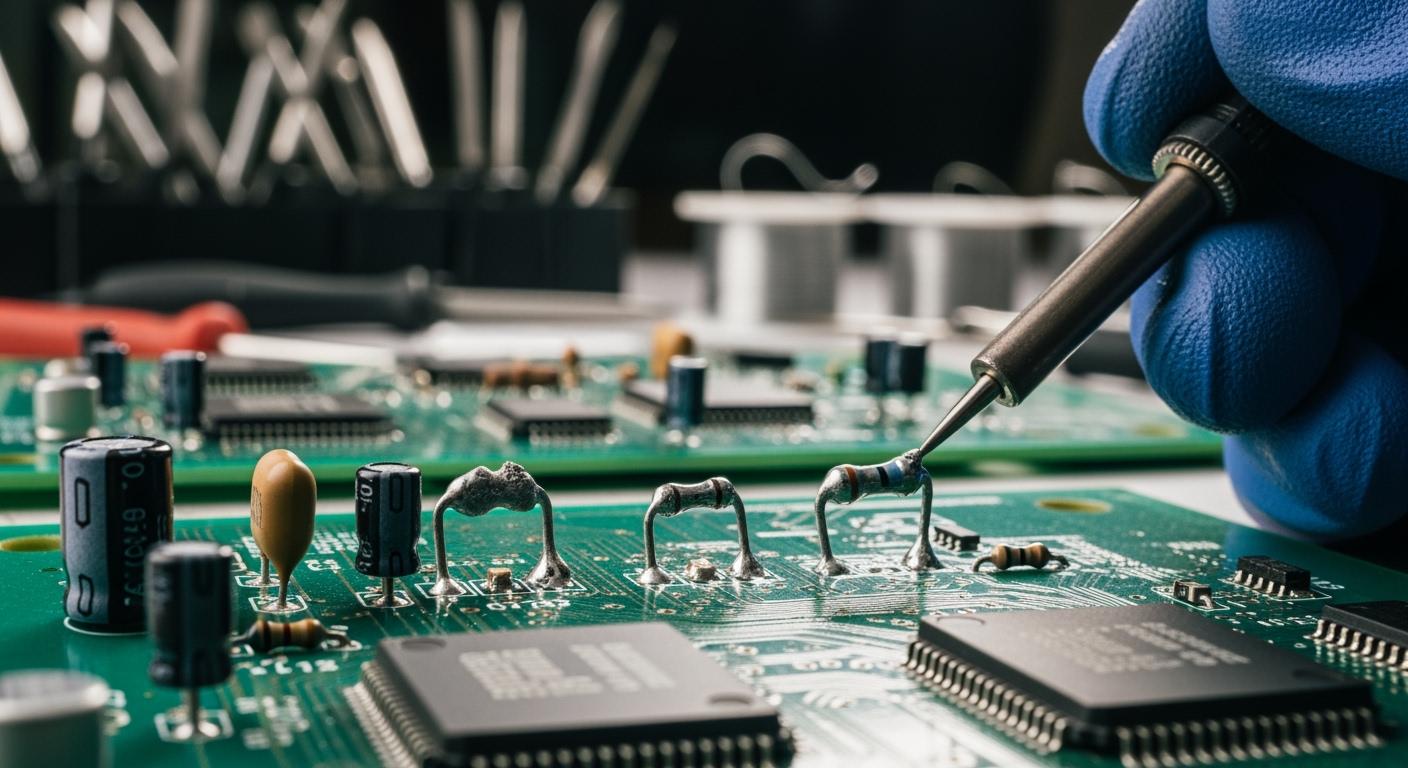
You face real problems when through-hole soldering defects happen during printed circuit board making. These defects can lower quality and reliability, leading to expensive failures. Studies show that through-hole soldering defects cause 8.7% of failures in industrial control boards. You need assembly without defects to ensure your products work correctly. KING FIELD provides exceptional Through Hole PCB Assembly Services, utilizing skilled teams and meticulous inspection. Understanding how defects occur and how to prevent them helps you choose the right solder and methods for optimal results.
- Through-hole soldering defects cause 8.7% of failures in industrial control boards.
Key Takeaways
- Through-hole soldering defects cause 8.7% of failures in industrial control boards. Knowing about these defects helps make products more reliable.
- Reliable assembly services help lower soldering defects. Pick a service that cares about quality so your boards work well.
- Use strong quality control steps. Inspections like Automated Optical Inspection and X-ray help find defects early.
- Train workers well to lower defect rates. Good training can cut defects by 15-20%. This helps get better soldering results.
- Check your PCB designs and hole sizes often. Good design stops problems like not enough hole fill and solder bridging.
Through Hole PCB Assembly Services and Quality
Importance of Reliable Assembly
You want your products to last and work well. Reliable through hole pcb assembly services help with this. Through-hole assembly makes circuit boards strong and steady. People have trusted this method for a long time. It is simple and saves money. When you pick a service that cares about quality, you get fewer soldering defects. Your boards work better. Reliable assembly lets boards survive tough places and keep working. At KING FIELD, you get flexible production and skilled workers. They know how to handle many parts and change things for you. Their experience lowers mistakes in soldering and keeps your projects moving.
Role of Quality Control
Quality control helps stop soldering defects before they cause trouble. You want every board to pass strict tests and checks. KING FIELD uses careful inspection to find problems early. Here are some important quality metrics in through hole pcb assembly services:
| Testing Method | Quality Metrics / Benchmarks |
|---|---|
| In-Circuit Testing (ICT) | Finds up to 90% of defects, covers 90% of faults |
| Functional Testing | Checks repeatability, reliability, and traceability |
| Automated Optical Inspection | 100% accuracy, 18% fewer false alarms, early defect detection |
| X-ray Inspection | Finds hidden solder defects using 2D/3D analysis |
| Burn-In Testing | Shows long-term performance under harsh conditions |
You also need strong quality control to keep soldering defects low. This includes operator training, environmental control, and following IPC standards for solder joints. When you use KING FIELD, you get a team that manages the solder process and finds problems fast. This focus on quality helps you avoid expensive repairs and keeps your customers happy.
Types of PCB Soldering Defects
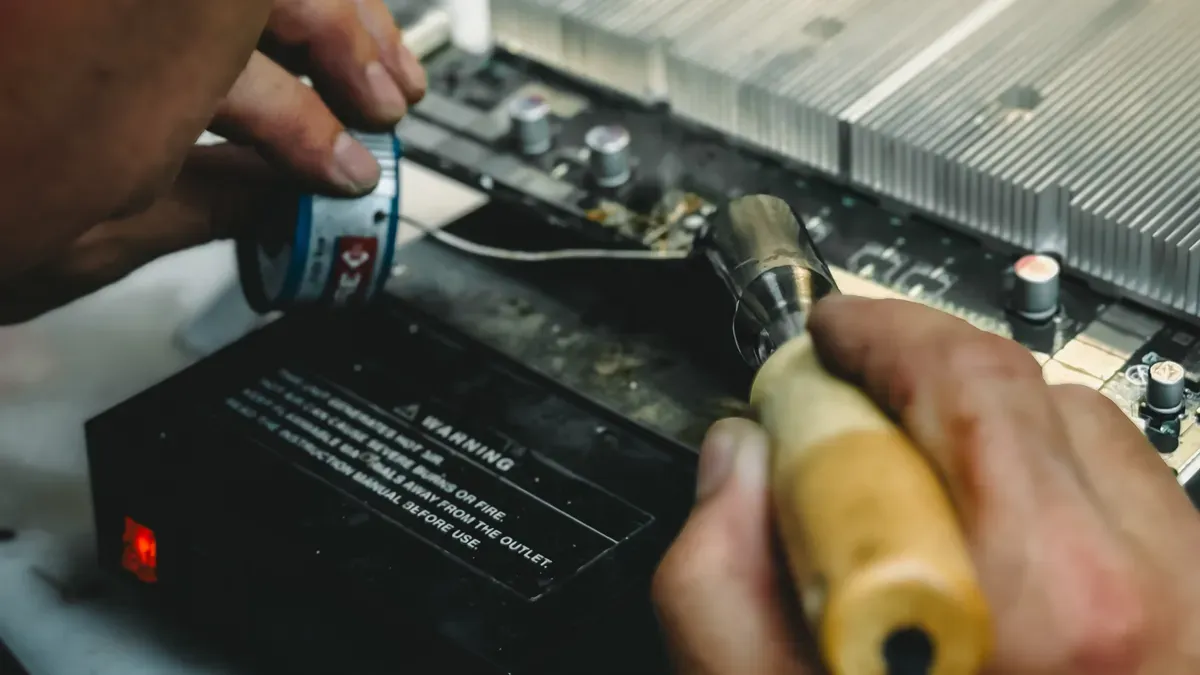
You should know about pcb soldering defects. These defects can make your board not work well. They can cause safety problems and make your board less reliable. KING FIELD’s team uses special tools to find these defects early. This helps your boards stay strong.
Insufficient Hole Fill
Insufficient hole fill happens when solder does not fill the hole. This makes the connection weak and lowers conductivity. It can happen if the solder is not hot enough or not enough solder is used. You might see empty spaces inside the hole. IPC-A-610 says you need 75% to 100% fill for good joints. If you see skip solder, your board may not be strong.
Insufficient Wetting
Insufficient wetting means solder does not stick well to the pad or lead. You can see this defect if the surface looks dull or rough. There may be gaps around the lead. Cold joints and disturbed joints show poor wetting. Pads can get rusty, solder can be old, or the temperature can be too low. Lift pads can happen if wetting is not good. You should check for gaps and rough spots to stop dry joints.
Tip: Look closely to find insufficient wetting. Check for gaps, rough spots, and lift pads.
Blow Holes and Voids
Blow holes and voids trap air inside the solder joint. These defects make the joint weaker. Your board can break if it shakes a lot. Voids also make heat and electricity move badly. This can make your device stop working. Wet boards and wrong soldering can cause these defects.
| Defect Type | Impact on PCB Assembly |
|---|---|
| Blow Holes & Voids | Makes joints weak, lowers conductivity, raises failure risk |
Solder Bridging
Solder bridging happens when too much solder connects pads by mistake. This can cause short circuits and make the board not work. Bad board design and too much solder are common reasons. If you do not fix solder bridging, your board can fail and cost money to repair. You need good soldering and careful design to stop this defect.
- Solder bridging can cause shorts.
- Too much solder and wrong heat can make it worse.
- Solder bridging is a big reason boards fail.
Solder Balls
Balling of solder means small balls form near pads or joints. These defects can cause shorts or block moving parts. Balling of solder can happen if solder splashes or paste is old. You should remove solder balls to stop problems. Balling of solder can hide other defects and make checking harder.
- Balling of solder can cause shorts.
- Solder balls can hide other defects.
- Balling of solder hurts reliability and looks.
- Balling of solder can stop devices from working.
Cold Solder Joints
Cold solder joints happen when solder does not melt all the way. You can see this defect if the surface looks dull or rough. Cold joints break easily and have high resistance. They can crack if the board moves or gets hot. You might see bad connections and unstable work. Cold solder joints make resistance higher, which can cause heat and damage.
- Cold solder joints are weak.
- They cause bad connections and unstable work.
Bulbous and Cracked Joints
Bulbous joints happen when solder rises above the PCB. Cracked joints come from heat or bad design. These defects make the joint weak and can cause short circuits. Your device can fail if these joints are present. Lift pads can happen with cracked joints and hurt safety.
Note: Bulbous and cracked joints can hurt your reputation and safety.
Excess Solder and Icicling
Excess of solder means too much solder covers the joint. This makes it hard to check the joint. It does not make the joint stronger or better. Excess of solder can hide other defects and waste materials. Icicling means spikes form after soldering. Icicles can break and cause shorts or block parts. No standard allows too much solder.
- Excess of solder hides defects and hurts reliability.
- Icicling can cause shorts and block parts.
- Excess of solder wastes materials and lowers quality.
You should look for these pcb soldering defects when checking boards. KING FIELD’s team uses visual checks, tests, and special tools to find and fix defects. You can trust their skills for good through hole pcb assembly services.
Causes and Prevention of Defects
Process Control and Training
You need good process control to make reliable boards. Soldering works best when operators are trained well. If workers use IPC-A-610 training, defects happen less often. Operators without training can cause more defects, about 15-20% higher. They might set inspection machines wrong or miss signs of bad soldering. The table below shows how training affects defects:
| Training Impact | Description |
|---|---|
| Standardized Training | Helps lower defect rates and false alarms |
| Uncertified Operators | Can make defects go up by 15-20% |
Always check your process and make sure operators know what to look for. They should spot dirty joints and other problems. Good soldering needs people who understand the steps.
Material Handling and Cleanliness
Handle materials carefully to stop contamination and weak joints. Moisture in FR-4 can make gas during soldering. This gas pushes solder out and makes holes or weak spots. You can bake boards at 120°C for two hours to stop this. Clean work areas and tools help keep joints strong. Good soldering needs clean surfaces and dry parts.
PCB Design and Hole Dimensions
Design matters for good soldering. Holes that are too big or small can cause weak joints. Wrong hole size can lead to bridging or not enough solder. The chart below shows how root causes link to defects:
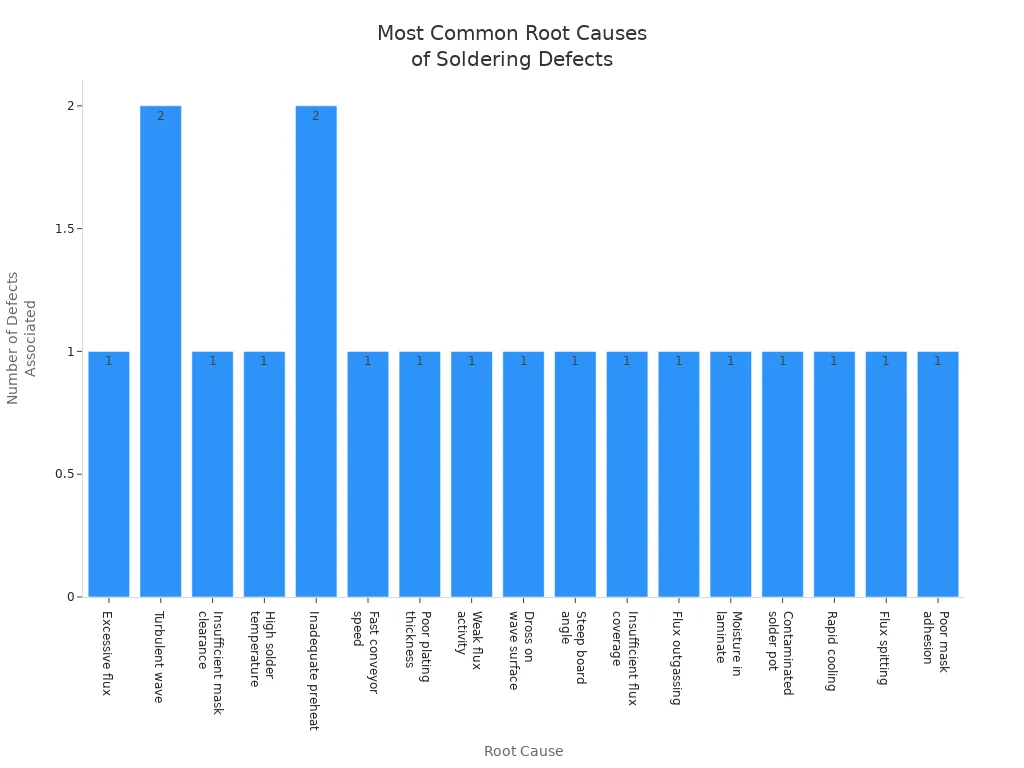
Always check your design and make sure holes fit the leads. This helps stop bad soldering and keeps things steady.
Inspection and Testing
Strong inspection and testing catch defects before boards leave. Use these methods to check joints:
- Automated Optical Inspection (AOI) finds missing parts and checks solder.
- X-ray inspection looks inside joints for cracks or holes.
- Functional testing checks if the board works.
- Flying Probe Testing is good for prototypes.
- In-Circuit Testing (ICT) checks placement and function.
- Boundary Scan Testing checks dense boards without touching them.
Advanced inspection can cut quality costs by over 30%. It can boost first-pass yield by up to 25%. Stopping defects early keeps your process steady and builds trust. Good soldering, careful control, and strong inspection help you make high-quality boards every time.
You can see that through-hole soldering defects can damage your products. These defects can make electrical parts not work right. They can also make the board break more easily. Your products might not last as long. If solder joints are weak or holes are not filled, you may get more returns and warranty claims. You need strong quality control to stop these problems from happening. KING FIELD gives you services with high reliability and zero defects. They check quality at every step with through hole pcb assembly services. You get flexible production and help from experts. Here are some steps you can follow to keep your boards strong: * Check solder joints at each step. * Use special tools to find hidden solder problems. * Keep good records and fix problems quickly.
| Benefit | Description |
|---|---|
| High Reliability | KING FIELD makes sure PCB assemblies are dependable in tough jobs. |
| Comprehensive Quality Control | The company checks quality from start to finish to make products better. |
| Zero-Defect Services | They give zero-defect PCB assembly for important fields like cars and medical devices. |
| Impact Area | Description |
|---|---|
| Electrical performance | Problems like shorts, opens, and noise can happen. |
| Mechanical reliability | Defects can make boards crack or wear out. |
| Product lifecycle | It can lower the time before something breaks and cause more warranty problems. |
| Compliance with standards | It is important to follow IPC-A-610, Class 3 rules. |
You can trust KING FIELD for through hole pcb assembly services. When you pick quality and expert soldering, you protect your products and your good name.
FAQ
What are the most common through-hole soldering defects?
You might see insufficient hole fill, solder bridging, cold solder joints, and solder balls. These problems can make your board weak and cause it to fail.
How can you prevent soldering defects during PCB assembly?
You should teach workers well, keep all materials clean, and check your designs. Use tools like AOI and X-ray to find problems early.
Why does quality control matter for through-hole PCB assembly?
Quality control lets you find defects before boards leave the factory. This means you get better products and fewer returns.
What makes KING FIELD’s through-hole PCB assembly services stand out?
| Feature | Benefit |
|---|---|
| Flexible Production | Works for your project needs |
| Rigorous Inspection | Makes sure there are no defects |
| Expert Team | Fixes problems quickly |