 English
 Arabic
 Chinese (Simplified)
 Dutch
Dutch French
 German
 Italian
 Portuguese
 Russian
 Spanish
What is PCB Electrical Testing and Why Does It Matter
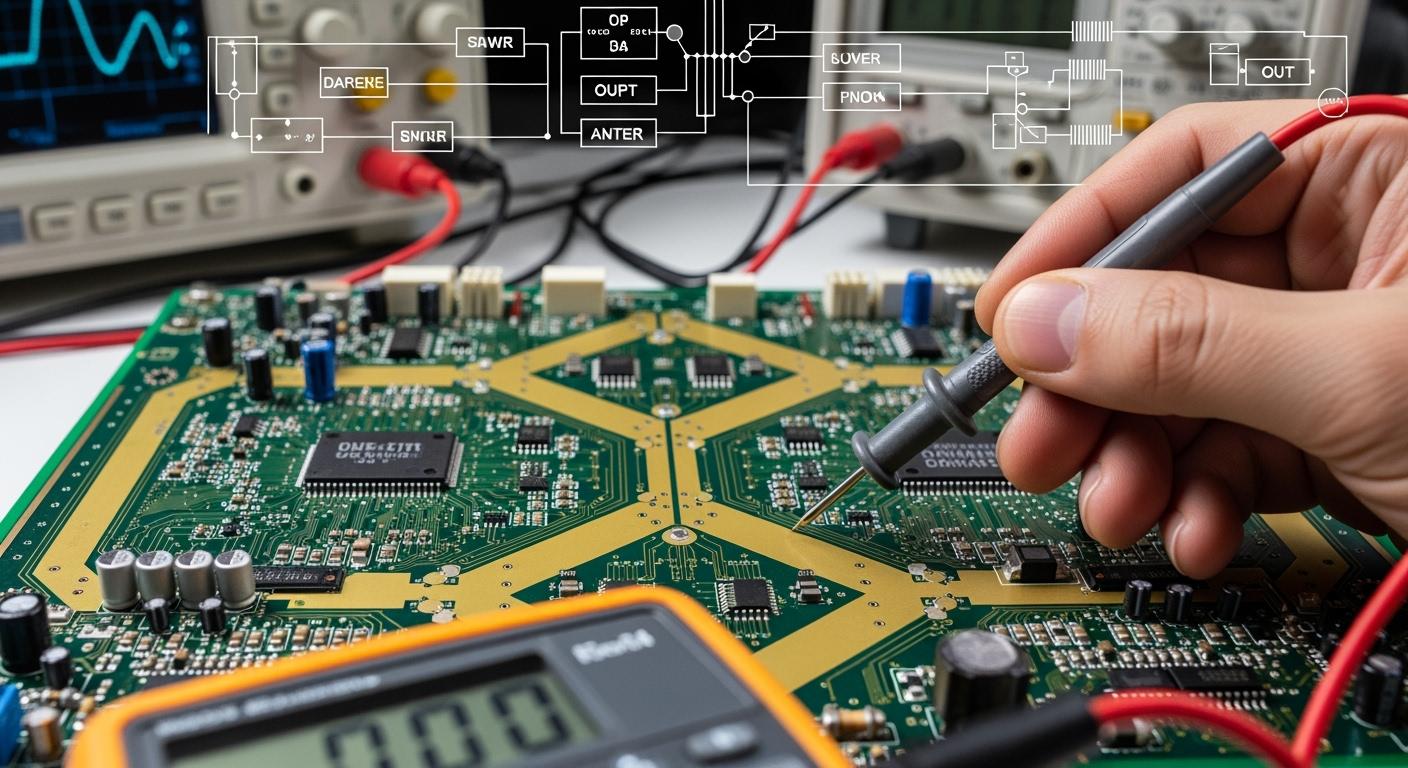
You need PCB electrical testing to make sure your printed circuit boards work right. This process checks every electrical path on a PCB for problems like open or short circuits. When you use good testing, you find defects early and make your product better. Testing methods like accelerated life testing (ALT) help guess how long a PCB will last and show where designs might break.
| How ALT Affects PCB Reliability | What It Means for You |
|---|---|
| Predict Lifespan | Learn how long your PCB will last |
| Identify Weaknesses | Find design problems early |
| Improve Design and Materials | Build better, stronger products |
| Reduce Time and Costs | Save money and test faster |
Key Takeaways
- PCB electrical testing checks if your printed circuit boards work right by finding problems like open and short circuits early.
- Using different testing ways, like in-circuit and functional testing, helps find both easy-to-see and hidden problems.
- Testing often during every step of making the board saves time and money by stopping big mistakes and fewer product recalls.
- Following rules like IPC keeps the product good and reliable, which makes customers trust you.
- Buying PCB testing tools and teaching your team helps them make better boards and stop mistakes.
PCB Electrical Testing Principles and Goals
Ensuring Continuity and Isolation
Every connection on your PCB needs to work right. Continuity testing checks if each path is complete. This lets current flow where it should. Isolation testing makes sure different circuits do not connect by accident. If two paths touch, you could have safety problems or your device might stop working.
Note: Continuity and isolation tests help you spot assembly mistakes and bad parts before they cause bigger trouble.
Here is how these tests keep your devices safe:
| Test Type | What It Checks For | Why It Matters |
|---|---|---|
| Continuity | All connections are complete | Ensures signals travel correctly |
| Isolation | No unwanted connections | Prevents shorts and safety hazards |
Electrical safety testing is the last step. It checks if your PCB meets safety rules. This step lowers the chance of hidden problems that could hurt people or break equipment.
Detecting Open and Short Circuits
You need to find open and short circuits early. An open circuit means a path is broken, so electricity cannot move. A short circuit means two points connect when they should not. This can make things overheat or even catch fire.
You can use different ways to find these problems:
- Continuity testing is good for prototypes but slow for big groups.
- Flying probe testing works for small to medium batches and finds opens at a fair speed.
- In-circuit testing is fast for big batches, but it needs a special tool.
- Automated optical inspection checks for surface opens quickly but cannot see hidden ones.
- X-ray inspection finds hidden problems inside complex boards, but it costs more.
- Functional testing checks if the whole system works, but you need all the logic ready.
| Method | Detects Open Circuits | Speed | Ideal For | Limitations |
|---|---|---|---|---|
| Continuity Testing | ✔️ | Slow | Prototypes | Not scalable |
| Flying Probe Testing | ✔️ | Moderate | Low-mid volume | Slower for large batches |
| In-Circuit Testing | ✔️ | Fast | High-volume | Requires fixture |
| Automated Optical Inspection | ✔️ (surface only) | Fast | SMT | Can’t detect hidden opens |
| X-ray Inspection | ✔️ (internal) | Moderate | BGA, QFN | Costly |
| Functional Testing | ✔️ (indirectly) | Moderate | Final validation | Needs full system logic |
You get the best results when you use more than one method. This helps you find both easy-to-see and hidden problems. It makes your printed circuit board work better.
Meeting Design Specifications
Your PCB should match the design exactly. PCB electrical testing checks resistance, capacitance, and other features to see if your board is correct. Automated test equipment or flying probe testing can check every connection.
- Electrical testing checks continuity, resistance, and capacitance.
- Automated systems make sure all circuit paths match the plan.
- These steps help you find shorts or opens before the board leaves the factory.
You should also follow rules like IPC-A-600. This rule tells you how to make good PCBs. Training your team and using certification programs helps you keep your boards the same and reliable.
When you test your PCB at every step, you save time and money. Early testing finds problems before they get expensive. You also lower the chance of returns and make things safer for your customers.
Common Types of PCB Electrical Testing
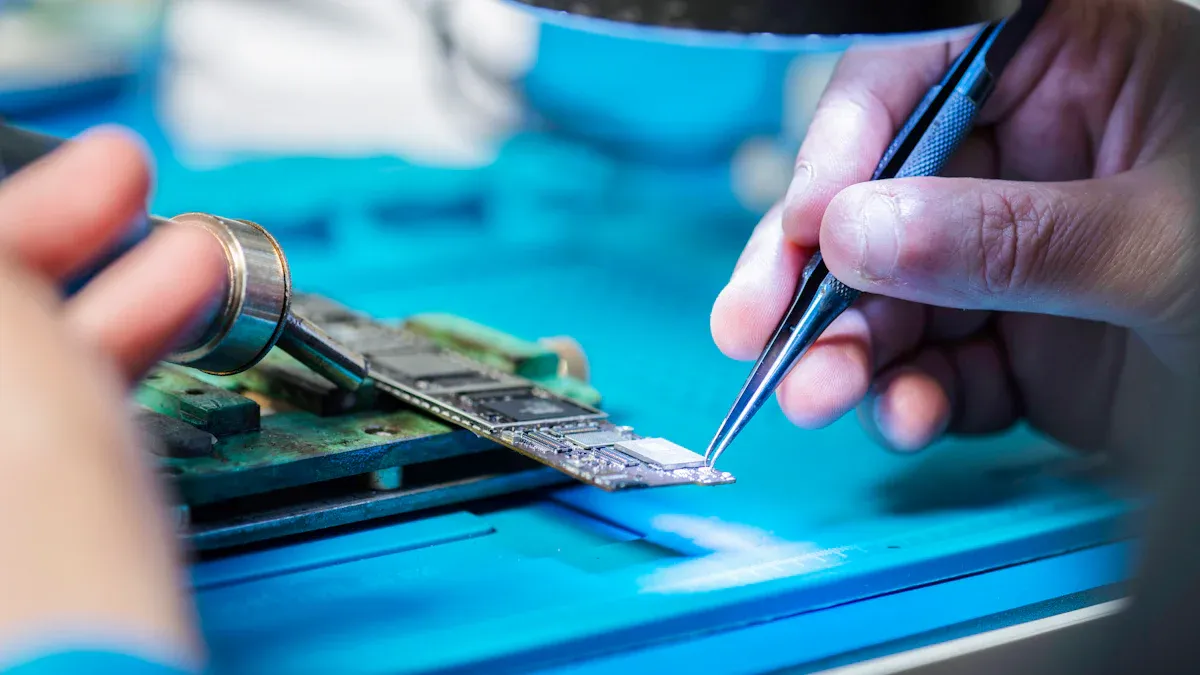
You should learn about the main types of PCB electrical testing. This helps you make sure your boards are good quality. Each method helps you find problems early. This keeps your PCB assembly working well.
In-Circuit PCB Testing
In-circuit testing is also called ICT. It checks every part on your PCB assembly. ICT is fast and works well for making lots of boards. It finds open connections, solder shorts, and other problems. Look at the table below to see what is good and bad about ICT:
| Advantages of ICT | Limitations of ICT |
|---|---|
| Finds problems quickly and correctly | Test fixtures cost a lot for small batches |
| Easy to use | Might miss connector problems in SMT |
| Great for making many boards | Needs good contact to work well |
| Finds most manufacturing problems | Hard to reach parts on crowded boards |
| Test results are easy to understand | Takes time to set up programs |
| Saves money and needs little fixing | Not great for problems that come and go |
| Works with automated lines | Must change fixtures for new board designs |
| Lowers risk of problems after shipping | Can affect sensitive parts |
ICT is best when you need to test many boards fast and keep them high quality.
Flying Probe PCB Testing
Flying probe testing uses moving probes to touch test spots on your PCB. You do not need a special fixture for this. This saves money for small batches or prototypes. Flying probe testing is good for small groups, boards that change often, or many board types. You can switch between boards quickly.
| Scenario | Why Choose Flying Probe Testing |
|---|---|
| Testing prototypes | Start testing fast and save money |
| Small batch production | Costs less than using fixtures |
| Boards change often | No need to make new fixtures |
| Many board types | Set up quickly for different boards |
Flying probe testing helps you find problems before adding parts. This saves time and money.
Bare Board Testing Methods
Bare board electrical testing checks your PCB before adding any parts. You use this step to find open circuits, short circuits, and other problems. Fixing problems now costs less than fixing them later. Bare board testing makes sure only good boards move forward. This helps keep quality high.
- Bare board testing finds shorts and opens before adding parts.
- You save time and money by fixing problems early.
- Only good boards go to assembly, so reliability goes up.
You should always use bare board testing to make sure your boards are good quality.
Functional PCB Testing
Functional PCB testing checks if your finished board works right. You test the board with power, signals, and stress like it will see in real life. This gives you confidence that the board works well. Functional testing finds hidden problems and mistakes that other tests might miss.
- Functional testing checks if the board works in real life.
- You can find hidden problems and fix them sooner.
- This testing helps you avoid returns and keeps customers happy.
You need functional testing to make sure your board meets all needs and works well in the final product.
Tip: Use different types of PCB electrical testing, like automated optical inspection and reliability testing. This helps you find more problems and make your boards better.
E-test is important for every step. You use e-test in bare board testing, in-circuit testing, flying probe testing, and functional testing. E-test checks electrical paths, finds problems, and keeps your PCB assembly safe. E-test helps you meet quality standards and keeps your boards reliable.
Benefits of PCB Testing for Product Quality

Preventing Costly Failures
PCB testing helps you avoid expensive problems. If you find defects early, you save money. Fixing problems in the factory costs less than fixing them later. Each step makes repairs cost more, up to ten times. Functional testing checks if every board works right. This lowers the chance of failures. It also protects your reputation and stops warranty claims.
- You find problems before customers get your product.
- You lower the risk of failures and recalls.
- You keep your company’s image safe and customers happy.
A smartphone company used better inspection systems. They cut defect rates by 30%. This led to fewer failures and happier customers.
Supporting Compliance and Reliability
PCB testing helps you follow industry rules and keep products reliable. IPC standards show you how to make boards that meet global rules. Following these standards improves your process and cuts mistakes. Customers trust your products more when you meet these rules.
IPC standards are important rules, not just advice. They help you build better products. If you skip testing, you may have big problems in the market. PCB electrical testing keeps you compliant and makes products safe and reliable.
Reducing Product Recalls
PCB testing helps you lower recalls. It checks if boards work right and meet design needs. It also makes sure parts work as they should. Early testing stops bad products from reaching customers.
- You check the process and catch defects early.
- You lower the risk of sending bad products.
- You save money and avoid recall problems.
A manufacturer added X-ray inspection to their process. They saved $75,000 in one year. Their defect rate dropped from 5% to 1%. They had fewer warranty claims. Over five years, they saved more than $375,000.
Tip: Spending money on PCB testing gives you better reliability, fewer failures, and more customer trust.
Challenges and Best Practices in Printed Circuit Board Testing
Common Testing Challenges
Testing printed circuit boards can be hard. Making lots of boards makes these problems worse. Here are some things that can go wrong:
- Wet weaving in the layers can slow signals down. This problem can make tests fail and lower your good boards by 12%.
- Each board has many parts and solder spots. You need good checks to keep quality high.
- Dirt in holes can block paths for electricity. This causes bad connections and missed signals.
- If you use too much or too little solder paste, you can get shorts or weak joints.
- Not cleaning off flux or dust can cause rust and make boards less reliable.
- If you skip automated optical inspection or X-ray, you might miss hidden problems.
- Handling parts wrong, like not stopping static, can hurt your components.
Tip: Clean your boards well and control how you build them. This helps you avoid many problems.
Practical Testing Tips
You can get better test results by using smart steps. Check this table for help:
| Best Practice | Description |
|---|---|
| Operator Training | Teach your team about new tools and how to fix problems. |
| Routine Maintenance | Keep your test tools clean and working right. |
| Troubleshooting Techniques | Use good ways to find and fix problems fast. |
| Fixture Design | Make test tools easy to change and add more test spots. |
Testing tools must get better as your boards get harder to test. Small parts and crowded boards make it tough to reach test spots. You need better tools to find hidden problems and keep boards working well.
Choosing the Right Method
Pick your testing method based on what you make:
- For prototypes, use flying probe or automated optical inspection. These are good for small batches and quick changes.
- For big groups, in-circuit testing and X-ray work fast and check everything.
- For simple boards, flying probe and AOI are enough. For hard or crowded boards, use X-ray and in-circuit testing.
- If you make car or medical products, add burn-in and more functional testing. This helps you meet strict rules.
- Think about how much a failure costs. Spending more on testing now can save you money later.
Note: Always change your testing steps when your pcb designs change. This keeps your products safe and working well.
You help keep people safe when you use PCB electrical testing. This testing finds hidden problems that you cannot see. It helps you follow important rules for cars and planes. Testing often makes things safer for everyone. Using smart tools like AOI and X-ray helps even more. Finding problems early means fewer recalls and safer products. When you care about safety, people trust you more. Make safety the most important thing with strong PCB electrical testing.
FAQ
What is the main goal of PCB electrical testing?
You want to make sure your PCB works as designed. Testing helps you find problems like broken paths or unwanted connections. This keeps your products safe and reliable.
When should you test your PCB?
You should test your PCB at every stage. Start with bare board testing before assembly. Test again after adding parts. Final testing checks if everything works before shipping.
What happens if you skip PCB electrical testing?
You risk sending out faulty boards. This can lead to product failures, recalls, or safety issues. Testing helps you avoid these problems and keeps your customers happy.
Which PCB testing method is best for small batches?
Flying probe testing works well for small batches or prototypes. You do not need special fixtures. You can switch between designs quickly and save money.
Can you use more than one testing method?
Yes, you can. Using different methods helps you find more problems. For example, you can use flying probe testing and functional testing together for better results.