 English
 Arabic
 Chinese (Simplified)
 Dutch
Dutch French
 German
 Italian
 Portuguese
 Russian
 Spanish

Choosing the right pcb maker sets the foundation for your project’s success. If you overlook quality or speed, you risk costly setbacks.
A study by the Electronics Industry Association shows that up to 20% of production costs come from issues related to poor-quality boards, such as delays and rework.
- 60% of PCB projects face delays because the manufacturer’s capabilities do not match project needs.
- The right partner boosts product quality, shortens time to market, and strengthens your position against competitors.
Focus on both technical skills and customer service to protect your investment.
Key Factors in Choosing a PCB Maker
Selecting a pcb maker requires you to balance two critical factors: quality standards and speed. These criteria determine whether your project will meet technical requirements and launch on schedule. As technology evolves, especially in industries like 5G and IoT, you must demand higher quality standards to ensure reliability and performance. Speed remains essential because rapid development cycles and market competition push you to deliver products faster.
Quality Standards and Reliability
You need to evaluate quality standards before committing to a manufacturer. These standards guarantee that your printed circuit boards will perform as expected in demanding environments. The most recognized quality standards in the industry include IPC and ISO certifications. The following table summarizes the main standards and their focus areas:
| Standard | Description |
|---|---|
| IPC-A-600 | Criteria for the visual quality and acceptability of PCBs. |
| IPC-6012 | Performance and durability, covering electrical, thermal, and mechanical. |
| IPC-A-610 | Guidelines for assembly cleanliness, soldering, and component placement. |
| IPC-2221 | Best practices for PCB design, including materials and layout. |
| J-STD-001 | Requirements for soldered assemblies, focusing on materials and process. |
| ISO 9001 | Quality management systems, symbol of quality in PCB manufacturing. |
| ISO 13485 | For medical device manufacturers, ensuring safe and effective products. |
| AS9100 | For aerospace, ensuring safety and effectiveness in regulated products. |
You should also inspect the physical attributes of the boards. The table below highlights important criteria for evaluating quality standards:
| Criteria | Description |
|---|---|
| Surface Conditions | Boards must be free from scratches, pits, or dents. Minor flaws may lead to rejection for Class 3. |
| Conductor Patterns | Must meet specified widths and spacings. Deviations can cause defects, especially in Class 2 boards. |
| Hole Quality | Through-holes must be clean and properly plated for reliability. |
| Solder Mask and Coatings | Must cover intended areas without voids. Exposed copper can cause issues during assembly. |
| Edge Conditions | Board edges should be smooth. Rough edges can compromise structural integrity, especially for Class 3. |
Tip: Ask your manufacturer about their long-term reliability testing, such as burn-in procedures. These tests ensure your boards withstand extended use and help prevent failures caused by heat or material stress.
Reliable pcb makers demonstrate their commitment through proactive communication, responsive support teams, dedicated account management, technical assistance, and comprehensive post-production support. These practices help you build a long-term partnership and reduce risks in your supply chain.
Speed and Turnaround Time
Speed is a decisive factor in electronics manufacturing. You must consider how quickly a manufacturer can deliver your boards, especially when working with tight deadlines. Quick-turn services can provide finished PCBs in as little as 24 hours, while standard lead times range from one to three weeks.
- Quick-turn: Delivery in 24 hours for urgent projects.
- Standard: One to three weeks for regular production cycles.
Turnaround time directly affects your project’s cost and schedule. The table below shows how different factors impact your timeline and budget:
| Factor | Impact on Cost and Timeline |
|---|---|
| Component Sourcing | Delays can increase costs due to expedited shipping needs. |
| Production Efficiency | Faster turnaround can reduce overall project costs. |
| Testing and Quality Checks | Extended testing phases can lead to increased timelines. |
Accurate quotes and clear timelines help you plan finances and avoid production delays. You should always request transparent pricing and realistic delivery estimates to keep your project on track.
Note: Fast turnaround is valuable, but never sacrifice quality standards for speed. The best pcb maker delivers both reliability and efficiency.
Evaluating PCB Maker Experience
Track Record and Industry Reputation
You should always examine the track record of a PCB maker before making a decision. A strong history of successful projects signals reliability and consistency. Manufacturers with proven experience often share key performance indicators that reflect their commitment to quality and delivery. The table below highlights important metrics you can use to assess a company’s reputation and operational strength:
| KPI Name | Description |
|---|---|
| First-Pass Yield (FPY) | Percentage of PCBs passing all quality checks on the first attempt without rework. |
| Defect Rate (PPM) | Number of defective PCBs per million produced, focusing on critical defects. |
| On-Time Delivery (OTD) Rate | Percentage of PCB batches delivered by the agreed deadline, reflecting supply chain resilience. |
| Customer Complaint Rate (CCR) | Percentage of PCB batches that trigger client complaints, indicating customer satisfaction. |
| Process Capability Index (Cpk) | Measures how well a process performs relative to specifications. |
| Rework Rate | Percentage of PCBs requiring rework to meet quality standards, reflecting process efficiency. |
| Prototype-to-Production Transfer Success Rate | Percentage of prototypes that scale to mass production without major issues. |
Industry awards and recognitions also boost the reputation of a PCB maker. For example, Indium Corporation received the Best of Industry Award for 2023, which highlights their innovation and quality in soldering products. The Taiwan Printed Circuit Association created the Special Contribution Award to honor leaders who drive innovation and impact. These recognitions help you identify manufacturers who set benchmarks for quality and reliability.
Expertise in PCB Design and Assembly
You need to evaluate the expertise of the manufacturer in both design and assembly. Top-tier PCB makers demonstrate advanced skills in handling complex designs and specialized equipment. The table below outlines the areas of expertise you should look for:
| Expertise Area | Description |
|---|---|
| Complex Design Handling | Advanced capabilities in managing intricate PCB designs. |
| Specialized Equipment | Use of specialized tools for flexible and rigid-flex circuits. |
| Quality Control Processes | Implementation of rigorous quality control measures. |
| Proficiency in PCB Types | Expertise in various types of PCBs, including multilayer boards. |
| Adherence to Industry Standards | Compliance with high industry standards in manufacturing and assembly processes. |
You should expect manufacturers to offer turnkey assembly services, including Surface Mount Technology (SMT), through-hole assembly, and mixed technology. These services show their ability to meet diverse customer needs. Leading companies invest in ongoing training and skill development. STI Electronics, Inc. provides electronic assembly and solder training courses in Alabama and Texas. Altium and IPC Education offer online courses for engineers and designers. Many manufacturers partner with IPC Authorized Training Centers and pursue Altium PCB Designer certification to maintain high standards.
Tip: Ask about the manufacturer’s training programs and certifications. Ongoing education ensures their teams stay current with industry advancements.
When you choose a PCB maker with deep experience and a strong reputation, you reduce risks and increase the likelihood of project success.
Assessing Manufacturing Capabilities
Equipment and Technology
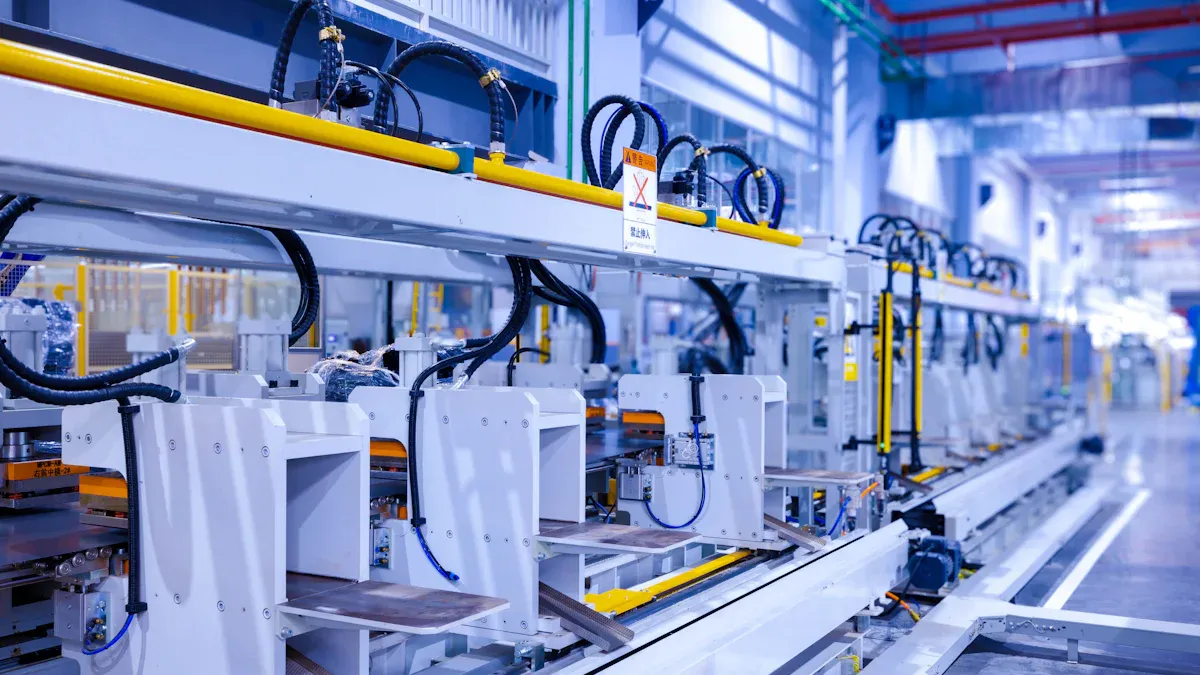
You should always examine the manufacturing capabilities of a PCB maker before making a decision. Leading manufacturers invest in advanced equipment to deliver consistent quality and fast production. Modern facilities use automated systems that control every step of the process. This approach reduces errors and improves efficiency.
Here is a table of advanced equipment you may find in top-tier factories:
| Equipment Type | Description |
|---|---|
| Roll-to-Roll Continuous Vertical Processing | Processes flexible PCBs in a continuous, efficient manner. |
| Panel Edge-to-Edge Continuous Vertical Processing | Handles PCB panels from edge to edge for uniform results. |
| Advanced Process Controls (EBA) | Provides precise control and monitoring of production processes. |
| Insoluble Anode System (ISA) | Maintains copper concentration and improves plating quality. |
| Technic MP200 | Roll-to-roll system for flexible printed circuits and substrates. |
| Technic MP100 | Automated wet processing equipment for PCB panels. |
| Technic Hoist Systems | Customizable hoist systems for various load capacities. |
When you choose a partner with strong manufacturing capabilities, you benefit from automation and process control. Automated Optical Inspection (AOI) and X-ray systems catch defects early, which boosts yield and reduces waste. Robotic systems also increase production efficiency and ensure consistent quality.
Tip: Nearly 30% of fast turn PCBs develop defects when manufacturers rush inspections. Always ask about the inspection technologies your supplier uses.
Handling High-Density and Complex PCBs
You face unique challenges when your project requires high-density or complex printed circuit boards. These designs need advanced manufacturing techniques, such as laser-drilled microvias and high-precision etching. Compact layouts make thermal management difficult and increase the risk of signal interference.
| Challenge | Description |
|---|---|
| Design Complexity | Requires sophisticated techniques and higher precision. |
| Signal Integrity Issues | Dense layouts increase electromagnetic interference and crosstalk. |
| Thermal Management | Compact components make heat removal harder, risking unstable operation. |
To ensure quality and reliability, top manufacturers use several quality assurance processes:
- Design for Manufacturing (DFM) reviews to spot issues early.
- Careful material selection for better durability.
- Automated process controls to reduce variability.
- Comprehensive final inspection and testing.
You should look for a PCB maker that uses AOI, X-ray inspection, and environmental stress testing. These steps help guarantee that your high-density boards will perform reliably in demanding applications.
Quick-Turn PCB Manufacturer: Turnaround and Flexibility
Standard and Rush Order Options
When you select a quick-turn pcb manufacturer, you gain access to a range of order options that support your project’s unique timeline. Standard orders offer predictable lead times, while rush services help you meet urgent deadlines. You can expect the following lead times for different PCB types and production phases:
| Production Phase | Quick-Turn PCBs | Standard PCBs | Advanced PCBs |
|---|---|---|---|
| Prototyping Lead Time | 24hrs–5 days | 5–7 days | 7–15 days |
| Mass Production | N/A | 2–4 weeks | 4–8 weeks |
| Rush Service | 12hr ultra-rush | Limited | Generally unavailable |
A quick-turn pcb manufacturer can deliver standard 2-10 layer PCBs in 5-7 business days. For higher layer counts or complex designs, lead times extend to 7-10 business days. Large production volumes may require 10-15 business days. If you need expedited prototypes, you can receive 2-4 layer PCBs in just 2-3 days, while 6-10 layer boards take 3-5 days. Rush PCB assembly services also offer flexibility:
- Simple assemblies (1-10 components): 3-5 days
- Moderate complexity (11-100 components): 5-7 days
- High complexity (100+ components): 7-10 days
Quick-turn pcb manufacturer services are essential for industries like consumer electronics, automotive, and medical devices. These sectors often require rapid testing and iteration. You benefit from fast and reliable production, especially during prototyping or when last-minute changes arise. Quick-turn pcb manufacturer flexibility allows you to adapt to shifting project requirements and market demands.
On-Time Delivery Performance
You need a quick-turn pcb manufacturer that consistently meets promised lead times. On-time delivery ensures your project stays on schedule and reduces costly delays. Industry leaders like Best Technology achieve on-time delivery rates as high as 99.2%. They accomplish this through in-house capabilities, such as lamination, drilling, plating, and surface finishing. Many quick-turn pcb manufacturer facilities operate 24-hour prototype lanes to further shorten lead times.
Reliable quick-turn pcb manufacturer partners use real-time tracking systems. These tools let you monitor your order from dispatch to delivery. You receive detailed graphs and quarterly charts that show quotes per week versus turnaround time and on-time delivery rates. Some manufacturers use workflow management systems that automatically log data at each production stage, giving you full visibility into lead times and delivery performance.
A knowledgeable customer support team can guide you through logistics and compliance, ensuring your boards arrive on time, every time.
When you choose a quick-turn pcb manufacturer with proven on-time delivery, you gain confidence in meeting your project milestones. Consistent lead times and transparent communication help you plan with certainty and respond quickly to market opportunities.
Quality Standards and Testing Processes
Inspection Procedures
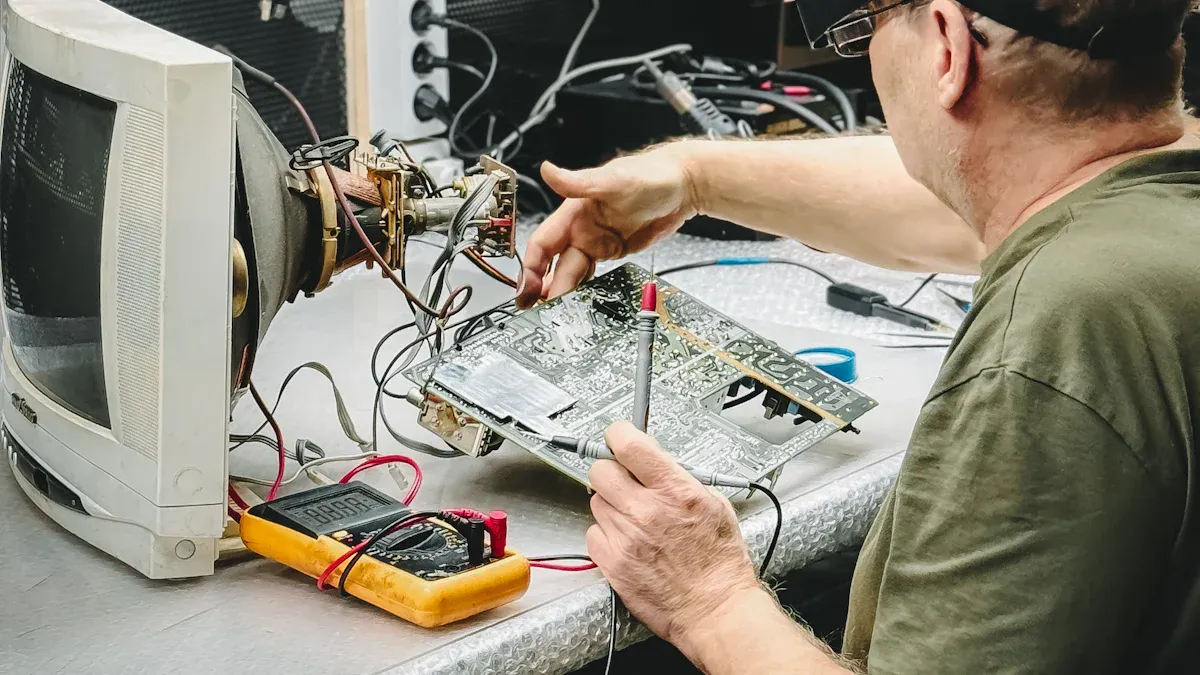
You must pay close attention to inspection procedures when evaluating PCB makers. These steps help you catch defects early and maintain high quality standards. Leading manufacturers use a combination of advanced technologies and manual checks to ensure every board meets strict requirements.
- Automated Optical Inspection (AOI) uses high-resolution cameras and image processing to spot issues like solder joint problems and component placement errors.
- X-ray inspection reveals hidden defects inside the PCB, such as voids in solder joints or misaligned layers.
- In-Circuit Testing (ICT) checks the electrical performance of components after assembly, helping you identify faults that visual inspections might miss.
AOI and X-ray inspection work together to address different types of defects. AOI finds surface problems, while X-ray uncovers internal issues. You benefit from a more reliable product when both methods are part of the quality control processes.
Manufacturers also use flying probe tests, functional tests, and electrical testing to verify performance. Visual inspection remains important for catching cosmetic flaws. These steps form a comprehensive approach to quality control processes, reducing the risk of failures in the field.
Certifications and Defect Rates
Certifications show you that a PCB maker follows industry-recognized quality standards. You should look for manufacturers who hold the following certifications:
| Certification | Description |
|---|---|
| ISO 9001 | Focuses on quality management systems to meet customer and regulatory needs. |
| ISO 13485 | Applies to medical PCB production, ensuring compliance and safety. |
| IPC Standards | Includes A-600, A-610, and A-6012 for high-quality benchmarks. |
| UL Standards | Ensures flammability compliance and RoHS for hazardous substances. |
These certifications prove that the manufacturer meets strict quality standards and regulatory requirements. You gain confidence in the reliability and safety of your boards.
Defect rates offer another way to measure a manufacturer’s commitment to quality. Top PCB makers report defect rates below 1%, while average producers may reach 3-5%.
| Manufacturer Type | Average Defect Rate |
|---|---|
| Top Manufacturers | <1% |
| Average Producers | 3-5% |
Low defect rates reflect strong quality control processes and attention to detail. You should always ask for defect rate data before choosing a supplier. This information helps you avoid costly rework and delays.
Tip: Choose PCB makers who combine rigorous inspection procedures, recognized certifications, and low defect rates. You protect your investment and ensure your products meet the highest quality standards.
Customer Support and Communication
Responsiveness and Availability
You need reliable customer support to keep your project on track. Manufacturers with strong customer service respond quickly to your questions and provide updates throughout the production process. Fast responses prevent delays and help you solve problems before they grow. The table below shows how leading PCB makers deliver accessible customer support and customer service:
| Manufacturer | Support Strategies |
|---|---|
| A-TECH CIRCUITS | User-friendly online quoting system, responsive support team, personalized assistance, timely updates. |
| ALLPCB | Comprehensive DFM analysis, engineering support, ongoing assistance throughout production. |
| JLCPCB | Easy order placement and tracking, responsive customer service team. |
| Osh Park | Detailed DFM feedback, online resources, community forums, personalized guidance. |
| Eurocircuits | Detailed DFM feedback, design optimization services, proactive problem-solving. |
| Bittele | Comprehensive DFM analysis, engineering support, insights to enhance design efficiency. |
You benefit from manufacturers who offer multiple communication channels. Email works well for sending files and documentation. Video calls help you resolve complex issues quickly. Project management tools allow you to share tasks and track progress. Regular meetings keep you informed about updates. Quick responses and clear contacts reduce confusion and streamline customer service.
Design Assistance and Problem Resolution
You face design challenges during PCB development. Manufacturers with strong customer support guide you from the initial design phase to mass production. Mer-Mar Electronics, for example, assists you at every stage, ensuring your design meets requirements and avoids costly errors. Effective customer service includes:
- Seamless integration of mechanical and electrical design workflows
- Sharing project management information across domains
- 3D visualization of PCB designs
- Real-time clearance checking for components
- Virtual prototypes for complex design elements
You improve results by collaborating with your manufacturer. Provide clear documentation, such as fabrication drawings and assembly instructions. This approach helps identify potential defects early and supports smooth production. Integration of mechanical design workflows and project management information sharing further enhances customer support and customer service.
Tip: Choose a PCB maker with proactive customer support and customer service. You gain peace of mind knowing your project receives expert attention and fast solutions.
Comparing Pricing and Value
Transparent Quotes
You need clear and upfront quotes when choosing a PCB maker. Transparent pricing helps you avoid hidden fees and unexpected charges. Reliable manufacturers provide detailed breakdowns of all costs, including materials, assembly, testing, and shipping. This approach lets you compare suppliers easily and make informed decisions. You should always ask for itemized quotes that show each service and its associated cost. This practice protects your budget and helps you plan for future projects.
Tip: Request quotes that include both standard and optional services. This way, you can see how each choice affects your total cost.
Manufacturers who offer competitive pricing often use efficient processes and strong supplier relationships. These factors help you get the best value without sacrificing quality. When you review quotes, check for clear terms, delivery timelines, and warranty information.
Value-Added Services
You gain more than just a finished board when you work with a top-tier PCB maker. Many manufacturers offer value-added services that improve product reliability and simplify your workflow. These services can include:
- PCB laser marking for inventory control and tracking
- In-circuit testing to detect assembly defects
- Conformal coating to protect against moisture and dust
Some companies, like Fast Turn, provide functional testing, burn-in testing, and custom test fixture development. They may also offer plastic injection molding for custom enclosures, giving you full support from design to delivery.
Here is a table of common value-added services you might find:
| Service Type | Description |
|---|---|
| PCB Design | Assistance with board layout and design |
| PCB Assembly | Complete assembly of components |
| Test Engineering | Testing to ensure boards meet specifications |
| Firmware | Integration of software for board functionality |
| Technical Writing | Documentation for your products |
| Training | Education on PCB manufacturing and design |
| ESD Protection | Safeguards against electrostatic discharge |
| Customization | Tailoring boards to your specific needs |
| Rework Service | Fixing issues after manufacturing |
| Cable Assemblies | Building cables for integration |
| Stencil Printing | Printing stencils for assembly |
| High Cleanliness Requirements | Ensuring strict cleanliness standards |
| Part Labels and Barcodes | Labeling for tracking and inventory |
These extra services help you reduce risk, save time, and improve the final product. You should consider the full range of offerings when comparing suppliers, not just the initial price.
Reputation and Customer Reviews
Online Ratings and Testimonials
You gain valuable insights by checking online ratings and testimonials before choosing a PCB manufacturer. These reviews reveal real experiences from other customers and help you judge reliability and service quality. Positive feedback builds trust and encourages you to move forward with a supplier. Negative comments warn you about potential risks and problems.
Here is a comparison table that shows how customer feedback influences your decision:
| Manufacturer | Average Rating | Common Review Themes | Reliability Score |
|---|---|---|---|
| PCBWay | 4.8/5 | Fast delivery, good support | High |
| JLCPCB | 4.6/5 | Affordable, consistent | High |
| Advanced Circuits | 4.2/5 | Quality, some delays | Medium |
| ALLPCB | 4.5/5 | Responsive, flexible | High |
| Bittele | 4.1/5 | Helpful, mixed speed | Medium |
- Positive reviews enhance trustworthiness.
- Negative feedback can deter potential customers.
You should read multiple customer reviews to spot patterns in service, delivery, and product quality. Reviews often highlight strengths and weaknesses that you might not find in official marketing materials. You make better choices when you rely on honest feedback from other users.
Industry Recognition
You strengthen your selection process by considering industry recognition. Awards and certifications show that a PCB maker meets high standards and stands out among competitors. You should look for manufacturers who have earned honors from respected organizations, such as IPC or the Taiwan Printed Circuit Association. These achievements signal a commitment to excellence and innovation.
Industry recognition often appears in the form of:
- Quality awards for manufacturing processes
- Certifications for safety and reliability
- Innovation prizes for new technologies
You build confidence in your supplier when you see strong industry recognition alongside positive customer reviews. This combination helps you avoid unreliable partners and ensures your project receives expert attention.
You set your project up for success when you choose a pcb maker who meets strict quality standards and delivers on time. Use this checklist to guide your evaluation:
- Review the design for manufacturing needs.
- Confirm material selection for durability.
- Inspect raw materials before fabrication.
- Monitor process parameters for accuracy.
- Check quality at each fabrication stage.
- Verify component placement during assembly.
- Inspect solder joints for reliability.
- Test electrical performance.
- Assess environmental durability.
- Keep detailed records for traceability.
Stay focused on quality standards and speed. Start your search for a pcb maker who can deliver both.