 English
 Arabic
 Chinese (Simplified)
 Dutch
Dutch French
 German
 Italian
 Portuguese
 Russian
 Spanish
How do PCBA test specifications emsure product quality
You use pcba test specifications to identify issues with your PCBA early in the process. These guidelines help you inspect each PCBA product before it reaches customers. The specifications outline how to test for quality, reliability, and safety. Many companies follow industry standards for pcba test procedures. For example, IPC-A-610 provides assembly rules, while IPC-2221 offers good design practices for PCBA.
| Standard Code | Description |
|---|---|
| IPC-A-600 | Acceptability of Printed Boards |
| IPC-6012 | Qualification and Performance for Rigid Boards |
| J-STD-003 | Solderability Tests |
| GB/T 4677 | Chinese National Standard (similar to IPC) |
By following these standards, customers have greater trust in your PCBA. They are more satisfied with the products they receive.
Key Takeaways
- PCBA test specifications find problems early. This helps products stay good and reliable.
- Using rules like IPC-A-610 makes customers trust the product. It also keeps the product working the same way each time.
- Finding defects early with tests lowers costs. It stops recalls and saves companies money.
- Functional testing checks if the PCBA works in real life. This makes products safer and more reliable.
- Testing every batch keeps quality high. It helps find problems before customers get the products.
What Are PCBA Test Specifications
Definition and Purpose
When you work with printed circuit board assembly, you need clear rules. These rules help make sure every product is good. PCBA test specifications give you these rules. They show you how to check each pcb for quality, safety, and performance. You use these rules to guide your testing. This helps you not miss any problems.
The main reasons for using pcba test specifications are:
- Quality assurance: You make sure each pcb matches the design and works right.
- Fault detection: You find problems like short circuits or bad connections early.
- PCB functional test verification: You check that the pcb works without mistakes.
- Reliability assessment: You see if the pcb can last in different situations.
- Compliance and standards conformance: You follow industry rules and meet legal needs.
- Cost reduction: You find problems early, so you do not waste time or money later.
- Customer satisfaction: You give customers good products that make them happy.
You use these test specifications to make a step-by-step plan for testing. This plan helps you pick which tests to do and when to do them.
Role in PCBA Manufacturing
PCBA test specifications are important in making products. They help you find problems early, which saves money and time. You use different types of pcb testing, like automated optical inspection and x-ray inspection, to find hidden problems. These methods help you check for things like solder bridges or mistakes in where parts go.
| Benefit/Method | Description |
|---|---|
| Early Defect Identification | You find problems early, so you avoid big mistakes. |
| Automated Optical Inspection (AOI) | You use cameras to spot problems like bad solder joints or parts in the wrong place. |
| X-ray Inspection | You look inside the pcb to find hidden problems in solder joints and layers. |
| Quality Control Steps | You follow steps like testing before, during, and after making the product. |
| Cost Reduction | You save money by fixing problems before the product leaves the factory. |
You also use pcba test specifications to set up your testing steps. Regular testing keeps your brand safe and makes customers trust you. Bad quality can cost a company a lot, sometimes more than 40% of yearly sales. By following strong test rules, you make sure your printed circuit board assembly is good and keeps your customers happy.
Key PCBA Test Types
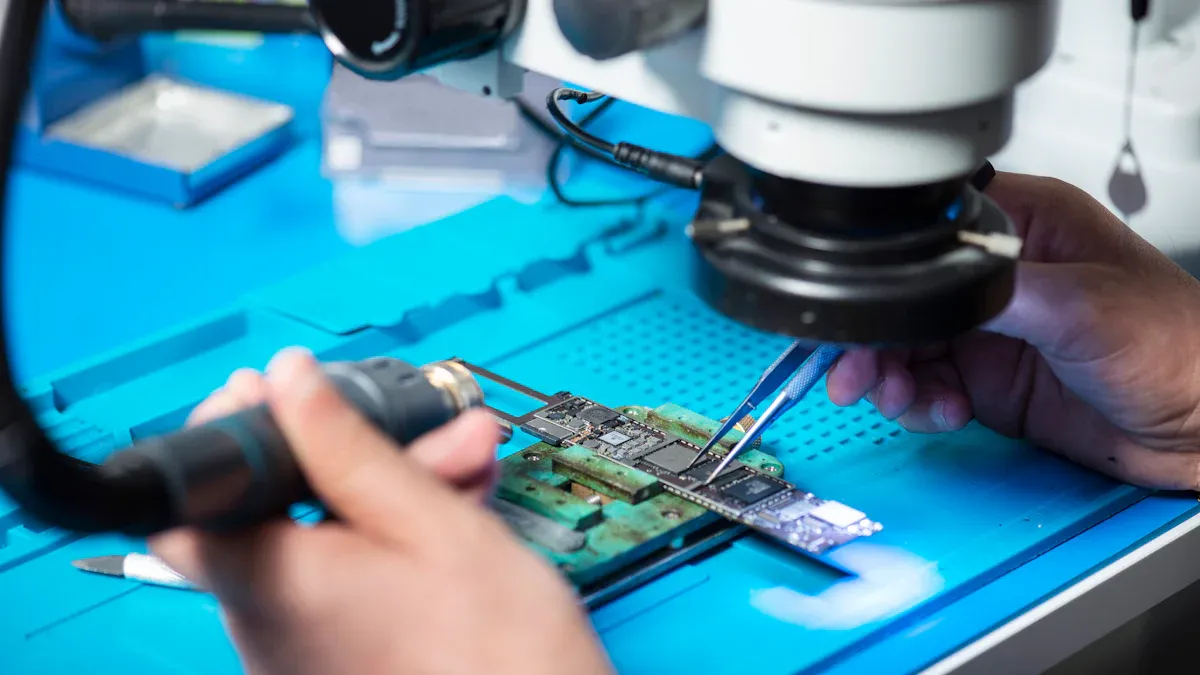
When you use pcba testing, you check if your products are good. There are many tests you can pick from. Each test helps you find different problems. These tests help you make your products better.
Visual Inspection
You start with visual inspection. You look at the pcba to find easy-to-see problems. You check for missing parts or bad solder joints. Manual inspection finds most defects, about 85% to 90%. Automated visual inspection finds even more, up to 99.5%.
| Inspection Method | Defect Detection Rate |
|---|---|
| Automated Visual Inspection | 99.5% |
| Manual Inspection | 85% – 90% |
Automated Optical Inspection (AOI)
AOI uses cameras to look at the pcba. This test finds problems like solder bridging and parts in the wrong place. AOI also checks if there is enough solder. AOI finds almost all solder bridging and most alignment problems.
| Defect Type | Detection Rate | Acceptability Threshold |
|---|---|---|
| Solder Bridging | 99.9% | <0.1mm gap between pads |
| Component Shift | 99.7% | >0.05mm misalignment |
| Insufficient Solder | 99.5% | <75% pad coverage |
X-ray PCBA Test
You use X-ray pcba testing to look inside the board. This test finds solder joint problems you cannot see. X-ray inspection is the best way to find these hidden problems. More than 70% of failures in important electronics come from hidden solder issues.
In-Circuit PCBA Test
In-circuit pcba testing uses a bed of nails fixture. This test checks each part on the board. It finds up to 98% of faults. You can find short circuits, open circuits, and wrong values. In-circuit testing is best for making lots of boards.
| Aspect | Details |
|---|---|
| Fault Coverage | Up to 98% |
| Faults Detected | Shorts, opens, wrong values |
| Efficiency | Best for mass production |
Functional PCBA Test
Functional testing checks if the pcba works right. You add voltage and signals, then see what comes out. This test finds problems that other tests might not find. You use functional testing to make sure the board does what it should.
Reliability and Environmental PCBA Test
You use reliability and environmental tests to see how the pcba handles stress. These tests include thermal shock, salt spray, humidity, and electrical testing. You can also check for leakage current, impedance, and solderability. These tests show if the board will last in tough conditions.
| Test Type | Conditions | Purpose |
|---|---|---|
| High-Temperature Operating Life | 125°C, 1.2X voltage | Checks IC interconnect reliability |
| Temperature Cycling | -55°C to +125°C | Finds solder joint cracks |
| Humidity Resistance | 85°C/85% RH, 5V bias | Finds moisture failures |
How PCBA Test Specifications Ensure Quality
Early Defect Detection
You can find problems early by using pcba test specifications. Early detection stops small problems from getting worse. You use different tests at each step to find defects. Automated testing gives you the same results every time. In-circuit testing finds short circuits and open connections. Automated optical inspection uses cameras to find visual problems. Functional testing checks if the pcba works in real life. X-ray inspection lets you see hidden solder joints. Boundary scan testing helps you find defects on crowded boards.
| Testing Method | Benefits |
|---|---|
| Automated Testing | Gives steady and correct results, so there is less change. |
| In-Circuit Testing (ICT) | Finds short circuits and open connections very well. |
| Automated Optical Inspection | Uses cameras to find visual problems early. |
| Functional Testing | Checks how the board works in real life. |
| X-ray Inspection (AXI) | Looks at hidden solder joints and inside layers. |
| Boundary Scan Testing | Tests dense PCBs without touching them. |
- Finding defects early means fewer failures.
- You make sure the board works as it should.
- You lower changes in product quality.
- Good products make customers happy.
When you use these tests, you fix problems before customers get the boards. This step is important for quality control.
Consistent Product Performance
You want every pcba to work the same way. Test specifications help you reach this goal. You use functional electrical testing to check each board. This test finds broken traces or bad parts. Automatic test equipment acts like real use. It checks if all circuits and parts work right. You keep the same test settings for every batch. This way, you get steady and even results.
Functional electrical testing also checks how the pcba handles stress. You see if the board can last through heat or shaking. This step helps you avoid common pcba problems. When you find and fix defects early, you lower the chance of recalls. You also make sure each product meets the rules.
Note: Testing every batch the same way means customers get good products each time.
Enhanced Safety and Reliability
You need your pcba to be safe and reliable. Strong test specifications help you do this. Functional testing checks if the board works in real life. This test finds hidden problems that other tests miss. You can find defects that might cause early failures. Boards that pass functional testing have fewer returns.
- Functional testing helps you meet rules like ISO 9001 and IPC-A-610.
- You record test results for checking and audits.
- You make products safer and more reliable.
Reliability testing, like heating and humidity tests, shows if the board can last in tough places. You use defect analysis to find weak spots. This helps you give safe products that last longer.
Reduced Returns and Failures
You want to stop returns and failures. Early defect detection with in-line testing keeps bad products away from customers. This way lowers the risk of recalls and warranty costs. Companies that test well have fewer returns. Saving money from stopping failures is much more than the cost of testing.
| Impact Area | Description |
|---|---|
| Early Defect Detection | Finds problems before products go out, so there are fewer failures. |
| Cost Reduction | Saves money by fixing problems early, since fixing later costs more. |
| Increased Confidence in Reliability | Makes people trust your products, which is important for things like medical devices. |
You use defect analysis and pcba test methods to find and fix problems before shipping. This step lowers returns and builds trust with customers.
PCBA Test Impact on Customer Satisfaction
Meeting Industry Standards
You want your products to be the best. Strong pcba test specifications help you follow important rules. These rules guide you from design to assembly and testing. You make sure your materials and products are always good.
- You use guidelines for design, assembly, and testing.
- You work with certified providers who know safety rules.
- You use test specifications that match global standards. This helps your products sell in other countries.
| IPC Standard | Description | Application Area |
|---|---|---|
| IPC-A-610 | Sets rules for electronic assemblies and solder joints. | Used for quality checks in PCBA making. |
| IPC-6012 | Lists what rigid PCBs need to work well. | Makes sure boards work in many places. |
| IPC-J-STD-001 | Tells how to solder parts the right way. | Helps keep soldering steady and strong. |
| IPC-2221/2222 | Gives tips for design and paperwork. | Makes designs better and follows rules. |
You use these standards to check if your pcba works well and lasts long. This helps you make products that people can trust.
Using industry standards in testing makes your products better and helps you compete.
Building Customer Trust
You earn trust by using strong test rules and methods. Customers want products that work every time. You test to check performance and find problems before shipping. This makes your products more reliable and stops expensive recalls.
| Aspect | Explanation |
|---|---|
| Performance Assurance | You make sure your pcba works in real life. |
| Product Longevity | You test to see how long your product lasts and find weak spots. |
| Customer Satisfaction | Good products mean fewer failures. This makes customers happy and builds trust. |
| Cost Efficiency | Finding problems early saves money and keeps customers safe. |
Testing helps you talk with customers and partners. Everyone knows what to expect from your products. You use feedback from testing to get better and try new ideas. Customers see you care about quality and feel good about your products.
When you use strong pcba test specifications, you show customers you care about quality and reliability. This builds trust and keeps them coming back.
You help make electronics safe and reliable by using strong PCBA test specifications. Testing at each step lets you find problems early and make products better.
- When you focus on testing, you get better performance, save money, and earn customer trust.
- Experts say you should use in-circuit and functional testing, X-ray checks, and watch production numbers.
| Benefit | Outcome |
|---|---|
| Early defect identification | Fewer recalls and lower costs |
| Improved product quality | Higher satisfaction and brand reputation |
| Risk mitigation | Safer products and compliance |
Make sure you always use strong testing. This helps your products do well in the market.
FAQ
What is the main goal of PCBA test specifications?
You use PCBA test specifications to make sure every board works as designed. These rules help you catch defects early and keep products safe.
Tip: Following test specifications helps you avoid costly mistakes.
Which PCBA test finds hidden solder problems?
You use X-ray inspection to find hidden solder issues. This test looks inside the board and spots defects you cannot see with your eyes.
| Test Type | Finds Hidden Defects? |
|---|---|
| X-ray | Yes |
| Visual | No |
How often should you test PCBA products?
You should test every batch of PCBA products. Regular testing helps you keep quality high and find problems before shipping.
- Test each batch
- Check after assembly
- Inspect before delivery
Why do customers care about PCBA testing?
You build trust with customers by using strong PCBA testing. Good testing means fewer returns and safer products. Customers feel confident when they know you test for quality.
Customers want products that work every time.