 English
 Arabic
 Chinese (Simplified)
 Dutch
Dutch French
 German
 Italian
 Portuguese
 Russian
 Spanish
What Are the Key Benefits of a One-Stop Complex PCB Assembly Solution?
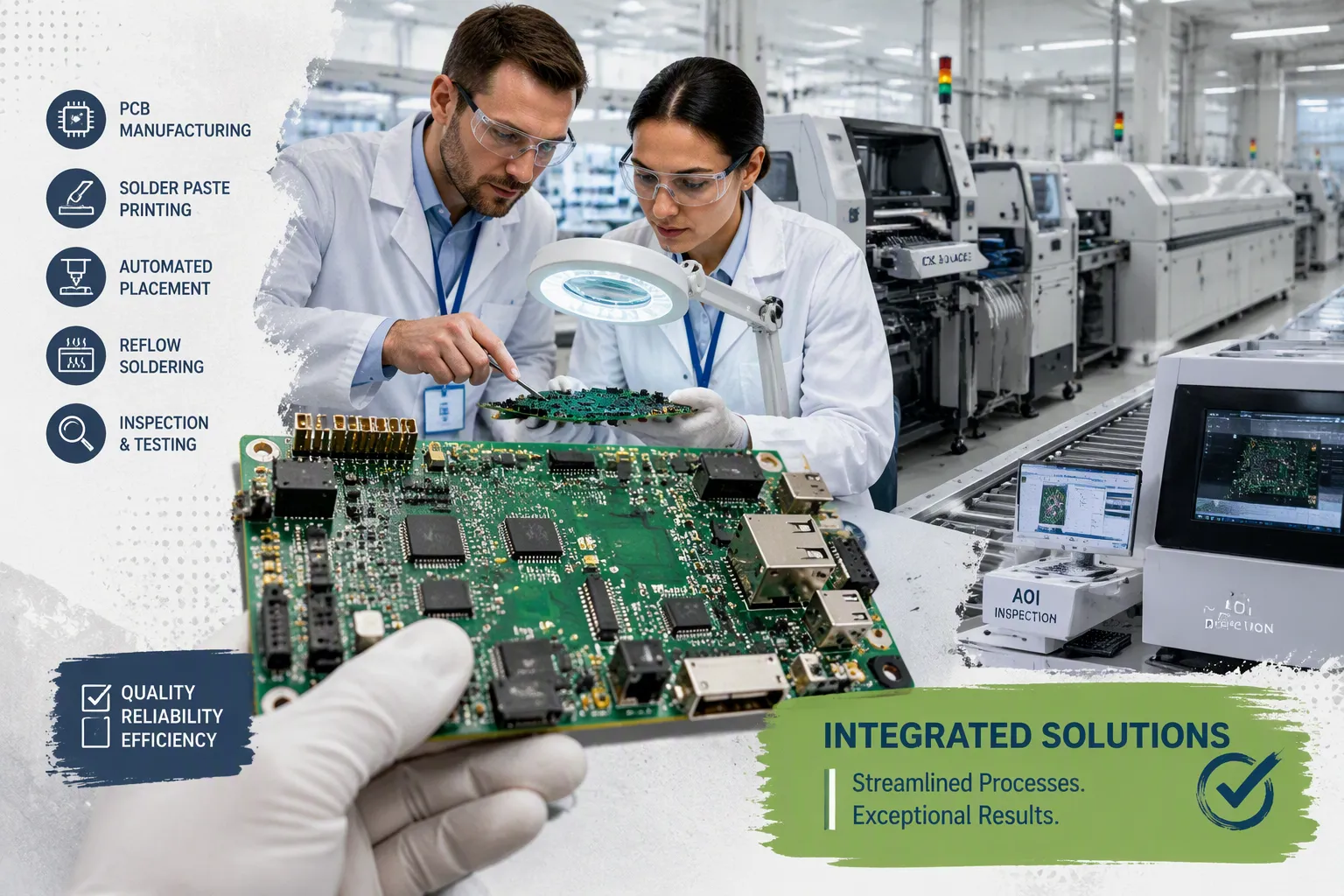
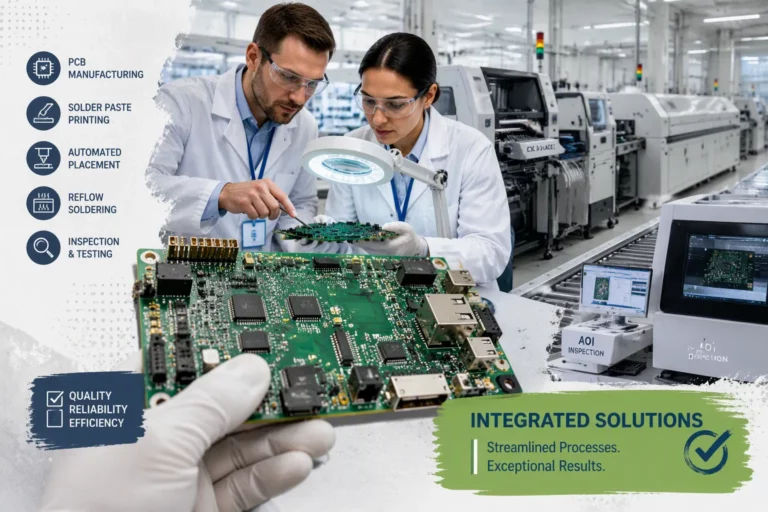
A one-stop complex pcb solution brings design, fabrication, procurement, assembly, and testing together under one provider. This model gives you easier management, lower costs, better quality control, faster turnaround, and expert support. A multi-vendor approach splits these steps across different companies. That setup creates many contracts, follow-ups, and logistical problems. The product moves between facilities, which increases lead time and risks losing parts. Communication problems come up across language and time-zone barriers. A one-stop service keeps fabrication and assembly in-house. This lowers errors and speeds up production. Teams get more time for design improvement instead of vendor coordination. The integrated model wins on risk reduction and resource freedom.
Key Takeaways
- One company takes care of design, making, putting together, and testing. This cuts the time spent coordinating by 80 percent.
- One-stop service lowers the total cost of ownership. Buying in bulk cuts material costs by 8 to 18 percent. You also save on shipping and office work.
- Unified standards and in-house testing improve quality. AI-driven AOI finds defects with 95 percent accuracy. First-pass yield goes above 95 percent.
- Combining all steps into one system cuts production time by 30 to 50 percent. Finding problems early stops delays. You get to the market faster.
- Direct help from engineers fixes problems fast. One team handles the whole process. This lowers rework and speeds root-cause analysis.
Streamlined Management With a One-Stop Service
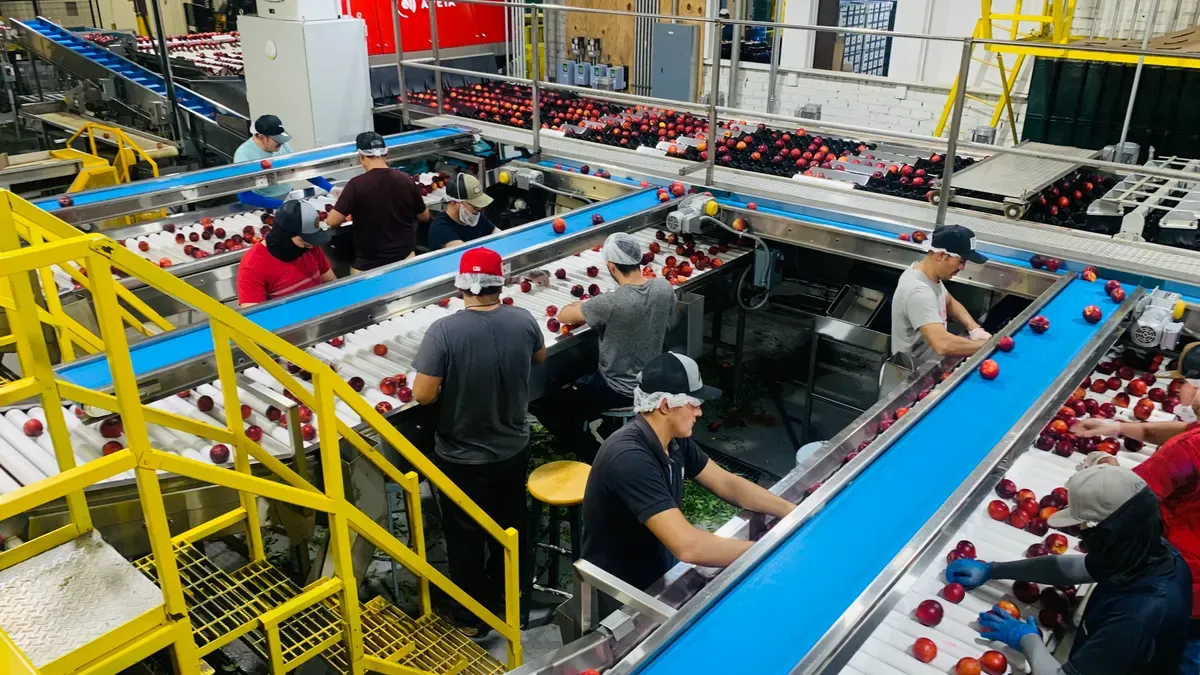
A one-stop service merges three connected phases under one provider. The same team handles pcb fabrication, manages parts procurement, and oversees pcb assembly. Each phase informs the next without delay. When fabricators understand assembly needs upfront, they adjust trace widths and pad geometries to match pick-and-place equipment correctly. When procurement teams know fabrication schedules precisely, they time component deliveries to avoid costly storage issues or material shortages. This integration prevents the friction that commonly plagues multi-vendor projects.
Consider a mid-sized electronics company that outsourced design, fabrication, and assembly to three separate vendors. Each vendor performed well individually. Coordination between them became the bottleneck. Small technical questions about trace width alignment with fabrication capabilities and component placement optimization for pick-and-place triggered repeated back-and-forth emails and clarifications. Each issue required cross-vendor coordination, which consumed time and stretched the timeline from weeks into months. The product ultimately missed its market window. This example shows how fragmented management creates compounding delays that derail projects.
Single Point of Contact
One person or team manages every stage of production. Design questions, fabrication changes, component availability, and assembly scheduling all go through a single channel. Issues resolve quickly because the contact sees the entire production picture. There is no need to call three different companies to solve one problem. The frustration of delayed responses and fragmented information disappears.
The administrative savings are substantial. Using a single contact for design, sourcing, and assembly reduces coordination time by 80 percent. That saving equals 20 or more hours per month. Teams redirect those hours to product improvement rather than vendor follow-up. Turnkey assembly eliminates the need to coordinate with multiple suppliers, manufacturers, and distributors simultaneously.
A real project demonstrated this efficiency clearly. The real challenge involved keeping labels, harnesses, housings, conformal coating, and export packaging aligned as one manufacturable project. Over about eight years, the turnkey model helped the project move from prototype-stage support to repeat production of approximately 10,000 units per year. Tighter traceability, better process control, and fewer supplier handoff problems resulted from a single managed process rather than multiple separate suppliers.
Fewer Handoffs, Less Risk
Each handoff between vendors creates a place for problems to hide. Physical and procedural handoffs introduce errors. Shipments between facilities risk damage to sensitive boards. Incoming inspections at each stage add time and cost. Scheduling coordination across different supplier calendars creates delays that compound across the production timeline.
Automation demonstrates the impact of fewer handoffs directly. Manual assembly defect rates range from 5 to 10 percent. Automated processes with integrated testing reduce defect rates to 0.1 to 0.5 percent. Early detection through solder paste inspection and automated optical inspection prevents defects before they can propagate to later stages. Fewer handoffs through automation lower defect rates dramatically.
Multi-vendor approaches carry many additional risks beyond handoff errors. Design feedback often arrives after layouts finalize, forcing expensive rework. Component availability issues surface late in the build. Assembly constraints conflict with electrical or mechanical intent. Responsibility shifts between suppliers during root-cause analysis, slowing problem resolution. A one-stop complex pcb solution eliminates these risks. The same team controls standards from fabrication through assembly. Tolerance management stays consistent across every stage. Engineering takes a proactive role instead of acting as a middleman between disconnected suppliers. The result is fewer delays, lower defect rates, and smoother project execution.
Cost Efficiency Across the Production Run
Lower Logistics and Admin Costs
A one-stop service handles all office tasks related to the assembly process. Checking suppliers, quality checks, and shipping all happen at the provider’s location. This less office work lets companies focus on new ideas and growth. One contact person saves time and money on talking to many suppliers. Simpler steps mean less work for contract talks, orders, and bills. Clear responsibility stops suppliers from blaming each other. Seeing the whole project and checking progress makes management easier. One-stop services can reduce project management time and costs by up to 40%.
Total cost of ownership shows a better picture than just the unit price. The table below compares key factors between turnkey and multi-vendor methods.
| TCO Factor | Impact of Turnkey / One-Stop vs. Multi-Vendor |
|---|---|
| Administrative overhead | Reduced |
| Defect rates | Lower |
| Time-to-market | Faster |
| Inventory carrying costs | Eliminated |
| Overall economics | Often better, especially when project time is valuable |
Q: Is one-stop PCB assembly more expensive?
A: Sometimes the unit price is a bit higher than if you manage every vendor yourself. But the total cost of ownership (TCO) is almost always lower. You save on shipping between vendors, lower the chance of waste, and free up your engineers’ time.
The hourly rate of an engineering team is often higher than the extra cost added by a one-stop shop. Using that time for design instead of searching for parts saves more money.
Better Pricing Through Integrated Sourcing
Turnkey providers combine buying across many customers. This gives them better bargaining power with part suppliers than individual companies have. Bulk discounts lower the cost of parts for the buyer. A real case study about moving from self-sourcing to a pre-assembly model says that buying in bulk and using less labor can cut material costs by 8% to 18%.
Integrated sourcing also handles parts buying in several ways. It buys parts globally through direct deals with suppliers for low-cost buying. It picks alternative parts to replace old, outdated, or expensive ones. It manages part life and availability to avoid supply chain problems. Bulk buying and cost savings come from negotiating volume discounts and getting the best price.
A contract manufacturer uses its bulk buying power to lower the cost per part below what design teams can get for new product launches or small production runs.
Experienced providers find different parts when the listed parts are not available or too expensive. They also see chances to cut BOM cost without hurting performance. These ways lower the total cost of buying rare and high-value parts in large amounts. A complex pcb solution with combined parts buying gives better cost predictability and less risk during part shortages.
Quality Control for Every Complex PCB Solution

Unified Standards From Design to Test
Quality begins before building starts. A one-stop provider uses one set of rules for circuit board design, building, assembly, and testing. This single approach stops the gaps that show up when different vendors each follow their own rules. Design for Manufacturing (DFM) is a key part here. DFM is a proactive way to improve PCB layout so it fits building skills. Engineers check if building, assembly, testing, and validation line up around one clear release package. A clean Gerber or IPC-2581 export alone does not prove it can be built. Stackup, process branch, notes, board edge, and test posture must all be clear. A board can pass building review yet fail assembly support or test access. One-stop providers catch these issues early, before layout removes practical access for in-circuit test.
Certifications support these unified standards. A potential partner should hold ISO 9001, which proves quality management systems are in place.
| Certification | Relevance to a one-stop complex PCB assembly provider |
|---|---|
| ISO 9001:2008 / ISO 9001:2015 | International quality management standard ensuring consistent processes and customer satisfaction across PCB fabrication and assembly. |
| IATF16949 | Automotive quality management standard requiring manufacturers to ensure product quality, security, performance, and reliability. |
| UL | Certification for circuit boards and power supplies requiring rigorous testing to reduce product hazards and meet safety standards. |
| RoHS | Restriction of hazardous substances certification, indicating compliance with environmental and material safety requirements. |
In-House Testing and Traceability
In-house testing keeps every check step under one roof. Full check stacks, including AOI, X-ray, ICT, and functional test, greatly raise first-pass yield compared to visual or sampling-only methods. In-house testing adds 10-30% to upfront cost but cuts costly rework and field failures. AI-driven AOI systems reach defect detection accuracy above 95% and boost first-pass yield from about 85% to over 95%. The order and mix of check steps matter as much as the tools themselves. In-house flying probe testing gathers detailed pass-fail and parametric data at each test point. This data-driven approach lets makers make targeted process fixes that raise first-pass yield without special test fixtures. By finding opens, shorts, and parametric deviations early, the feedback loop cuts rework and boosts overall yield.
Traceability stretches this control to every part. Providers use standards such as ISO 13485 for medical devices, AS9100 for aerospace, ITAR for defense work, and IPC Class II and III for high-reliability electronics. Barcode and QR code systems label each PCB for real-time tracking. A Manufacturing Execution System (MES) links parts, processes, and check results into one database. Full traceability tracks every single part and process step for each board. The payoff shows during a recall. Without traceability, a maker might recall all 8,000 parts from production weeks KW06–KW10, with a response time of 4 days and a precision rate of 5%. With traceability, the same recall covers 480 parts, resolves in 2 hours, and reaches an 83% precision rate. Cost drops from €3.2 million to €320,000. Testing and validation data feeds right into this system, closing the loop between check and traceability.
Faster Turnaround and Expert Support
Compressed Timelines Through Integration
A one-stop model removes the waiting periods that happen between different vendors. When quick-turn PCB fabrication and in-house SMT assembly work together, total production time can drop by 30–50%. Material procurement and PCB fabrication often take up the largest part of the schedule, not assembly itself. Integrated providers watch lead-time trends, pricing shifts, and lifecycle changes across every active BOM. This early warning system stops delays before they reach the production floor. A March 2026 semiconductor lead-time spike almost doubled in one month and surprised many teams. Teams that spot upward trends early can negotiate allocation or qualify alternatives. Late responders pay spot premiums instead.
Several practical factors drive these shorter timelines:
- Consigned manufacturing lets assembly start sooner, with timelines dropping to about 3–4 weeks depending on complexity, volume, and testing.
- Talking with the manufacturing partner early uncovers sourcing and scheduling risks before they grow.
- Complete documentation, including accurate BOMs and Gerber files, lets manufacturers flag issues before production starts.
- Planning for component availability and approving alternate components makes the schedule more predictable.
Design choices matter too. Teams should simplify the design, use standard materials, improve the PCB layout for DFM compliance, and pick a capable factory with steady scheduling. A complex pcb solution that brings these steps together keeps every phase moving without idle gaps.
Engineering Guidance When Issues Arise
Problems come up in every build, and how fast you respond decides the outcome. A one-stop provider gives you direct access to engineers who understand the whole production picture. They see the design intent, the fabrication limits, and the assembly needs all at once. This clear view makes root-cause analysis much faster. A multi-vendor setup forces teams to pass questions between suppliers, and each handoff adds days.
Integrated engineering support also makes testing and validation stronger. Engineers adjust the test strategy when a design change affects access points or signal integrity. They suggest process fixes based on flying probe data and AOI results. This feedback loop raises first-pass yield and cuts rework. The same team that manages assembly and integration owns the final test results, so accountability never shifts. When a defect shows up, one group traces it from bare board to finished unit without waiting on outside vendors. That single-thread ownership turns possible delays into quick, documented fixes.
The good things about a one-stop service build on each other. Smoother management means fewer delays. Lower costs free up money. Consistent quality control cuts down on rework. Faster turnaround helps you catch market chances. Expert help fixes problems before they get big. All together, these gains give teams an edge over others. They lower risk and free up engineers to create new things.
Picking the right partner is important. Companies should check process control, quality habits, and whether production is ready. They should look at certifications like ISO 9001, AS9100D, and ISO 13485. They should make sure engineering support runs from quote to production. A partner with the right skills turns complex work into an advantage you can handle.
FAQ
What does a one-stop complex PCB assembly solution include?
One provider takes care of design review, fabrication, getting parts, assembly, and testing. The same team makes sure quality standards are the same from bare board to finished unit. This setup gets rid of the handoffs that slow down projects using many vendors. It also keeps traceability and quality checks all in one place.
How much time can a one-stop model save?
Having fabrication and assembly in one place can cut total production time by 30 to 50 percent. Consigned manufacturing can bring timelines down to about 3 to 4 weeks, depending on how complex the board is, how many you need, and what tests are required. Checking part availability early also stops delays before they happen during production.
Does one-stop assembly cost more per unit?
Sometimes the price for one unit is a little higher than using many different vendors. But the total cost of ownership is almost always lower. Teams save money on shipping between vendors, cut waste, and free up engineer time. Buying parts in bulk can cut material costs by 8 to 18 percent.
Which certifications should a partner hold?
A good partner should have ISO 9001 for quality management. For automotive work, they need IATF16949. Medical devices need ISO 13485, and aerospace projects need AS9100. High-reliability electronics use IPC Class II and III standards. These certifications show the company has steady processes for fabrication and assembly.
How does in-house testing improve quality?
In-house testing puts AOI, X-ray, ICT, and functional checks all in one place. AI-driven AOI systems can find defects with over 95 percent accuracy. They also raise first-pass yield from about 85 percent to over 95 percent. Traceability systems then connect every part and process step to one database.