 English
 Arabic
 Chinese (Simplified)
 Dutch
Dutch French
 German
 Italian
 Portuguese
 Russian
 Spanish
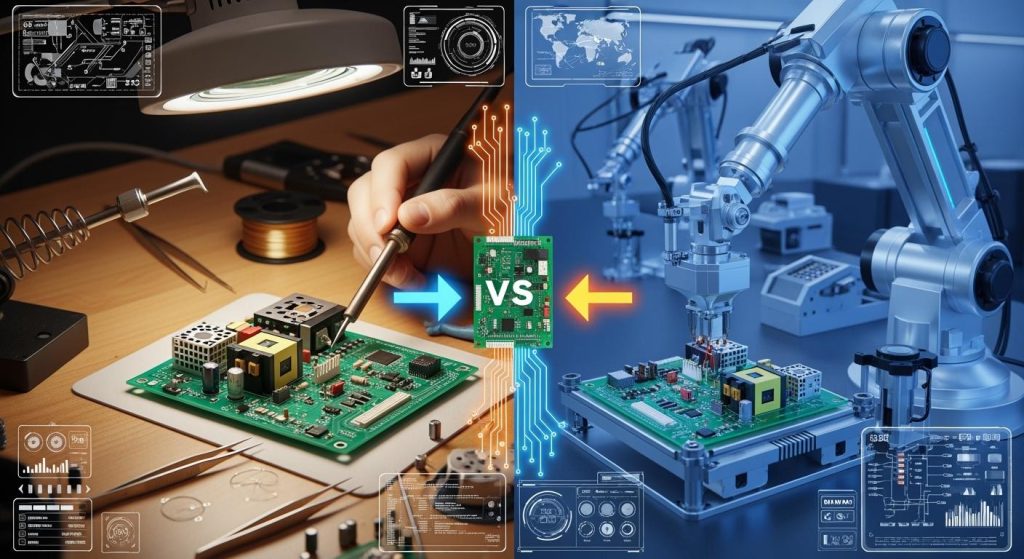
You need to pick the right power supply pcb assembly method for your project. Think about how many you need, how hard the design is, how much money you have, how much time you have, and what quality you want. For example, manual assembly is good for small amounts, tricky designs, or if you do not have much money. Automated assembly is best if you need to make a lot or finish fast. The table below shows how each thing can change your choice:
| Factor | Manual Assembly | Automated Assembly |
|---|---|---|
| Production Volume | Good for small amounts or test pieces | Best for making a lot at once |
| Design Complexity | Helps with tricky or changing designs | Works for easy, steady designs |
| Budget Constraints | Cheaper ways work better with manual | More money means you can use machines |
| Timeline | Fine if you have lots of time | Makes things much faster |
| Quality Standards | Lets people check quality by hand | Needs more checks for good quality |
Both pcb assembly methods have their own good points, so choose what works best for your project.
Key Takeaways
- Pick manual assembly for small jobs or prototypes. You can change the design fast and fix mistakes right away.
- Use automated assembly if you need to make many at once. Machines make sure each one is the same and save time.
- Think about how much money you have. Manual assembly costs less for small groups, but automated assembly saves money for big orders.
- Look at how hard your design is. Manual assembly works better for hard designs. Automated assembly is best for easy, repeated jobs.
- Always check your schedule. Automated assembly is quicker, so it is good for rush jobs. Manual assembly takes longer but lets you change things more.
Power Supply PCB Assembly Methods Compared
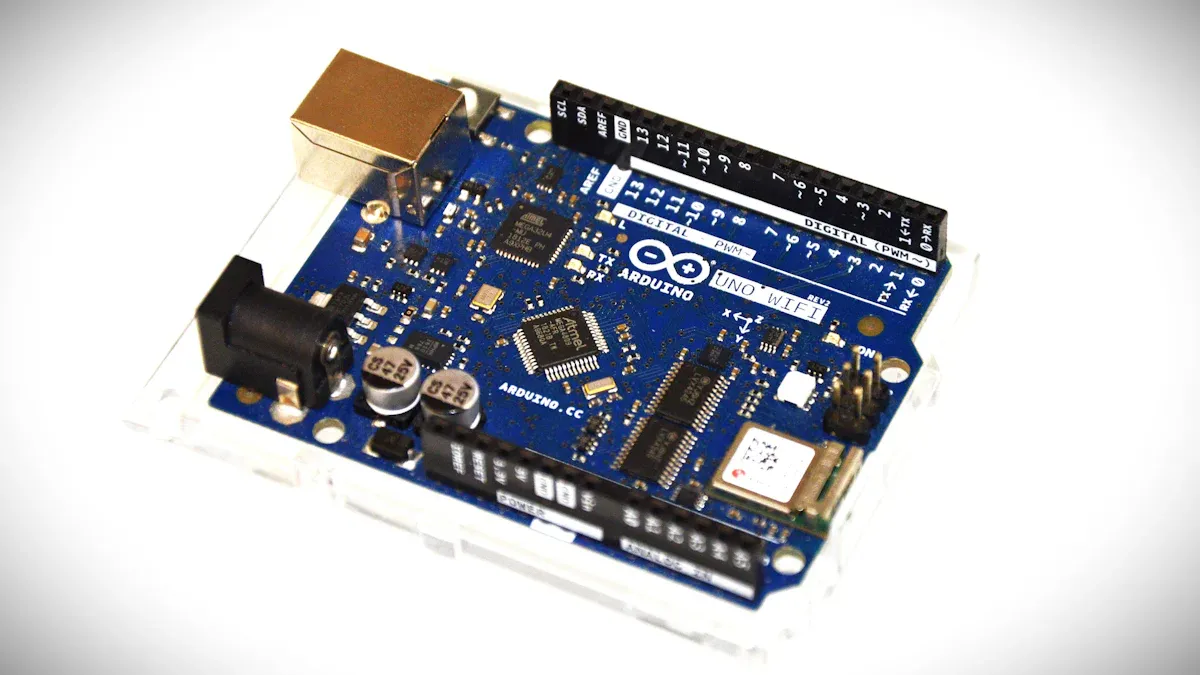
When you pick a power supply pcb assembly method, you should know how manual and automated pcb assembly are different. Each one is good for certain projects. They both have their own strengths.
Manual PCB Assembly Overview
Manual pcb assembly means people build the circuit board by hand. Workers get all the parts and tools ready before they start. They use a Bill of Materials (BOM) to make sure nothing is missing. Every part is put on the board and soldered by hand. Workers check their work with special tools. They also test the board to see if it works right. This way is good for custom or small projects. You can change the design fast and fix problems as they happen.
- Get all parts and tools ready first.
- Use a BOM to keep track of parts.
- Put and solder each part by hand.
- Check and test the board for mistakes.
Automated PCB Assembly Overview
Automated pcb assembly uses machines to build boards quickly and accurately. Pick-and-place machines put parts on the board very fast. Solder paste printing helps make strong joints. Reflow soldering heats the board to connect everything well. Machines check for mistakes to keep quality high. This way is best for big orders and projects that need the same design every time. Automated assembly can have very few mistakes, sometimes only 10-50 parts per million.
- Robots put parts on fast and in the right place.
- Solder paste printing and reflow soldering make strong joints.
- Machines check for problems early.
- Works well and is steady for big projects.
| Feature | Manual PCB Assembly | Automated PCB Assembly |
|---|---|---|
| Speed | Slower, good for small jobs | Fast, best for big jobs |
| Cost (per unit) | Costs more for big orders | Costs less for big orders |
| Quality | Depends on worker skill | Very steady, fewer mistakes |
| Flexibility | Easy to change or fix | Best for same designs |
| Volume | Small batches | Makes lots at once |
Tip: If you want to make many boards fast and cheap, automated assembly is best. For custom or small projects, manual assembly gives you more control.
Manual PCB Assembly Pros and Cons
Advantages of Manual PCB Assembly
You can use manual assembly when you want more control over your project. This method lets you change designs quickly. If you need to build a prototype or a small batch, manual pcb assembly works well. You can fix mistakes right away. Workers can check each part and make sure everything fits. You can use special tools to test the board and improve soldering quality. Manual assembly gives you flexibility. You can use different parts and make changes without waiting for machines.
- You can change designs fast.
- You can fix problems as they happen.
- You can build small batches or prototypes.
- You can use many types of parts.
- You can check each board by hand.
Note: Manual pcb assembly helps you when you need custom boards or want to test new ideas.
Limitations of Manual PCB Assembly
Manual assembly has some limits. You may see more mistakes because people can get tired or miss small details. If you need to build many boards, manual work takes longer and costs more. You may find it hard to keep the same quality for every board. Some parts, like COTS components, can cause problems. These parts may have features you do not need or use older chipsets, which can hurt battery life. Large modules can make your board less compact. Sensors may not be accurate enough for health tech. Thermal management can be tricky because boards may not fit your enclosure well. Fixed RF parts can limit range and compliance with standards. You may also have trouble getting certification since you cannot control the inside design or software. If you need to meet strict standards, manual assembly may not work.
- You may see more errors and slower production.
- You may pay more for big orders.
- You may have trouble with design flexibility.
- You may face issues with battery life and sensor accuracy.
- You may struggle with thermal management and RF range.
- You may find it hard to get certification.
Tip: If you need steady quality, fast production, or must meet strict standards, manual assembly may not be the best choice.
Automated PCB Assembly Pros and Cons
Benefits of Automated PCB Assembly
Choosing automated pcb assembly gives many good points for your project. Machines build boards very fast and can make many at once. This helps finish big orders quickly. The quality stays the same because machines do the same steps every time. This means better quality control and fewer mistakes than manual work.
- You can make more boards faster. Machines do not get tired like people.
- Quality is better and steady. Machines put parts in the right place every time.
- You can make small and complex boards. Machines handle tiny parts well.
- Machines collect data during work. This helps find problems and improve quality.
- Automated assembly saves materials and energy. This helps the environment and cuts costs.
- Workers focus on checking quality, not repeating tasks.
Automated pcb assembly gives steady and exact results. This helps meet strict rules and make reliable products.
Drawbacks of Automated PCB Assembly
Automated assembly has some problems too. You must set up machines right or parts may go in wrong places. If feeders are loaded wrong, parts can be misplaced. Bad board design, like missing marks, can confuse the machine and cause errors.
- Wrong feeder setup causes parts to be placed wrong.
- Poor board design can make machines place parts incorrectly.
- Not cleaning or fixing machines lowers their accuracy.
- Even a tiny mistake, like 0.1mm, can break connections.
- Going fast and making many boards can lower accuracy.
- Different parts need special machine settings.
- Machines must be calibrated well. Bad calibration causes repeated errors.
- Keeping tight placement is hard without good systems.
You must watch quality closely with automated assembly. Machines can repeat the same mistake many times if problems are not found early.
Choosing the Right PCB Assembly Method
To pick the best pcb assembly method, look at your needs one by one. Match your project’s size, design, money, time, and quality goals to the right way. Use this guide to help you choose.
Project Volume and Scale
First, think about how many boards you need. If you only need a few or want to test ideas, manual assembly gives you more control. You can change things fast and fix mistakes as you work. If you need a lot of boards, automated assembly is better. Machines can make thousands of boards quickly and the same every time. This saves time and money as you order more. Automated pcb assembly lets you make more boards without losing quality.
PCB Complexity and Component Types
Check your board’s design and what parts you use. Manual pcb assembly is good for special layouts, repairs, and unique designs. Skilled workers can handle tricky parts and make changes fast. Automated machines are best for lots of small or hard parts, like tiny chips. These machines follow set steps and keep the quality the same. If your board has many different parts or needs quick changes, manual ways give you more freedom. If you want all boards to be the same with advanced parts, automated ways are better.
- Manual soldering is good for small projects and custom boards.
- Automated machines are best for bigger jobs and tricky boards.
- Manual ways let you change designs easily.
- Automated assembly uses set steps for the same results.
Budget and Cost Considerations
Think about your money and check costs. Manual assembly costs less to start, which helps for small jobs. If you need more boards, automated assembly saves money. Machines use less labor and materials for big orders. The table below shows how costs change as you order more:
| Project Size | Manual Assembly Cost (per unit) | Automated Assembly Cost (per unit) |
|---|---|---|
| Small (under 100 units) | $50 to $100 | N/A |
| Medium (100 to 500 units) | N/A | Break-even point around 100 to 500 units |
| Large (over 1000 units) | N/A | $5 to $10 |
Manual assembly is best for small batches. Automated assembly saves money for big orders. Always check when it is cheaper to use machines.
Timeline and Speed
Deadlines are important. Manual assembly takes longer, especially for big jobs. It works for testing or if you have lots of time. Automated pcb assembly is much faster. Machines can put over 60,000 parts on boards each hour. This makes automated ways best for fast jobs and big orders.
| Criterion | SMT Assembly | THT Assembly |
|---|---|---|
| Assembly Speed | > 60k CPH on modern pick-and-place; fully automated reflow | 3 k–4 k CPH; often manual insertion + wave or selective solder |
If you need boards quickly, automated assembly gives you the speed you want.
Quality and Reliability
You want your boards to work well every time. Manual assembly depends on how careful workers are. This can cause small mistakes, mostly with big batches. Automated assembly uses machines to keep quality steady. You get the same quality and strong checks. Automated ways help you meet tough rules. If you need high trust, automated pcb assembly is safer.
Flexibility and Customization
Manual ways let you change designs, swap parts, and fix problems right away. This is good for testing, custom boards, or new ideas. Automated assembly is best for projects with set designs and repeat steps. If you want to try new layouts or use special parts, manual assembly gives you more choices. If you want every board to be the same, automated ways are better.
Decision-Making Checklist
Use this checklist to match your project to the right pcb assembly way:
- Check your Bill of Materials (BOM) for all info.
- Make sure you have enough extra parts to stop delays.
- Look for any parts that are hard to get before you start.
- Test other parts to meet quality rules.
- Watch for price drops on bigger orders.
- Track end-of-life notices for your parts.
- Add import costs to your budget.
Tip: Go over each step before you pick a way. This helps you avoid delays and keeps your project moving.
By following these steps, you can pick the best power supply pcb assembly way for your needs. You will get the right mix of cost, quality, and speed for your project.
Real-World Scenarios for Power Supply PCB Assembly
Low-Volume and Prototype Projects
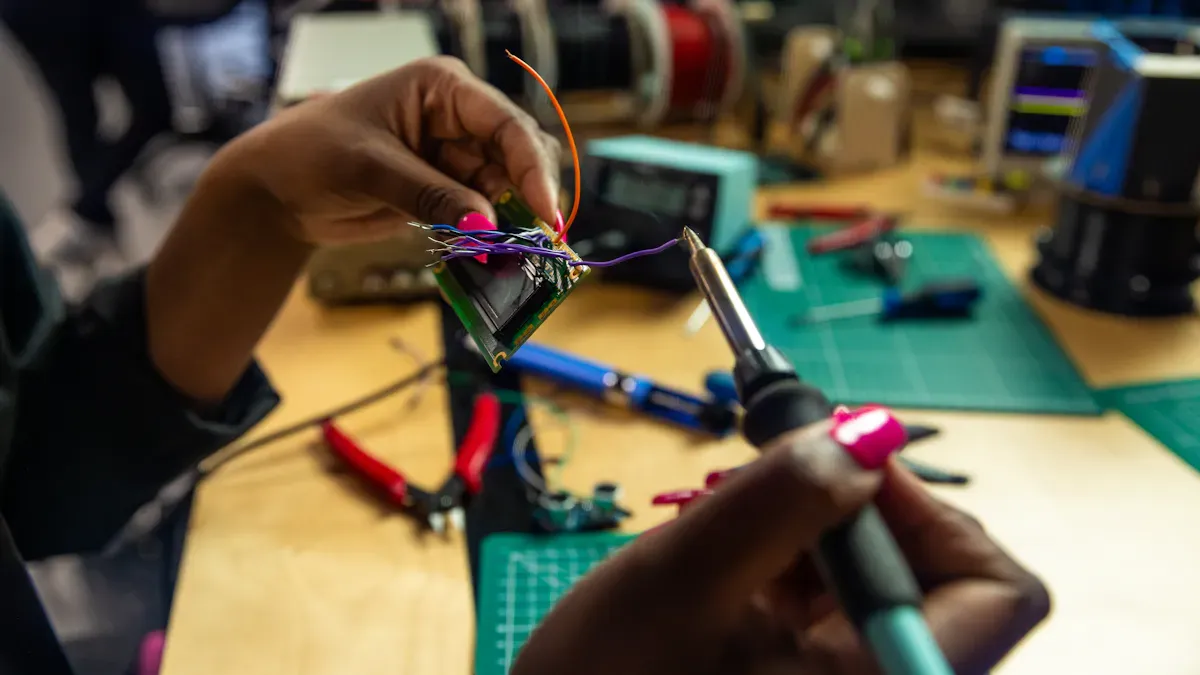
Sometimes you only need a few boards. This is called a prototype or small batch. You use these to test your design before making lots of boards. Building just a few helps you see if everything works right. Manual assembly is good here because you can fix mistakes fast. You can also swap out parts easily. People use this way during design and engineering. Sometimes, both surface-mount and through-hole parts are used together. Here are some examples:
| Scenario | Description |
|---|---|
| Engine Control Units (ECUs) | Use mixed assembly with SMT for small parts and through-hole for strong connectors. |
| Programmable Logic Controllers (PLCs) | Combine SMT for processing and through-hole for durable terminal blocks. |
| Switching Power Supplies | Mix SMT for high-frequency circuits and through-hole for parts that need better heat control. |
- Prototype pcb assembly lets you try out ideas in small numbers.
- You use it to check if your design works.
Tip: Manual assembly lets you change things quickly and stay in control.
High-Volume Production
If you need lots of boards, use automated pcb assembly. Machines work fast and make the same thing every time. This helps you finish big orders on time. Machines can also handle tricky designs with many tiny parts. Here is how manual and automated ways compare for big jobs:
| Aspect | Manual Assembly | Automated Assembly |
|---|---|---|
| Speed | Slower, needs more workers | Fast production |
| Quality Control | Based on worker skill | Consistent and precise |
| Suitability | Good for low amounts, complex | Good for high amounts, steady |
- Automation makes things faster and keeps quality high.
- Machines test boards quickly and the same way each time.
- You can find and fix problems before sending boards out.
Note: Automated pcb assembly is best when you need lots of boards.
Specialized and Irregular Components
Sometimes you need to use special or weird-shaped parts. Manual assembly is better for big, heavy, or odd parts. Workers can put these parts in the right spot. Automated assembly is better for small, close-together parts that need to be very exact. For example, DDR4 DIMM connectors are hard to put in by hand because the pins are tiny and close. Machines can do this job better.
- Manual assembly works best for large or heavy parts.
- Automated assembly is better for small, exact parts.
Rapid Iteration and Prototyping
You may want to make your product better, fast. Rapid iteration means you build, test, and change your design many times. Fast pcb assembly helps you get new products out sooner. You can change your design when you get feedback. This also saves money by finding problems early. Here are some main benefits:
| Advantage | Description |
|---|---|
| Reduced Time-to-Market | Fast assembly helps you launch products faster. |
| Increased Flexibility | You can change your design quickly and easily. |
| Cost Efficiency | You save money by fixing problems early and reducing extra stock. |
- You can test many versions and pick the best one.
- Early tests help you reach your quality goals and avoid big mistakes.
Tip: Rapid prototyping helps you stay ahead in a fast market.
Decision Guide for PCB Assembly
When to Choose Manual PCB Assembly
Pick manual assembly if you want more control. Manual pcb assembly is best for small batches or prototypes. If you need to test new ideas, manual ways let you do that. You can change your design often and fix mistakes fast. Manual assembly lets you use special parts that machines cannot handle. It is good when you have a small budget for your project. Workers check each board by hand and find problems early.
- Use manual assembly for custom designs.
- Pick manual if you only need a few boards.
- Choose manual to try different parts or layouts.
- Manual assembly helps you make changes fast.
Tip: Manual assembly is great for projects that need hands-on work and flexibility.
When to Choose Automated PCB Assembly
Automated pcb assembly is best when you need many boards fast. Machines work quickly and keep the quality the same for every board. If your project needs high-speed production, automated assembly saves time and money. Pick automated if you want fewer mistakes and steady results. Automated systems are good for big orders and simple, repeatable designs.
Here is a table to show the main reasons to pick automated pcb assembly:
| Advantage | Description |
|---|---|
| High-Speed Production | Automated assembly lines can make lots of PCBs much faster. |
| Consistency and Precision | Automated systems lower mistakes and keep quality steady. |
| Cost-Effective for Large Productions | High setup costs are balanced by less labor and more boards in big runs. |
- Pick automated for big projects with many boards.
- Choose automated if you want every board to be the same.
- Automated assembly is best for saving money on large orders.
Note: Automated pcb assembly helps you meet strict quality rules and finish your project on time.
You can pick the best power supply pcb assembly method by thinking about what your project needs. Manual assembly lets you change things and gives you more control. Automated assembly is faster and makes fewer mistakes. Look at this table to see how both ways are different:
| Aspect | Manual Assembly | Automated Assembly |
|---|---|---|
| Flexibility | High | Low |
| Time Efficiency | Slow | Fast |
| Error Correction | Easier by hand | Fewer mistakes |
Think about how hard your board is to build. Count how many boards you need. Check how much money you have. Decide how quickly you want your boards done. If you are not sure, ask an expert for help before you begin.
FAQ
What is the main difference between manual and automated PCB assembly?
Manual assembly means people put parts on and solder them. Automated assembly means machines do these jobs instead. Manual work gives you more control over each board. Machines make boards faster and keep the quality the same.
Can you mix manual and automated assembly in one project?
Yes, you can use both ways together. Machines can put on most parts. People can add special or hard parts by hand. This is helpful if you have both normal and unique parts.
How do you know which assembly method to choose?
Think about how many boards you need. Look at your design, money, and time. Use manual assembly for small jobs or custom boards. Pick automated assembly for big orders or when you need boards fast.
Does automated assembly always cost less?
No, it does not always save money. For small batches, setup costs make machines expensive. You only save money with machines if you build lots of boards.
What quality checks should you use for PCB assembly?
You should check every board for mistakes. Use your eyes to look for problems. Do electrical tests and use machines to inspect boards. These steps help you find mistakes early and keep boards working well.