 English
 Arabic
 Chinese (Simplified)
 Dutch
Dutch French
 German
 Italian
 Portuguese
 Russian
 Spanish
How to Select the Right Large PCB Manufacturer for Your High-Volume Needs
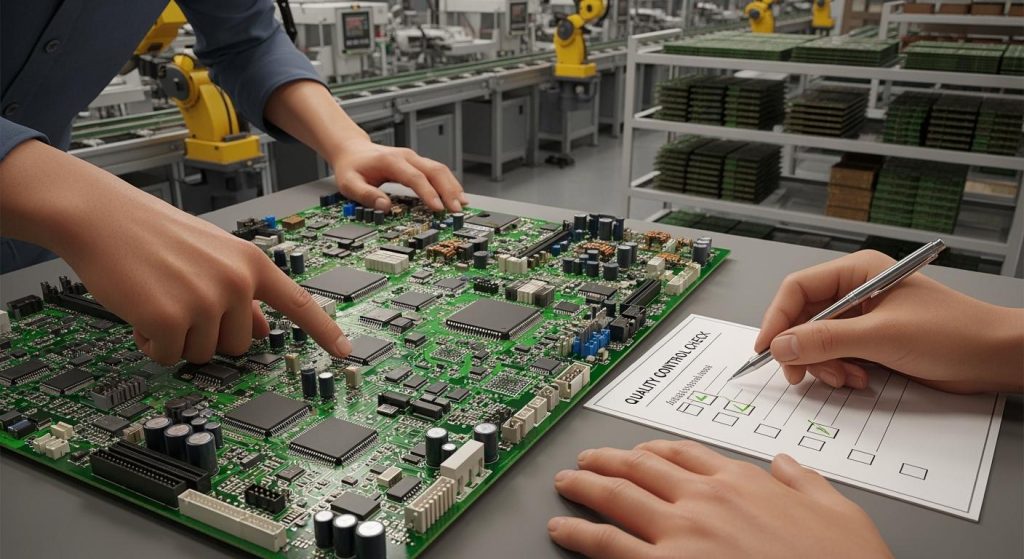
Choosing a large PCB manufacturer for high-volume jobs needs careful thought about quality, size, and skill. If you do not look at these things, you can have big problems like product recalls, losing money from bad boards, and hurting your company’s name. Many companies make mistakes because they only care about price or new technology, not about trust and good basics in making things. The industry shows that harder designs and fast growth in advanced PCBs need strong quality checks. When you pick a pcb manufacturer, you must have a clear plan to check certifications, how much they can make, cost, delivery, and help. This way, you can feel sure you are picking a pcb manufacturer that is right for you.
Key Takeaways
- Always look for industry certifications like ISO 9001 and IPC-A-610. These show the manufacturer follows quality rules.
- Strong quality control steps, like Automated Optical Inspection, help find problems early and save money.
- Check the manufacturer’s production skills and experience. A trusted partner can manage big orders and tough designs.
- Make sure the manufacturer follows rules for materials. This keeps your products safe and protects people.
- Good communication and customer support are very important. A helpful manufacturer fixes problems fast and keeps projects moving.
Quality and Certifications for Large PCB Manufacturer

Industry Standards and Certifications
When you pick a large pcb manufacturer, you should check their quality and certifications. These certifications mean the company follows important rules and makes good products. If you want high-quality pcbs, you need a printed circuit board manufacturer with the right certifications.
Here is a table of the most recognized certifications in the industry:
| Certification | Description |
|---|---|
| ISO 9001 | Quality Management System ensuring consistent product quality and customer satisfaction. |
| ISO 14001 | Environmental Management System focusing on eco-friendly practices in PCB manufacturing. |
| ISO 13485 | Quality management system for medical device manufacturing. |
| IPC-A-600 | Acceptability criteria for PCB fabrication with classifications for different product types. |
| IPC-A-610 | Quality standards for PCB assembly, ensuring the final product meets quality requirements. |
| IPC-2221 | General design requirements for printed circuit boards. |
| IPC-6012 | Qualification and performance criteria for rigid PCBs. |
You should ask about these certifications when you choose a pcb manufacturer. For example, companies with ISO 9001 usually have fewer bad boards. Companies without certifications often have more mistakes because they do not follow strict rules. Certifications like ISO 13485 and AS9100 are very important for medical and aerospace jobs. These certifications make sure the manufacturer uses strong checks and gives great quality every time.
Tip: Always check if your printed circuit board manufacturer has the certifications your industry needs. This step helps you avoid big mistakes and makes sure your products are safe and work well.
Quality Control and Testing
Great quality in pcb manufacturing comes from strong quality control. You want your circuit board manufacturing partner to use good testing and checking at every step. This helps find problems early and keeps your products working well.
Here are some standard quality control processes used by top manufacturers:
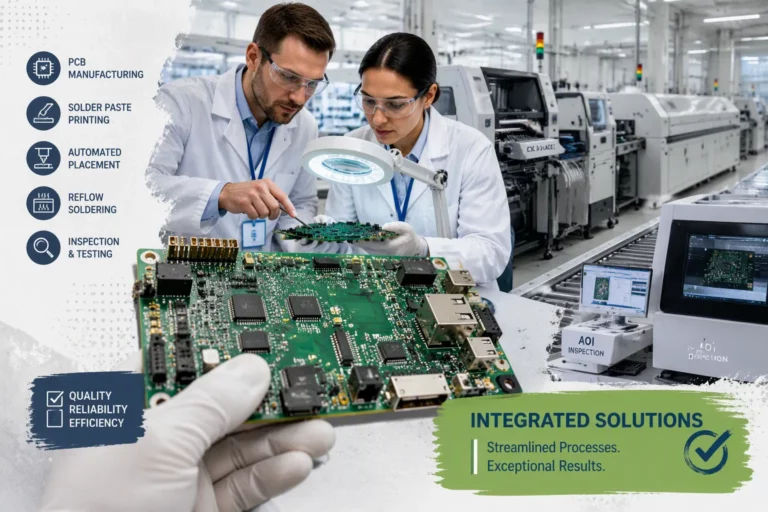
- Automated Optical Inspection (AOI) Testing
- Microscopic Examination
- Impedance Testing
- Electronic Test
- Final Product Inspection
These steps make sure each board matches your pcb design and is easy to make. Many manufacturers also use in-line testing. Automated inspection and testing systems find mistakes early and lower human error. AOI, for example, looks for wrong parts and lets the team fix problems fast. This way, more boards turn out right and costs go down.
You can see more details in the table below:
| Process | Description |
|---|---|
| Lamination | Slicing test, thermal shock test, and copper foil adhesion test are performed. |
| Drilling | Control of drill tips’ service life and tests for hole roughness and position. |
| Copper Plating | Backlight test checks the thickness of plated copper. |
| Electroplating | CMI700 checks surface and hole wall copper thickness. |
| Developing and Etching | Width and spacing checks for circuits, with random checks later. |
| AOI | Automated Optical Inspection scans for defects in PCBs. |
| Soldermask and Silkscreen | QC semi-inspection and QA inspection for solder mask and silkscreen quality. |
| Electrical test | Flying probe test and fixture test are performed. |
| Routing | Boards undergo routing process twice for precision. |
| V-CUT | First sample inspection after V-cut process. |
| FQC | Final Quality Control inspection with additional random checks and tests. |
| Physical Lab | Various physical tests conducted to ensure quality. |
You should expect your printed circuit board manufacturer to use these steps. They help you see what is happening and make sure the quality is great. When you pick a manufacturer with strong quality and certifications, you get good products and fewer problems later.
Note: High-volume orders need more than just good machines. They need a team that checks every detail and follows strict rules. This focus on quality keeps your business and your customers safe.
Manufacturing Capabilities and Experience
Production Volume and Technology
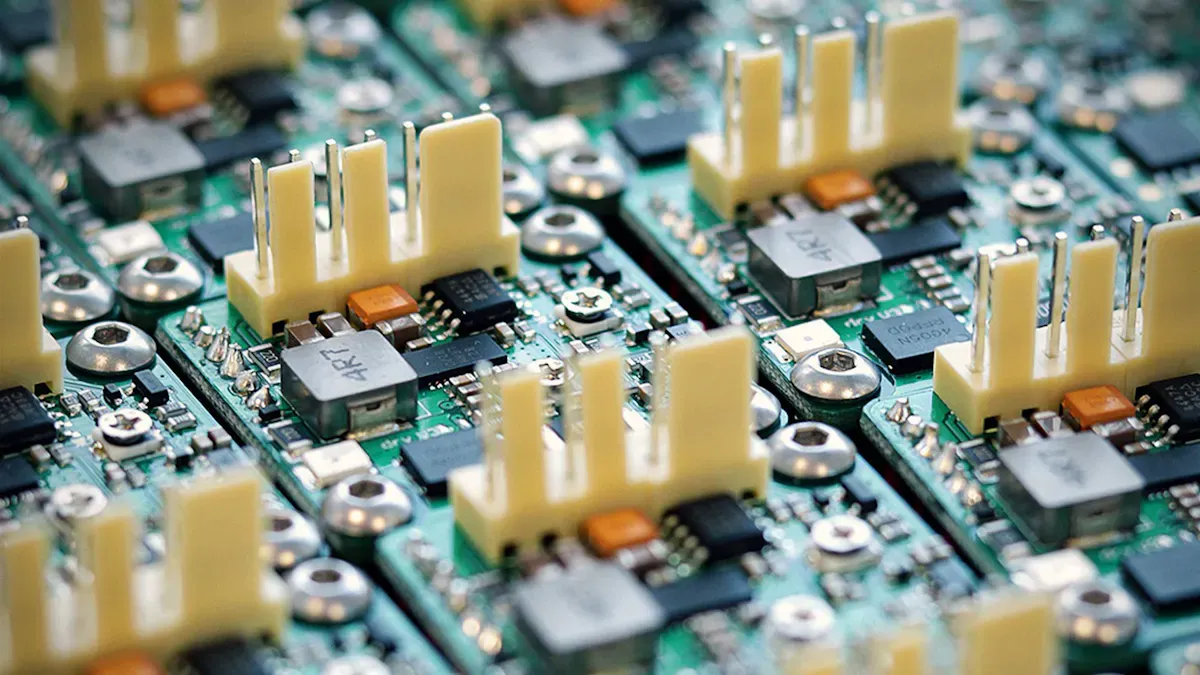
When you pick a large pcb manufacturer, you should check what they can make. You want a partner who can make lots of boards and keep them good. Some companies can make many boards every year. For example, JLCPCB makes over 8 million square meters of boards each year. This means they are good at making lots of boards and are reliable.
You should also see what machines and tools the pcb contract manufacturer uses. New machines help keep the boards high quality and make many at once. Here are some technologies used by top pcb contract manufacturers:
- Up to 64 layer processing technology with fine trace and space control.
- Gold finger processing for high-density precision.
- High-precision back-drilling to improve board performance.
- Metal-based and ultra-thick copper manufacturing for heat dissipation.
- Mechanical and laser depth control for complex groove structures.
- Mixed pressure process for combining FR-4 and high-frequency materials.
- Anti-CAF process for better reliability and service life.
- Buried capacitor and resistor technology for enhanced performance.
- Inner layer exposed technology for high-frequency circuit transmission.
These pcb capabilities help you get boards that work well and last long.
Expertise of PCB Contract Manufacturer
Experience and a good name are important when picking a pcb manufacturer. The best pcb contract manufacturer usually has over 20 years of experience making lots of boards. EBest Circuit, for example, has more than 18 years of experience and is trusted in pcb manufacturing.
You need to check if the pcb contract manufacturer can handle hard designs and big orders. Here are some ways the best pcb contract manufacturer checks their boards:
- Environmental testing checks board strength against heat, moisture, and vibration.
- Automated Optical Inspection finds misalignments and soldering issues.
- X-Ray Inspection detects hidden defects in multilayer boards.
- In-Circuit Testing checks each circuit for failures.
- Flying Probe Testing uses robotic arms for flexible testing.
- Functional Testing simulates real-world use to ensure features work.
- Burn-In Testing stresses boards to find early failures.
These steps show how good and strong the pcb contract manufacturer is. You should always check their experience and if people trust them. This helps you pick a partner who gives you good boards and can handle big jobs.
Tip: Ask for details about their pcb capabilities and production capabilities. This helps you know if they can make lots of boards and keep them high quality.
Compliance, Material Sourcing, and Cost
Regulatory Compliance and Material Traceability
When you work with a large pcb manufacturer, you need to check if they follow rules. These rules help keep people and the planet safe. Some important standards are:
- RoHS stops dangerous things like lead, mercury, and cadmium in electronics.
- REACH controls chemicals used in making pcbs. Factories must register chemicals, keep safety papers, and tell customers about risks.
- Compliance means factories check materials, watch suppliers, and keep records for RoHS and REACH.
You need a pcb contract manufacturer that tracks all materials. Traceability systems follow every part from start to finish. Engineers and customers can see where each part comes from. This helps everyone trust the process and keeps the supply chain safe. Many factories use barcode scanners and cameras to track materials. The Manufacturing Execution System connects all the data for tracking. Each raw material gets its own tag. Every step is written down. If there is a problem, the system finds the bad part fast.
Tip: Always ask your pcb contract manufacturer how they track materials and follow rules. This helps you avoid problems and keeps your products safe.
Pricing Transparency and Value
Cost and clear prices are important when picking a pcb manufacturer. You want to know the price and get good value. Where parts come from changes quality and price. If a factory uses bad or fake parts, your boards may break. Waiting for parts can slow down making boards. Price changes can make it hard to get good parts. Problems in other countries can stop you from getting quality parts.
| Challenge | Impact on Quality |
|---|---|
| Component Shortages and Delays | Production stops, late delivery of quality PCBs |
| Quality and Counterfeit Risks | Failures in final product, poor quality |
| Price Volatility | Hard to get high-quality materials consistently |
| Geopolitical and Logistical Issues | Trouble getting quality materials, affects production |
You need to balance cost, quality, and trust. Top pcb contract manufacturers use machines and smart ways to save money. They share tooling costs over many boards. They use strict certifications and tests like AOI and X-ray. This keeps quality high and costs low. You can get better prices by knowing what you need, learning about the market, building good relationships, asking for discounts, and comparing quotes.
Note: Always check how your pcb manufacturing partner gets parts and sets prices. Good habits mean you get strong boards at a fair price.
Turnaround Time, Support, and Reputation
Lead Times and Delivery Reliability
You need to know how quickly your pcb contract manufacturer can deliver boards. Fast lead times help you finish projects on time. Most top manufacturers finish big orders in two to four weeks. The table below shows how long each step takes:
| Process Step | Typical Duration |
|---|---|
| PCB fabrication | 7 to 12 days |
| Component sourcing | 1 to 3 weeks |
| Assembly & testing | 5 to 10 days |
| Total lead time | 2 to 4 weeks |
A large pcb manufacturer uses skilled workers and machines to speed up work. They test every board with AOI, ICT, and X-ray to check quality. You want a partner who listens to your needs and fixes problems fast. The best pcb manufacturer keeps a strong supply chain and has backup plans for delays. This focus on reliability means you get your boards on time.
Tip: Ask your pcb contract manufacturer how they handle disruptions. Reliable delivery helps you stay on schedule and protects your reputation.
Customer Support and Reviews of Best PCB Manufacturer
Good communication and customer service are important for your project. You need a pcb contract manufacturer who answers questions quickly and helps you solve problems. The best pcb manufacturer gives advice and helps before issues get worse. When you work with a good team, you can track orders and fix problems fast.
Choosing the right partner means checking their reputation. Customer reviews show if a company keeps promises. Look for feedback about quality, delivery, and partnerships. The table below shows what customers say about the best pcb manufacturer:
| Review Summary | Rating |
|---|---|
| Positive feedback on quality and reliability | 4.5 |
| Long-term partnership with consistent quality | N/A |
You can also look for these signs of a good reputation:
- Boards match all design tolerances.
- Orders arrive when expected.
- Customers are happy with service and support.
Picking the right pcb manufacturer means you get a partner who helps you with every project. This partnership helps your business grow and keeps your products strong.
To pick the right pcb contract manufacturer for big jobs, use these steps:
- Check their skills and how long they have worked.
- Look at their machines and if their workers are trained.
- Ask if they help with prototype PCB assembly services.
- Make sure they have strong quality control.
- See if their buildings and tools are good.
- Find out if they offer customization options.
- Make sure they can handle big orders.
- Compare their cost and pricing.
If you follow these steps, you can avoid problems and build trust. Picking a pcb contract manufacturer with strong certifications gives you better products, longer-lasting boards, and saves money. Start looking now and work with a pcb contract manufacturer who helps your business grow.
FAQ
What certifications should you look for in a large PCB manufacturer?
Look for ISO 9001, IPC-A-600, and RoHS certifications. These show the company follows important safety and quality rules. Always ask to see proof before you buy.
How can you verify a manufacturer’s production capacity?
Ask for pictures of the factory and data about how much they make. Order a small batch to check their speed and quality. You can also read reviews from other customers.
Why does material traceability matter in PCB manufacturing?
Material traceability lets you follow each part used in your PCB. This keeps your product safe from bad or fake materials. It also helps you fix problems fast.
What is the typical lead time for high-volume PCB orders?
Most large PCB manufacturers finish orders in two to four weeks. The time depends on how hard the board is and if materials are ready. Always check the schedule before you begin.
How do you evaluate customer support from a PCB manufacturer?
Send questions and see how quickly they answer. Read what other people say about their service. Good support means you get help when you need it.