 English
 Arabic
 Chinese (Simplified)
 Dutch
Dutch French
 German
 Italian
 Portuguese
 Russian
 Spanish
What is Industrial Automation Assembly and How Does It Work
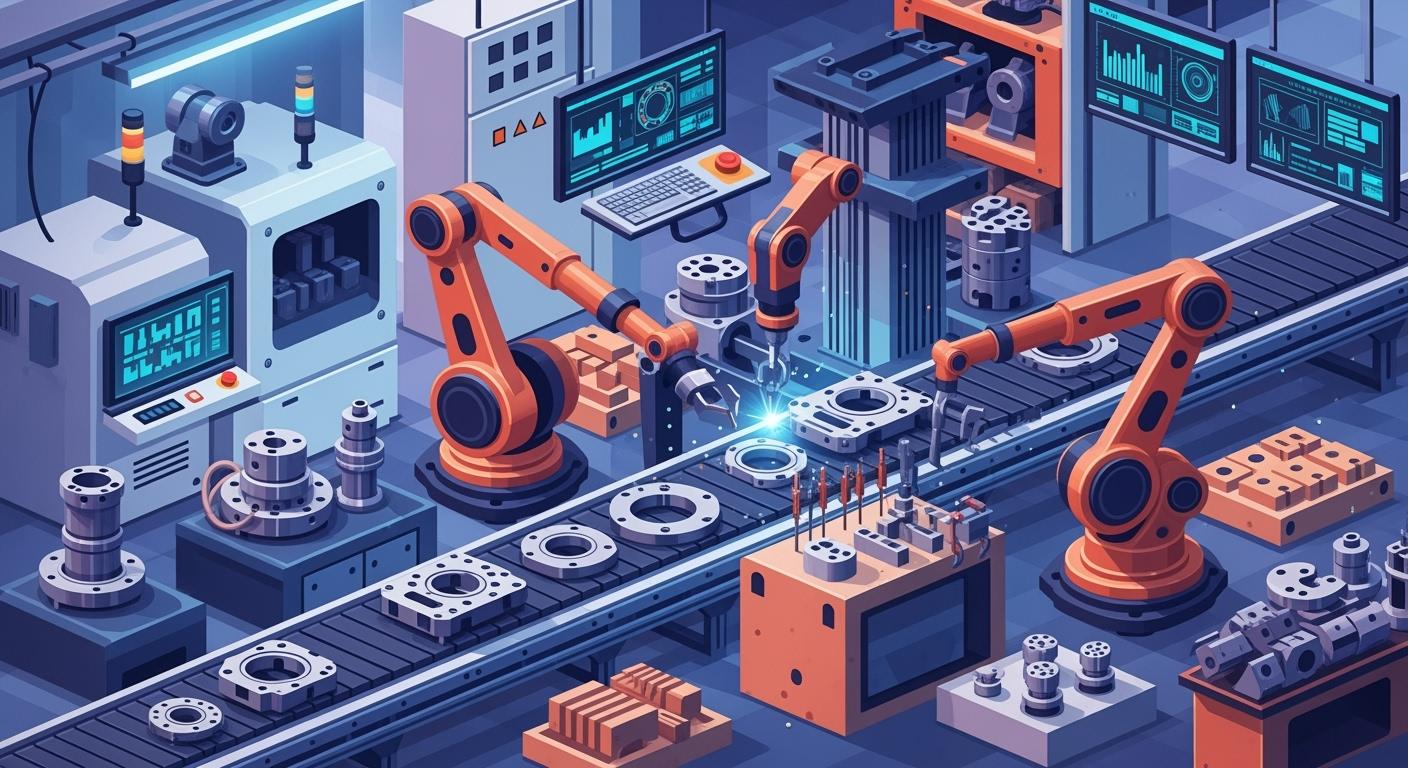
You see Industrial Automation Assembly in action when machines take over tasks that people once performed. This approach connects machines, sensors, and controls into a unified system, helping factories operate more efficiently. Industrial Automation Assembly aims to speed up production and improve accuracy, while also reducing costs and increasing output.
- Today, 64% of factory jobs can benefit from Industrial Automation Assembly.
- By 2022, robots handled 42% of factory work through Industrial Automation Assembly.
The Asia-Pacific region leads the world in Industrial Automation Assembly, especially in the automotive and electronics industries.
Key Takeaways
- Industrial automation assembly helps factories work better. Machines do jobs faster and make fewer mistakes. This means products are made more quickly and with less error.
- Automation cuts labor costs by a lot, up to 40%. Factories can use fewer workers and still stay safe.
- Using automation can make products better. Mistakes go down from 1-2% with people to only 0.01% with machines.
- Flexible automation systems can change fast to new needs. They are good for factories making many different things in small amounts.
- Putting money into automation makes factories work better. It also helps companies keep up with what customers want.
Core Concepts of Industrial Automation Assembly
Definition and Purpose
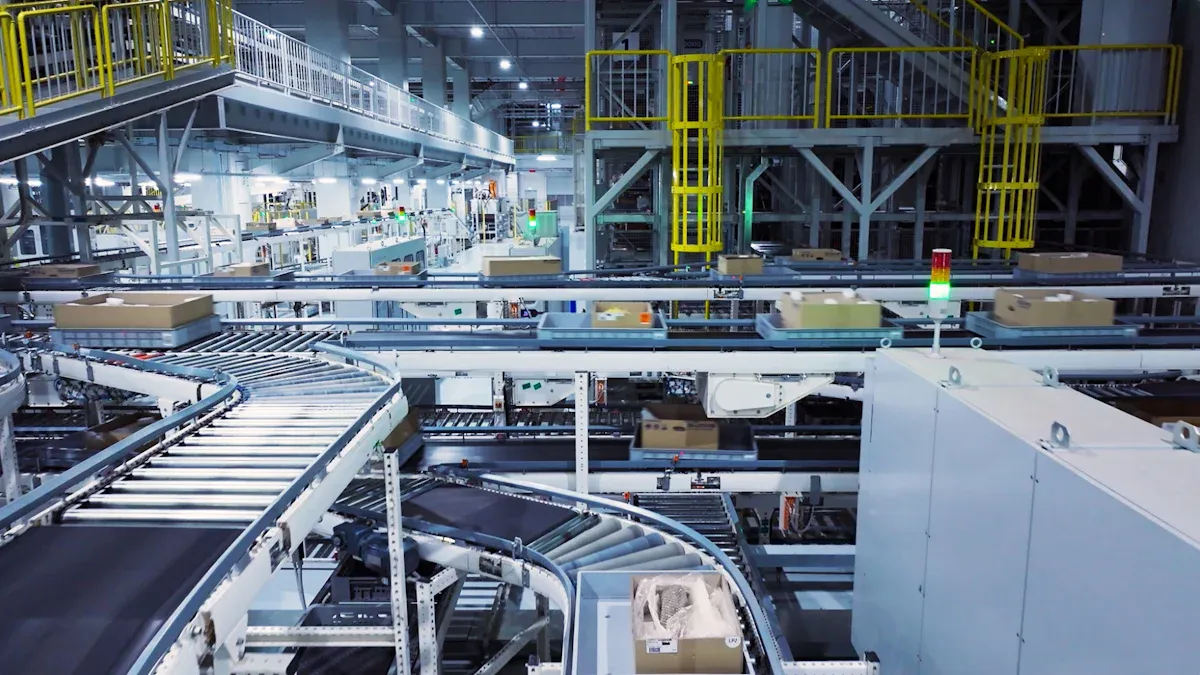
Industrial automation assembly means using machines to do jobs people did by hand. This helps make products faster and safer. It also helps make fewer mistakes. The main goal is to boost efficiency and productivity in factories. When you use industrial automation assembly, you need fewer people on the line. This lets production keep going even if workers are not there. It also lowers the chance of injuries.
Here are the main goals of industrial automation assembly:
- Lower the need for people, which keeps workers safe.
- Make production faster and more reliable.
- Improve quality by cutting down on mistakes.
- Save money by making things cost less over time.
You also use materials and time better, help the environment, and make your factory more sustainable. Industrial automation assembly helps you get better results and higher efficiency in manufacturing.
Tip: If you design products for automation, it is easier to use machines and robots in your factory.
Key Components and Technologies
Industrial automation assembly uses many systems and technologies to work well. You will find some main parts in these systems:
- Loading system
- Pick and place device
- Conveyor system
- Inspection system
- Assembly mechanism
- Unloading system
These parts help move, check, and put together products on the line. You also see advanced tools like robotic arms, conveyor systems, vision systems, programmable logic controllers (PLCs), automated guided vehicles (AGVs), collaborative robots (cobots), artificial intelligence (AI), the Internet of Things (IoT), and augmented reality (AR). Each tool helps make your factory more accurate and efficient.
Here is a table with some key rules for industrial automation assembly:
| Principle | Description |
|---|---|
| Design Simplification | Use fewer parts to make automation easier. |
| Correct Orientation Design | Add features so parts cannot go in wrong. |
| Self Locating Feature | Help parts fit in the right spot, even if off. |
| Joining Method Selection | Use easy joining, like snap fits, for simple handling. |
| Part Handleability | Make sure robots can grab and move parts easily. |
| Top Down Assembly | Design for vertical assembly to help robots work better. |
| Modular Product Design | Break products into smaller parts for easier automation. |
| Poka Yoke (Mistake Proof) | Add features that stop mistakes during assembly. |
When you follow these rules, it is easier for automated machines and industrial robots to do their jobs well.
How Automation Assembly Works
Industrial automation assembly happens when machines and systems work together to build products. Robots are the main part of the system. They pick, place, and join parts quickly and accurately. End effectors, like grippers or welding tools, help robots do special jobs. Vision systems use cameras to guide robots and check each part.
Control systems help robots and machines talk to each other. Software programs let you set up, watch, and change how your systems work. Sensors are important for safety and accuracy. For example, proximity sensors stop machines if someone gets too close. Cameras and LiDAR help robots see and understand what is around them. Position sensors make sure every move is exact, which is important for quality.
All these parts work together in assembly line automation. Automated systems move parts from one station to the next. They check for mistakes and put everything together with little or no help from people. This makes your factory more efficient, improves quality, and makes production more reliable.
Note: Using industrial automation assembly helps your business stay ahead by making products faster and with fewer mistakes.
Types of Automation Systems
Fixed Automation
Fixed automation is used when factories make the same thing many times. Machines in these systems do only one job. You set up the machines once, and they keep working the same way. This type is good for making lots of the same product. You see fixed automation in car factories and places that make chemicals or medicine. It is also used in assembly lines. Some examples are conveyor systems and machines that put things together. Paint and coating lines use fixed automation too.
- Fixed automation does not cost much to set up because it is simple.
- It is cheap to keep running since it does not break often.
- If you want to change what you make, it can get expensive.
Fixed automation is best for making many of the same thing, but it is hard to use for new products.
Programmable Automation
Programmable automation is more flexible than fixed automation. You can change what the machines do by changing their programs. This is helpful when you need to make different things in groups. Programmable automation is used in factories that make many products. It is also used in chemical plants, food factories, and medicine production. You can tell the machines what to do with special commands. You can write new programs for each product. This helps you make different things when you need to.
- You use software to control the machines.
- You can make new things by loading new programs.
- Programmable automation is good for making batches and different products.
Flexible Automation
Flexible automation lets you switch jobs fast and easily. You use it when you need to make many kinds of products in small numbers. These systems use parts that can be changed, smart sensors, and controls that adjust. These things help you change what you make without stopping for long. You can use the same robots and machines for new jobs right away. Flexible automation is great for places where products change a lot.
| Advantages of Flexible Automation |
|---|
| It can change to new jobs easily. |
| It works well for many products in small amounts. |
| It takes less time to set up. |
Flexible automation can change what it does by itself, which saves time and work. Companies want to be flexible and change fast to keep up with what people want. You can keep making things and react quickly to new trends.
Flexible automation helps you keep up by making your factory ready for anything.
Benefits of Automation in Assembly
Efficiency and Productivity
Automation helps factories work faster and better. Machines do not need breaks like people do. Many companies have seen big changes after using automation. For example:
- A top car company had 78% less downtime with AI maintenance.
- Raining Rose made changeovers 50% faster and made 20% more products each hour.
- Beckett Air delivered 10% more orders on time by using IoT systems.
Factories often make about 5.1% more products after starting automation. Machines can do many jobs at once. This helps factories make things quickly and meet what customers want.
Quality and Accuracy
Automation helps make products better and more exact. Robots and vision systems check every product for quality. Automated assembly stops mistakes people might make. This keeps results the same every time. You can see the difference in mistakes:
| Assembly Type | Error Rate |
|---|---|
| Manual Assembly | 1-2% or more |
| Automated Assembly | as low as 0.01% |
Automated systems use real-time data to find problems early. This means less waste and fewer bad products. Making things exactly right is important in electronics and medical device factories.
Cost-Effectiveness
Automation helps factories spend less money. Machines can lower labor costs by up to 40%. They also save about 2,000 hours each year, which is like having one extra worker. Here are some ways automation saves money:
| Description | Cost Savings |
|---|---|
| Reduction in labor costs in manufacturing | Up to 40% |
| Average hours saved per year by automation | 2,000 hours (equivalent to 1 FTE) |
| Cost reduction in repetitive tasks with RPA | Up to 75% |
| Global labor cost reduction due to automation | Over $200 billion in a decade |
Automation also cuts costs over time. Smart systems and quality checks help use less energy and make less waste.
Safety Improvements
Automation makes factories safer for workers. Robots do dangerous or boring jobs, so people are safer. Automated systems help stop injuries from lifting, falling, or bumping into things. Workplace injuries in the U.S. cost $59 billion each year. Automation can help lower these costs and keep workers safe.
| Safety Improvement Type | Description |
|---|---|
| Repetitive Strain Injuries | Automated systems lower stress and injury risk. |
| Falls from Height | Robots stop workers from needing to go up high. |
| Manual Material Handling Injuries | Automation does heavy lifting, so workers do not get hurt. |
| Collision and Traffic Accidents | Smart traffic systems help stop crashes. |
You can make your workplace safer and let your team do more important jobs.
Challenges in Industrial Automation
Implementation Barriers
When you try to use industrial automation, you may face problems. The biggest problem is the high cost at the start. Many companies worry because new robots and systems cost a lot. Some companies now let you rent robots, like hiring temporary workers. This helps smaller factories start automation without spending too much money at first.
Another problem is making sure new machines work with your old ones. If they do not fit together, production can slow down or stop. You should get help from experts to make sure everything works well together. Making custom systems can also be hard. Working with skilled designers can make it easier.
Here is a table that shows common problems and ways to fix them:
| Barrier | Description | Solution |
|---|---|---|
| Integration with Existing Systems | New machines may not work with old ones and cause delays. | Work with a company that helps new machines fit with old ones. |
| High Initial Costs | Buying new equipment costs a lot of money at first. | The money you save later is worth it; look for cheaper options. |
| Complexity in System Design | Custom systems are hard to design and build. | Work with skilled designers to make it simpler. |
| Ensuring System Reliability | Machines need regular care to keep working. | Pick a company that gives support and fixes machines. |
| Training and Skill Development | Workers need new skills to use new machines. | Give workers good training so they can use the new systems. |
Maintenance and Upkeep
You need to take care of your automation systems to keep them working. A good plan for repairs and checks helps stop breakdowns. Regular checks help your machines stay strong and last longer. You should work with trusted suppliers and service teams. They can help fix problems fast and keep spare parts ready.
Automation brings new things to watch out for. You must handle different types of equipment and use smart sensors and controls. People still need to watch over the machines. You must check that everything works right. Having a backup plan helps you deal with surprises or machine problems.
Tip: Doing regular checks and repairs can stop breakdowns and keep your factory running well.
Workforce Adaptation
Automation changes how people work in factories. Some jobs may go away, but new jobs will show up. You need workers who can run, program, and fix automated machines. Training helps your team learn new skills and solve problems.
You can use cobots to let people and robots work together. Making machines easy for people to use helps everyone. Flexible work plans help you change when you need to. Teaching your team to keep learning helps them get ready for new technology.
“Automation has changed how products are made and how people work. It lowers the need for simple jobs but raises the need for skilled workers. Companies must train workers for new skills so people and machines can work together.”
Checking what your team can do and what you will need helps you plan training and get ready for new jobs.
Factory Automation Applications
Automotive Industry
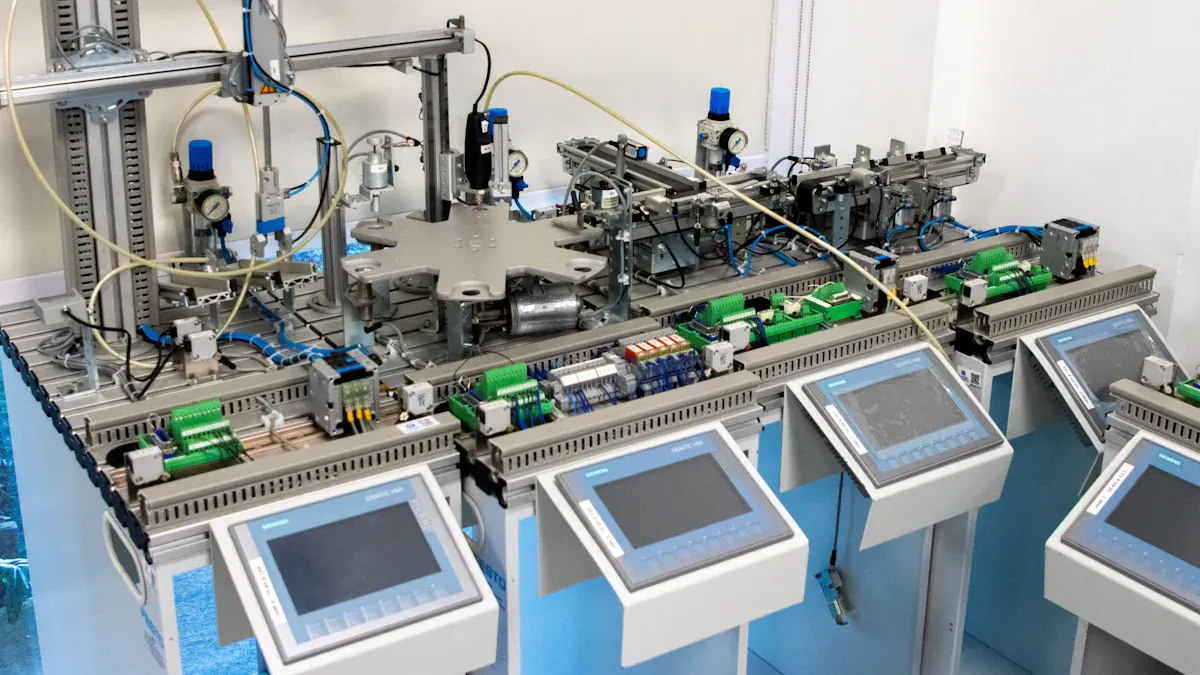
You see factory automation a lot in car factories. Industrial automation helps make cars faster and safer. Cobots work next to people and do jobs like putting on door handles and windshield wipers. These robots let workers do harder tasks. The Lear Corporation uses UR5 cobots to put together car seats. These cobots screw in parts 8,500 times every day. More cars get made with fewer mistakes. Cobots also check if parts are good by looking at them and measuring them. You can trust every car is made well because factory automation does these jobs very carefully.
Electronics Manufacturing
Factory automation changes how electronics are made. Automated systems help make things faster and stop delays. You get the same quality each time because machines make fewer mistakes than people. The number of robots in electronics factories went up by almost 15% each year from 2021 to 2023. When you use factory automation, your company gets big benefits. You can run factories that work all the time without stopping. Automated assembly lines handle tiny parts and very careful jobs. You can find problems early and fix them quickly. Factory automation helps you keep up with orders and stay ahead in electronics.
Tip: Companies that use factory automation in electronics can compete better and make great products.
Food and Beverage Production
Factory automation helps make food and drinks safe and fast. Industrial systems measure, mix, and pack products without mistakes. You can use fully automated factories to keep everything clean and the same every time. Robots fill bottles, close packages, and check labels. This lowers the chance of germs and waste. Factory automation lets you watch every step and follow safety rules. You can make more food with less work and keep customers happy.
Other Industry Examples
You see factory automation in many other places too. Industrial automation helps make medical devices, home appliances, and chemicals. Automated systems sort, pack, and check products in warehouses. You can use fully automated factories for textiles, plastics, and even furniture. Factory automation helps you make more products and better quality in almost any business.
| Industry | Factory Automation Use Case |
|---|---|
| Medical Devices | Automated assembly and inspection |
| Home Appliances | Robotic packaging and quality checks |
| Chemicals | Automated mixing and batch processing |
| Warehousing | Sorting, packing, and inventory tracking |
Factory automation gives you what you need to grow your business and face new problems.
You now know that industrial automation changes how factories make things. Machines help build products quickly and safely. There are different types of automation that make factories work better. Industrial automation gives you better quality and saves money. You can use automation to fix problems in your business. New technology will keep making assembly lines smarter and easier to change.
FAQ
What is the main goal of using automation in a factory?
Factories use automation to work faster and safer. It helps lower mistakes and saves money. Automation lets factories run longer without stopping. This makes factories more productive and dependable.
How do robots help in a factory assembly line?
Robots move, pick, and place parts in factories. They repeat jobs many times and do not get tired. Robots help factories run smoothly. They also help make products with fewer mistakes.
Can small factories use automation, or is it only for big companies?
Any factory can use automation, no matter the size. Small factories often start with simple machines. You do not need a lot of money to begin. Even small factories can see big improvements with automation.
Tip: Start with one area and add more automation as you grow.
What jobs do people do in a factory with automation?
People set up machines, check quality, and fix problems. Workers can learn to run and program robots. They also keep the factory safe and help make things better.
| Job Role | Factory Task Example |
|---|---|
| Technician | Setting up and fixing machines |
| Quality Inspector | Checking products |
| Operator | Running automated lines |
| Engineer | Making factory systems better |
How does automation make a factory safer?
Automation keeps people safe by doing risky jobs. Machines lift heavy things and work in dangerous places. This lowers injuries and makes factories safer. Safety sensors and smart systems help protect everyone.