 English
 Arabic
 Chinese (Simplified)
 Dutch
Dutch French
 German
 Italian
 Portuguese
 Russian
 Spanish
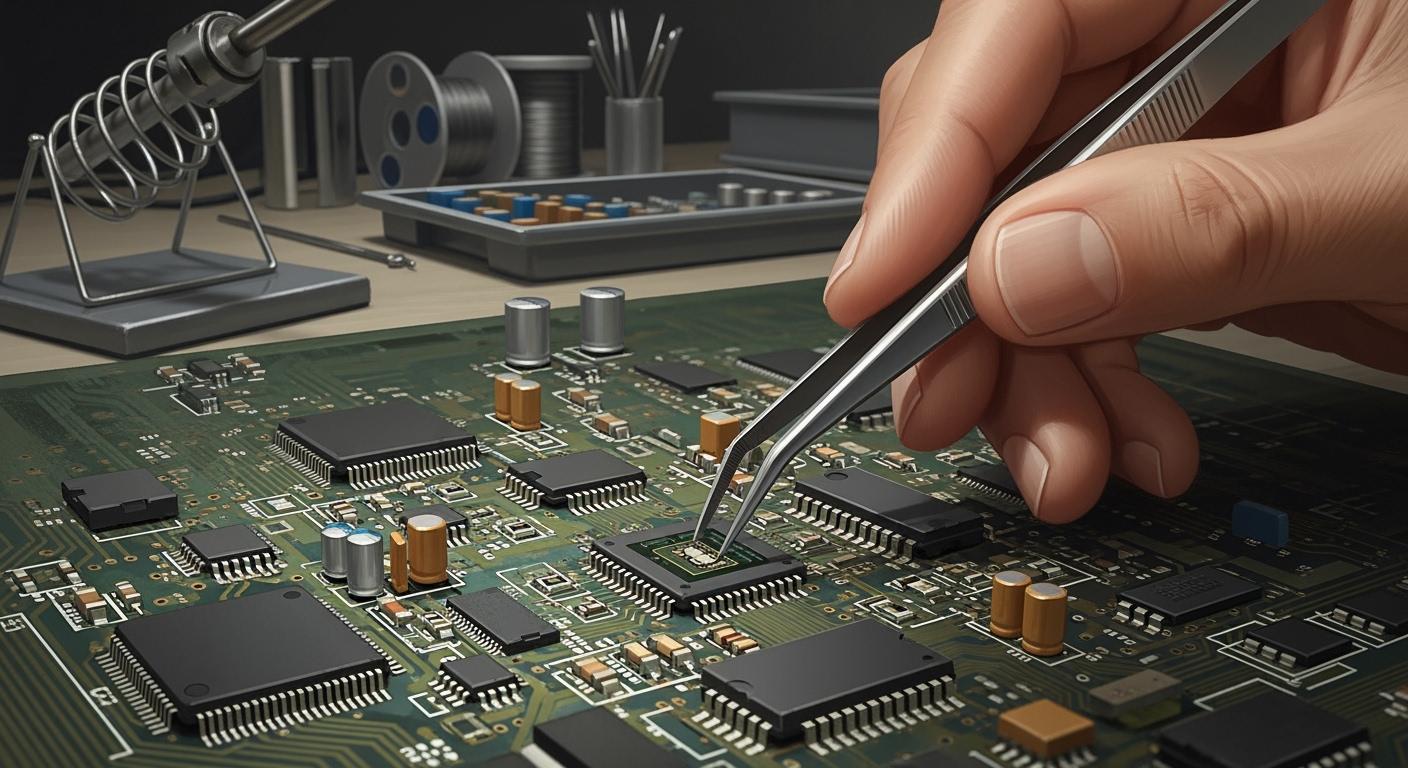
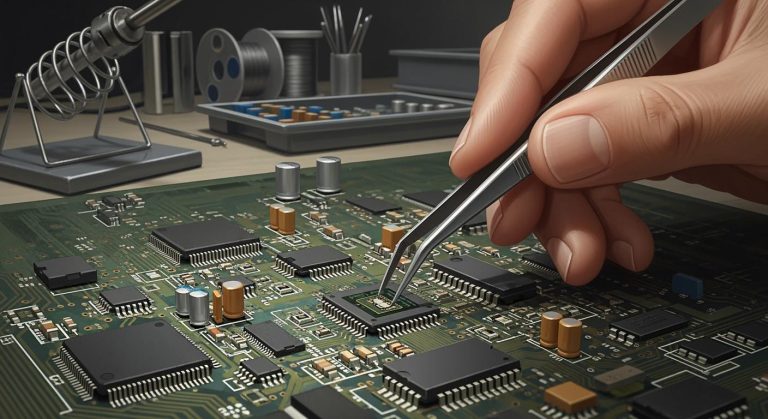
Surface mount technology, or smt, lets you attach electronic components directly onto the surface of printed circuit boards. You see this method in almost every modern device because it increases efficiency and reliability. KING FIELD delivers smt assembly services that set industry standards for precision and speed. Automated machines place components quickly and accurately, which reduces labor costs and boosts scalability. Shorter leads and direct mounting help your products perform better, even under harsh conditions. You gain consistent quality and rapid turnaround with every project.
Key Takeaways
- Surface Mount Technology (SMT) lets you place small electronic parts directly on circuit boards, making devices smaller, faster, and more reliable.
- Automated machines in SMT speed up production, reduce errors, and lower costs, helping you move quickly from prototypes to mass production.
- SMT offers better electrical performance and design flexibility compared to older through-hole methods, supporting compact and advanced devices.
- Quality control with tools like automated inspection and careful process steps ensures high reliability and fewer defects in SMT assemblies.
- SMT is widely used in consumer electronics, industrial equipment, and medical devices, enabling innovative, efficient, and safe products.
What Is SMT?
SMT Overview
You encounter surface mount technology in almost every modern electronic device. SMT lets you place electronic components directly onto the surface of a printed circuit board. This method replaces older assembly techniques that required drilling holes for each component. You benefit from smaller, lighter, and more reliable products because SMT allows for higher component density and improved electrical performance.
Note: SMT enables you to design compact devices with advanced features, making it the preferred choice for smartphones, computers, and industrial equipment.
Take a look at how SMT compares to traditional through-hole technology:
| Characteristic | Surface Mount Technology (SMT) | Through-Hole Technology (THT) |
|---|---|---|
| Component Size and Density | Smaller components allow for higher density on PCBs. | Larger components limit density. |
| Assembly Process | Automated, quicker, and more accurate. | Manual, slower process. |
| Cost-Effectiveness | Generally cheaper, especially at high volumes. | More expensive due to labor. |
| Design Flexibility | Components can be placed on both sides of the board. | Limited to one side. |
| Higher Frequencies | Better suited for high-frequency applications. | Less effective at high frequencies. |
| Improved Electrical Performance | Superior due to shorter traces and better signal integrity. | Inferior performance. |
| Thermal Considerations | Better heat dissipation due to smaller size. | Less efficient heat dissipation. |
You gain faster production speeds and lower costs with SMT. Automated machines place components with high precision, which reduces errors and improves quality. You also achieve better signal integrity and heat dissipation, making SMT ideal for demanding applications.
Evolution of SMT
SMT has transformed electronics manufacturing over the past five decades. You see its roots in the early 1970s, when engineers began using miniaturized chip components in hybrid circuits. Quartz watches and calculators were among the first consumer products to benefit from this innovation.
The technology advanced rapidly between 1976 and 1985. Automated assembly equipment entered the market, allowing you to produce video cameras and pocket radios with greater efficiency. You could now build devices with more functions and smaller footprints.
From 1986 onward, SMT became the standard for cost reduction and performance improvement. You find SMT in military, automotive, and computing sectors. Automated placement and soldering systems now dominate the industry, enabling you to manufacture complex products at scale.
| Year Range | Milestone Description |
|---|---|
| 1970 – 1975 | Initial application of miniaturized chip components to hybrid circuits; first consumer products like quartz watches and calculators. |
| 1976 – 1985 | Rapid miniaturization and multifunctionality; introduction of automated surface-mount assembly equipment; used in video cameras and pocket radios. |
| 1986 – present | Focus on cost reduction and performance; expansion into military, automotive, and computing sectors; widespread use of automated placement and soldering systems. |
You rely on SMT to meet the demands of modern electronics. The evolution of SMT has made it possible for you to create devices that are smaller, faster, and more reliable than ever before.
SMT Process
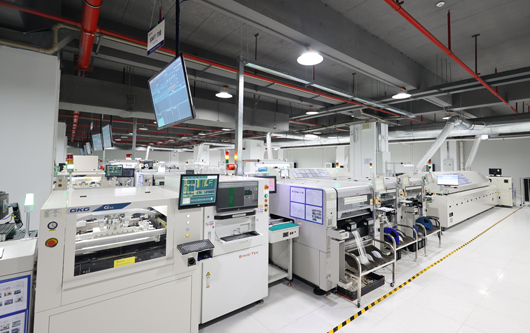
Key Components
You need several essential components to achieve a successful smt assembly. Each plays a unique role in the process:
- Stencil Printer: This machine applies solder paste to the PCB pads with high precision. Accurate paste deposition is critical for reliable electrical connections.
- Pick-and-Place Machine: Automated systems place surface mount devices onto the PCB. These machines operate at high speed and ensure precise positioning, which maintains circuit integrity.
- Reflow Oven: You use this equipment to heat the assembly and melt the solder paste. The oven creates strong, durable bonds between components and the PCB.
- SPI (Solder Paste Inspection): This tool checks the quality and consistency of solder paste application. It helps you catch issues early and maintain high standards.
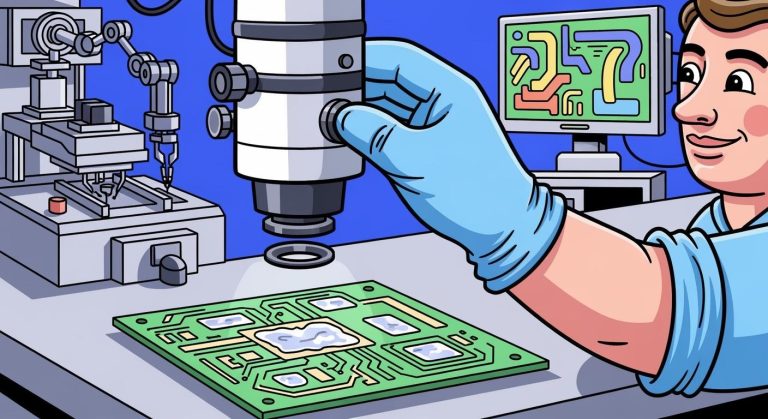
- AOI (Automated Optical Inspection): After soldering, AOI systems inspect the finished boards for defects. High-speed cameras detect placement errors and soldering faults, ensuring reliability.
Quality control is vital at every stage. KING FIELD uses advanced inspection systems to guarantee that each board meets strict industry standards.
Assembly Steps
You follow a series of precise steps to complete the smt process. Automation and state-of-the-art equipment help you minimize errors and speed up production. Here is a typical workflow:
- Preparation of Components and PCB: You start by preparing the surface mount components and the PCB. Clean surfaces and accurate inventory ensure smooth assembly.
- Solder Paste Printing: You apply solder paste to the PCB pads using a stencil printer. This step sets the foundation for strong electrical connections.
- Component Placement: Automated pick-and-place machines position each component onto the pasted pads. Precision here is crucial for circuit functionality.
- Reflow Soldering: You transfer the assembled board into a reflow oven. Controlled heating melts the solder paste, creating solid joints.
- Inspection and Testing: You inspect the board using AOI and other methods. Functional tests confirm that the assembly meets performance requirements.
| Assembly Step | Contribution to Quality |
|---|---|
| Solder Paste Stenciling | Ensures accurate application of solder paste for reliable electrical connections. |
| Component Placement | Utilizes precision machinery to place components accurately, maintaining circuit integrity and functionality. |
| Reflow Soldering | Solidifies connections in a controlled environment, enhancing durability and reliability of the assembly. |
KING FIELD’s automated assembly lines achieve defect rates as low as 0.01%. You benefit from consistent quality and reduced risk of errors compared to manual methods.
Equipment Used
You rely on specialized equipment to enhance automation and precision throughout the smt process. Solder paste printers use vision alignment systems to apply paste accurately. Pick-and-place machines operate at high speeds, placing thousands of components per hour with minimal error. Reflow ovens create stable solder joints by controlling temperature profiles.
Automated inspection tools, such as AOI and SPI, help you maintain quality. These systems detect defects early and ensure that every board meets your requirements. KING FIELD invests in state-of-the-art equipment to deliver rapid production and reliable results. You gain faster turnaround times and higher product performance.
Advanced automation reduces human error and increases consistency. KING FIELD’s SMT Assembly services combine precision, speed, and rigorous quality control to help you stay competitive.
SMT vs. Through-Hole
Main Differences
When you compare surface mount technology to through-hole technology, you notice clear differences in how each method attaches components and shapes the final product. Surface mount technology lets you place components directly onto the surface of the printed circuit board. Through-hole technology requires you to insert component leads into holes drilled through the board. This difference affects everything from assembly speed to product size.
Here is a table that highlights the main differences:
| Feature | Surface Mount Technology (SMT) | Through-Hole Technology (THT) |
|---|---|---|
| Component Attachment | Components attach to the PCB surface without holes. | Components inserted into plated through holes. |
| Component Density | Higher density due to smaller components and no holes. | Lower density with larger components and spacing. |
| Assembly Process | Automated assembly is common, allowing for mass production. | Often requires manual assembly, especially for small lots. |
| Testing and Reliability | More complex due to higher density; requires specialized testing. | Easier to troubleshoot due to larger spacing and visibility. |
Note: You achieve higher efficiency and more compact designs with surface mount technology, while through-hole technology offers easier manual handling and inspection.
Pros and Cons
You should consider the strengths and weaknesses of each method before choosing the right approach for your project. Surface mount technology brings you several advantages, such as improved manufacturing efficiency, greater design flexibility, and enhanced performance in compact devices. However, it can present challenges in mechanical strength and prototyping.
Through-hole technology stands out for its strong mechanical bonds and ease of manual assembly. It works well for prototypes and products that need to withstand physical stress. On the other hand, it limits your ability to create high-density layouts and often increases production costs.
Here is a quick comparison:
| Technology | Advantages | Disadvantages |
|---|---|---|
| SMT | High component density, smaller components, automated assembly, improved signal integrity | Mechanical weakness, difficult for prototyping, high initial investment |
| THT | Strong mechanical bonds, easier for prototyping, versatility | Lower component density, higher production costs |
- Advantages of SMT: You benefit from faster production, compact layouts, and better electrical performance.
- Disadvantages of SMT: You may face challenges with mechanical durability and inspecting tiny components.
- Advantages of THT: You gain robust connections and easier manual work.
- Disadvantages of THT: You deal with bulkier boards and slower, more expensive assembly.
Choosing between these methods depends on your product’s needs. If you want speed, miniaturization, and automation, surface mount technology is the best fit. If you need strength and easy prototyping, through-hole technology remains a solid choice.
SMT Types
Passive and Active Components
You work with two main categories of components in smt: passive and active. Passive components do not amplify signals. You use them to control current, store energy, or filter noise. Active components process signals, switch currents, or amplify data using semiconductors. The table below shows the differences and examples:
| Component Type | Function | Examples |
|---|---|---|
| Passive | Not capable of amplification; used for current regulation, energy storage, and noise filtering. | Resistors, Capacitors, Inductors, Fuses |
| Active | Amplifies signals, switches currents, or processes data using semiconductor technology. | Diodes, Transistors, Integrated Circuits (ICs) |
Tip: You often combine both types on a single board to achieve the desired circuit performance.
Common Packages
You encounter several package types when designing or assembling electronic products. Each package serves a specific purpose and fits different applications. The table below outlines the most widely used packages and their typical uses:
| Package Type | Description | Typical Applications |
|---|---|---|
| Passive Rectangular Components | Mainly resistors and capacitors, sizes include 0603 and 0402 | Used in various electronic circuits |
| SOIC | Small Outline Integrated Circuit with dual in line configuration | Commonly used for integrated circuits |
| TSSOP | Thin Shrink Small Outline Package | Used for analog amplifiers, controllers, memory |
| QFP | Quad Flat Pack | Generic type for integrated circuits |
| BGA | Ball Grid Array | High-density applications, pads underneath |
You select a package based on the component’s function, the available space, and the assembly process.
Choosing SMT Type
You need to consider several criteria when choosing the right smt type for your product. The following table summarizes the most important factors:
| Criteria | Description |
|---|---|
| Technological Capabilities | Check if the company’s equipment and technology match your component and assembly needs. |
| Experience and Expertise | Ask about experience with similar products to ensure smooth manufacturing. |
| Certifications and Compliance | Confirm industry certifications for quality and regulatory standards. |
| Quality Control Measures | Review quality control processes to guarantee reliability and minimize defects. |
| Production Flexibility | Make sure the company can handle different volumes and adapt to changes in your project. |
Note: You improve your product’s reliability and performance by selecting the right partner and package for your assembly needs.
SMT Benefits
Automation and Speed
You gain a major advantage with automated assembly lines. Machines handle repetitive and precise tasks, which means you see fewer errors and faster results. KING FIELD uses advanced pick-and-place systems and automated soldering to deliver high-speed production. This approach lets you move from prototypes to mass production without delays. Workers can focus on quality control and troubleshooting, while machines handle the bulk of the work.
Here is how automation boosts your production:
| Benefit Category | Explanation |
|---|---|
| Automated Precision | Eliminates human error in component placement, improving accuracy and reducing rework time. |
| Scalability | Enables smooth transition from prototypes to high-volume production without delays. |
| Faster Assembly Speed | SMT machines operate up to 10 times faster than manual insertion, drastically increasing output. |
| Reduced Setup Time | Quick tooling changes and program switching reduce setup from hours to minutes. |
| Quality Consistency | Achieves 99%+ placement accuracy, reducing defects and rework cycles. |
| Cost Optimization | Reduces labor costs by automating repetitive tasks, increasing throughput and ROI in volume. |
KING FIELD’s automated lines help you achieve rapid turnaround and consistent quality for every project.
Miniaturization
You want smaller, lighter, and more powerful devices. SMT makes this possible by letting you place components on both sides of the board and pack them closer together. This higher density means you can fit more features into a compact space. Modern electronics, like smartphones and wearables, rely on this technology to deliver advanced functions without increasing size.
SMT’s automated process also supports miniaturization by ensuring precise placement and reducing errors. You benefit from efficient manufacturing and the ability to create complex, compact products that meet today’s market demands.
With KING FIELD, you can design high-density boards that keep your products ahead of the competition.
Cost and Performance
You save money and boost performance when you choose SMT for your assembly needs. Automated processes lower labor costs and speed up production, especially for large orders. The following table shows how SMT compares to traditional through-hole assembly for high-volume production:
| Assembly Type | Cost per Board | Total Cost for 10,000 Boards |
|---|---|---|
| SMT | $0.80 | $8,000 |
| Through-Hole | $1.50 | $15,000 |
You also see better electrical performance. SMT uses smaller components and shorter signal paths, which improves signal integrity and allows devices to run at higher speeds. KING FIELD’s high-precision assembly ensures your products meet strict quality standards and perform reliably in demanding applications.
Choose KING FIELD for flexible manufacturing, rapid delivery, and top-tier product performance.
SMT Challenges
Common Issues
You face several recurring issues during smt assembly. These defects can impact reliability and performance if you do not address them early. The table below outlines the most frequent problems, their causes, and proactive strategies you can use to minimize risk:
| Defect Type | Description | Causes | Proactive Strategies |
|---|---|---|---|
| Missing Components | Component absent or misplaced on the pad | Vacuum failure, feeder setup, solder paste | Maintain nozzles, inspect feeders, AOI post-placement |
| Tombstoning | Component stands vertically after soldering | Uneven wetting, temperature ramp, solder volume | Optimize reflow, control paste, follow pad design rules |
| Component Misalignment | Offset from pad center | Fiducial error, programming, excessive force | Calibrate vision, verify placement, control vibration |
| Solder Balls | Solder spheres near components | Paste degradation, moisture, rapid heating | Control storage, optimize reflow profile |
| Solder Bridging | Conductive path between pads | Thick stencil, poor registration, component shift | Use quality stencils, precise alignment, robust AOI |
Tip: You can reduce these defects by combining regular equipment maintenance with advanced inspection systems.
Quality Control
You need robust quality control measures to ensure defect-free assemblies. The following table summarizes essential practices that help you maintain high standards:
| Quality Control Measure | Description |
|---|---|
| Solder Paste Printing | Inspect stencils for wear and replace as needed |
| Operator Training | Train staff in setup, defect recognition, troubleshooting |
| Statistical Process Control (SPC) | Monitor process variation using statistical methods |
| Advanced Inspection Tools | Use 3D AOI and X-ray inspection for precision |
| Compliance with International Standards | Follow ISO 9001 and IATF 16949 for reliability |
Note: You improve reliability and consistency by integrating these quality control steps throughout your smt process.
Solutions and Best Practices
You can overcome assembly challenges by following proven best practices. Consider these strategies:
- Regularly calibrate pick-and-place equipment to reduce misalignment risks.
- Use segmented stencil apertures to control solder paste volume.
- Preheat PCBs before rework to protect thermal pads.
- Optimize alignment during assembly to prevent misalignment.
- Apply solder paste using proper techniques for even distribution.
- Adjust reflow soldering profiles to match component thermal mass.
- Follow rework procedures that minimize damage to pads and traces.
- Use fiducial markers for precise placement of thermal pads.
- Implement stencil design guidelines for controlled paste application.
- Tailor reflow profiles to prevent thermal shock and ensure proper solder wetting.
You achieve higher yields and fewer defects by adopting these practices. Consistent attention to detail and process optimization help you deliver reliable products every time.
SMT Applications
Consumer Electronics
You see surface mount technology everywhere in consumer electronics. Smartphones, tablets, and laptops rely on compact circuit boards that support advanced features. SMT allows you to fit more components into smaller spaces, which means devices become lighter and more powerful. Televisions, gaming consoles, and wearable devices also benefit from this technology. You enjoy faster performance and longer battery life because manufacturers use automated assembly lines to produce reliable products at scale.
Tip: SMT enables rapid innovation in consumer electronics, helping you access new features and improved designs every year.
Industrial Uses
You depend on SMT for industrial electronics manufacturing. This technology has transformed production by shifting away from traditional methods. You gain several advantages:
- Enhanced production efficiency through direct mounting of components on PCBs.
- Increased assembly speed, which leads to faster production cycles.
- Improved reliability of electronic devices used in harsh environments.
- Compact designs that allow for smaller and more complex industrial equipment.
You find SMT in high-reliability applications such as programmable logic controllers (PLCs) and control modules. Automotive electronics use SMT to create lightweight, high-density control modules. These improvements boost vehicle performance and safety.
Medical Devices
You rely on SMT to produce medical devices that meet strict regulatory standards. Quality management systems play a vital role in this industry. ISO 13485:2016 outlines requirements for organizations involved in medical devices. You must verify that your contract manufacturer holds ISO 13485 certification. This ensures traceability, risk management, and process validation, which are essential for compliance.
When designing medical devices, you prioritize regulatory considerations. You select components and materials that comply with international regulations such as RoHS and REACH. You address biocompatibility early to reduce adverse reactions. You avoid conflict materials and ensure no use of animal tissues or latex. You consider geographical restrictions and anticipate obsolescence, which may require design changes and new FDA submissions.
Note: SMT supports the production of reliable, safe, and compliant medical devices that improve patient outcomes.
Related Terms
SMD Explained
You often hear the term SMD when working with surface mount technology. A surface-mounted device (SMD) is an electronic component that connects directly to the surface of printed circuit boards. This mounting method forms the foundation of Surface Mount Technology (SMT). You use SMT to attach SMDs to PCBs, which streamlines production and boosts efficiency in electronics manufacturing. SMDs and SMT work together to transform how you build devices. You achieve faster production, lower costs, and greater reliability. Understanding this relationship helps you see why SMDs are essential in modern electronics. You rely on SMDs for compact designs and high-performance products.
Note: SMDs are integral to SMT processes. You use SMT to mount SMDs, making your manufacturing faster and more reliable.
Other Key Terms
You encounter many important terms in SMT assembly. Knowing these terms helps you communicate clearly and understand each step in the process.
- Surface Mount Technology (SMT): The method you use to mount components directly onto PCB surfaces.
- PCB Assembly: The process where you assemble electronic components onto printed circuit boards.
- Pick and Place Machine: Automated equipment that places SMDs onto PCBs with precision.
- Reflow Soldering: The technique you use to melt solder paste and secure components.
- AOI Systems (Automated Optical Inspection): Machines that inspect boards for defects and ensure quality.
- Solder Paste Printing: The step where you apply solder paste to PCB pads before placing components.
- Feeder Setup: The arrangement you use to supply components to pick-and-place machines.
- Stencil Design: The creation of stencils that control solder paste application.
- Quality Control and AOI Integration: Practices you follow to maintain high standards and reduce defects.
- Smart Factory & AI Integration: Advanced systems you use to automate processes and improve efficiency.
Tip: You improve your workflow and product quality by mastering these terms. You gain confidence in every stage of SMT assembly.
You have seen how Surface Mount Technology transformed electronics manufacturing by enabling faster, more reliable, and cost-effective production. KING FIELD stands out with advanced SMT Assembly services, proven expertise, and strict quality standards. When you choose an SMT partner, focus on equipment, in-house capabilities, and industry reputation. To move forward, consider running a pilot batch, arranging operator training, and establishing real-time monitoring. For guidance or a tailored solution, reach out to KING FIELD and take your project to the next level.
FAQ
What is the main advantage of SMT over traditional assembly?
You gain higher component density and faster production with SMT. Automated machines place parts directly on the board, which reduces errors and saves time. This method lets you design smaller, more powerful devices.
How does KING FIELD ensure quality in SMT assembly?
You benefit from KING FIELD’s strict quality control. The team uses advanced inspection tools, such as AOI and SPI, to catch defects early. Each board undergoes thorough testing to meet industry standards.
Can SMT handle both small and large production runs?
Yes, you can use SMT for prototypes or mass production. KING FIELD’s flexible manufacturing adapts to your needs. Automated lines switch quickly between different batch sizes, ensuring fast delivery every time.
What types of components can you use with SMT?
You can use both passive and active components, including resistors, capacitors, ICs, and transistors. SMT supports a wide range of package types, such as SOIC, QFP, and BGA, for various applications.
Why should you choose KING FIELD for SMT assembly?
You receive expert service backed by over 20 years of experience. KING FIELD delivers precision, speed, and reliability. The team manages complex projects and provides turnkey solutions, so you can focus on your core business.