 English
 Arabic
 Chinese (Simplified)
 Dutch
Dutch French
 German
 Italian
 Portuguese
 Russian
 Spanish
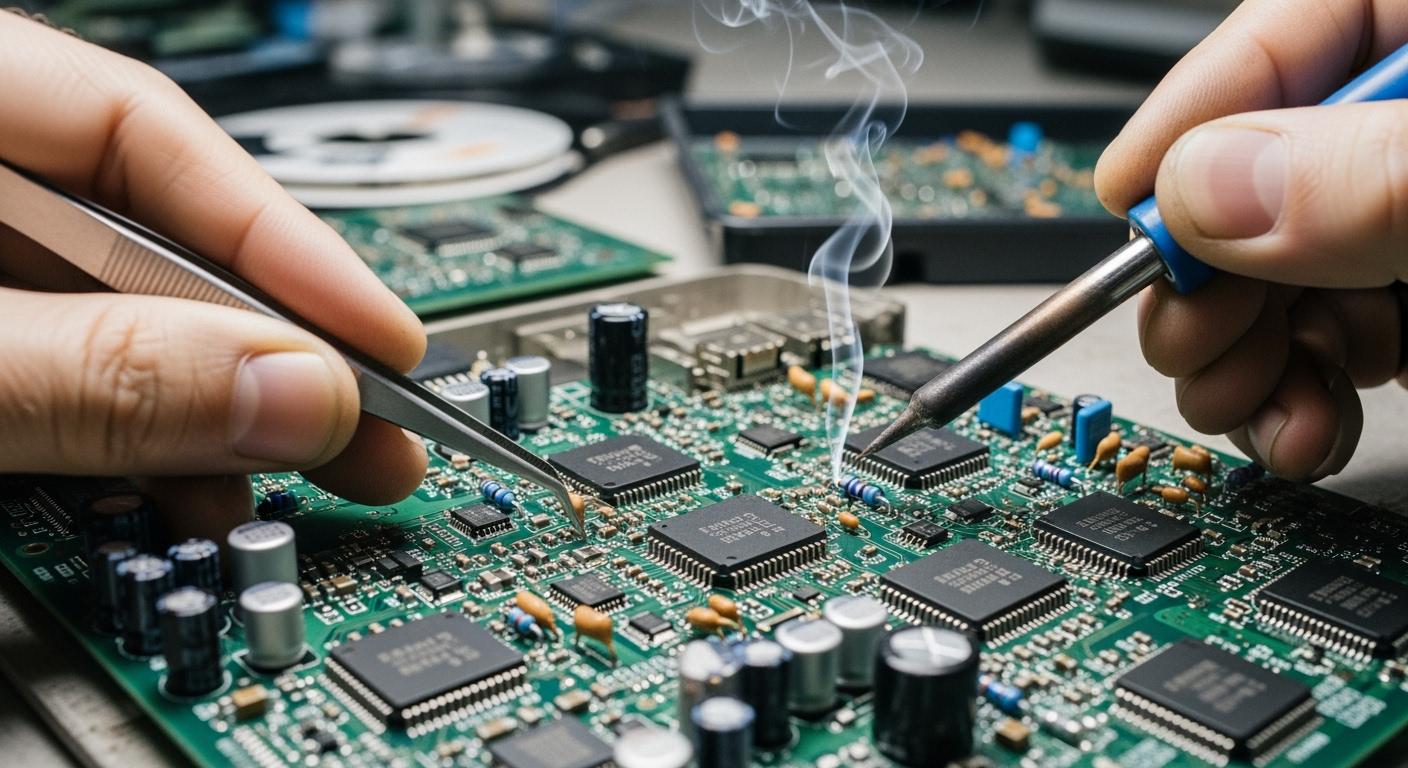
Printed circuit board assembly forms the backbone of modern electronics. You see its impact everywhere, from smartphones to medical devices. As the demand for advanced electronics grows, the global market for pcb assembly continues to expand rapidly:
- The market could reach over USD 102 billion by 2026, with steady growth projected through 2033.
- Some experts see even higher growth, estimating USD 176.6 billion by 2035.
Understanding the assembly process and best practices helps you achieve high quality, efficiency, and reliability. King Field stands out by offering advanced capabilities, flexible solutions, and strict quality control to meet your unique needs.
Key Takeaways
- Understand the PCB assembly process to ensure high quality and reliability in your electronic devices.
- Choose the right assembly technology—Surface Mount Technology (SMT) or Through-Hole Technology (THT)—based on your project needs.
- Implement best practices in design for manufacturability to avoid costly errors and streamline production.
- Select materials and suppliers carefully to enhance the performance and longevity of your PCB assemblies.
- Prioritize quality assurance through rigorous testing methods to guarantee the reliability of your products.
What Is Printed Circuit Board Assembly?
Definition and Role
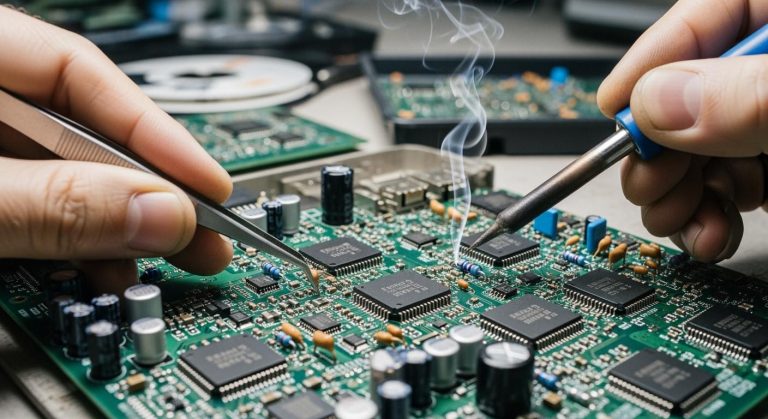
You encounter pcb assembly every time you use an electronic device. This process involves mounting electronic components onto a printed circuit board, creating a functional unit that powers everything from computers to medical equipment. Pcb assembly serves several essential functions in device manufacturing:
- Provides electrical connectivity between components
- Offers mechanical support for delicate parts
- Manages thermal conditions to prevent overheating
- Routes signals efficiently across the board
- Ensures electrical isolation for safety
- Enables miniaturization and reliability in modern devices
You see these functions come together through a series of steps. Pcb assembly includes component placement, soldering, inspection, testing, and depanelization. Each step ensures that your device operates as intended and meets strict quality standards.
Tip: Understanding the role of pcb assembly helps you make informed decisions when selecting manufacturing partners or designing new products.
Importance in Electronics
Pcb assembly stands at the heart of innovation in electronics. You benefit from devices that are smaller, lighter, and more powerful because of advancements in assembly technology. Surface Mount Technology (SMT) allows manufacturers to use smaller components, fitting more parts onto a single board. This compactness makes smartphones, laptops, and wearables thinner and lighter.
You also gain improved performance. SMT supports high-frequency circuits with smaller components, reducing interference and enhancing device functionality. This improvement is critical for products like Wi-Fi routers and advanced communication devices.
Pcb assembly enables manufacturers to deliver reliable products that meet the demands of today’s fast-paced market. You rely on these processes to ensure your devices work consistently and safely. As technology evolves, pcb assembly continues to drive progress, making electronics more accessible and efficient for everyone.
PCB Assembly Process
The pcb assembly process transforms your design into a reliable, high-performance product. You need to understand each stage to ensure quality, efficiency, and repeatability. King Field’s advanced automation and rigorous inspection and quality control set the standard for modern assembly, whether you require a single prototype or a production run of thousands.
Design and Preparation
Preparing for pcb assembly starts with a robust design. You must focus on manufacturability and testability to avoid costly errors later. Here are essential practices:
- Design for Manufacturability (DFM) ensures your board is easy and cost-effective to produce.
- Design for Testability (DFT) allows for efficient troubleshooting and validation.
- Select proper materials and substrates for reliability.
- Optimize PCB layout by adjusting trace width, spacing, and component placement.
- Use standardized footprints to simplify sourcing and assembly.
- Minimize complex vias to reduce errors and costs.
- Apply quality assurance standards such as ISO and IPC.
You set the foundation for a successful pcb assembly process by following these guidelines.
Stencil Printing
Stencil printing applies solder paste to the PCB pads, which holds components in place before soldering. The choice of stencil impacts accuracy and efficiency. Consider the following types:
| Type of Stencil | Advantages |
|---|---|
| Electroformed Stencils | Highly accurate, ideal for complex PCB soldering. |
| Framed Stencils | Fixed on a frame, offers accurate positional and dimensional application for high-volume PCBs. |
| Frameless Stencils | Not attached to a frame, suitable for smaller quantities or prototypes. |
| Prototype Stencils | Used for manual applications, helps eliminate printing mistakes. |
| Laser Cut Stencils | Produces detailed and accurate designs, ideal for complex soldering tasks. |
King Field uses advanced stencil printing techniques to ensure consistent solder paste application, supporting both rapid prototyping and large-scale pcb assembly.
Component Placement
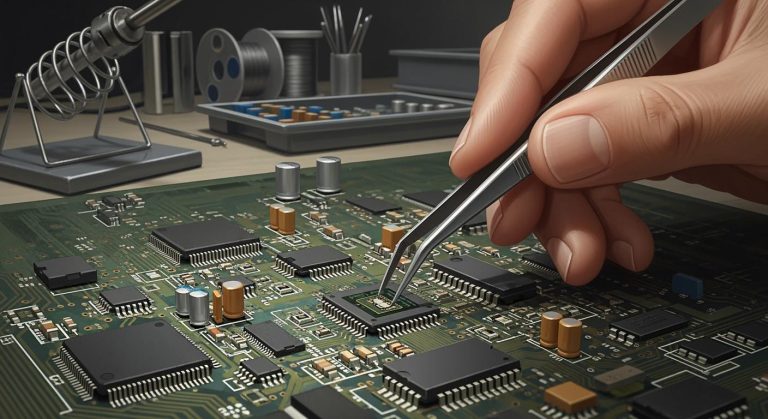
Component placement uses automated pick-and-place machines to position electronic parts on the solder-pasted board. You benefit from advanced robotics and flexible automation at King Field. These systems:
- Use multi-axis robotic arms for precise placement, even with complex or tiny components.
- Adapt quickly to design changes, reducing downtime.
- Integrate real-time inspection to catch errors immediately.
This step ensures that every component sits exactly where it should, whether you need a single prototype or a high-volume production run.
Soldering Methods
Soldering creates permanent electrical connections between components and the PCB. You will encounter two main methods:
| Criteria | Reflow Soldering | Wave Soldering |
|---|---|---|
| Component Type | Best for SMT components, ideal for high-density designs | Primarily for THT components, can solder SMT if glued |
| Process Complexity | Simpler control with automated processes | More complex, requires expertise in settings |
| Thermal Impact | Lower thermal stress, ideal for heat-sensitive parts | Higher thermal stress, risk of warpage or damage |
| Production Volume | Flexible for low and high volumes | Optimized for high-volume THT production |
| Defect Rates | Lower defect rates (<1%) due to precise application | Higher defect risk (2-5%) if parameters are not optimized |
- Reflow soldering works best for surface mount technology (SMT) and high-density designs. The board passes through a reflow oven, melting the solder paste and forming strong joints.
- Wave soldering suits through-hole technology (THT) and high-volume production. The board moves over a wave of molten solder, connecting all pins at once.
King Field’s automated soldering lines deliver consistent results, minimizing defects and supporting a wide range of pcb assembly requirements.
Inspection and Testing
Inspection and testing are critical for ensuring the reliability of your assembled boards. King Field employs multiple advanced methods:
| Method | Best For | Benefits | Challenges |
|---|---|---|---|
| In-Circuit Testing (ICT) | High-volume production | High fault detection, fast testing | High fixture cost, inflexible |
| Automated Optical Inspection (AOI) | Inline inspection | Fast, accurate for surface defects | Limited to visual defects |
| X-Ray Inspection | High-density boards | Detects hidden issues | Expensive, slower than AOI |
| Functional Testing (FCT) | Final validation | Thorough functionality checks | Time-consuming, setup-specific |
- AOI provides high-speed, non-contact inspection for surface defects.
- X-ray inspection detects hidden issues in high-density or complex boards.
- ICT identifies up to 98% of defects, including open circuits and shorts.
- FCT simulates real-world conditions to confirm performance.
You can trust King Field’s comprehensive inspection and testing to catch defects early and guarantee quality, whether for prototypes or mass production.
Final Assembly and Packaging
The final assembly step may include adding connectors, heat sinks, or other hardware. After assembly, packaging protects your boards during shipping and storage. You should expect:
- ESD bags and pink poly for static-sensitive components.
- Moisture barrier bags with desiccants for humidity protection.
- Bubble wrap or tissue paper for cushioning.
- Vacuum sealing for maximum protection.
These packaging standards prevent contamination, physical damage, and electrostatic discharge. King Field tailors packaging to your requirements, ensuring your pcb assembly arrives safely and ready for integration.
Tip: Each step in the pcb assembly process builds on the last. By partnering with King Field, you gain access to advanced automation, flexible production, and world-class quality control—no matter your project size or complexity.
Printed Circuit Board Assembly Technologies
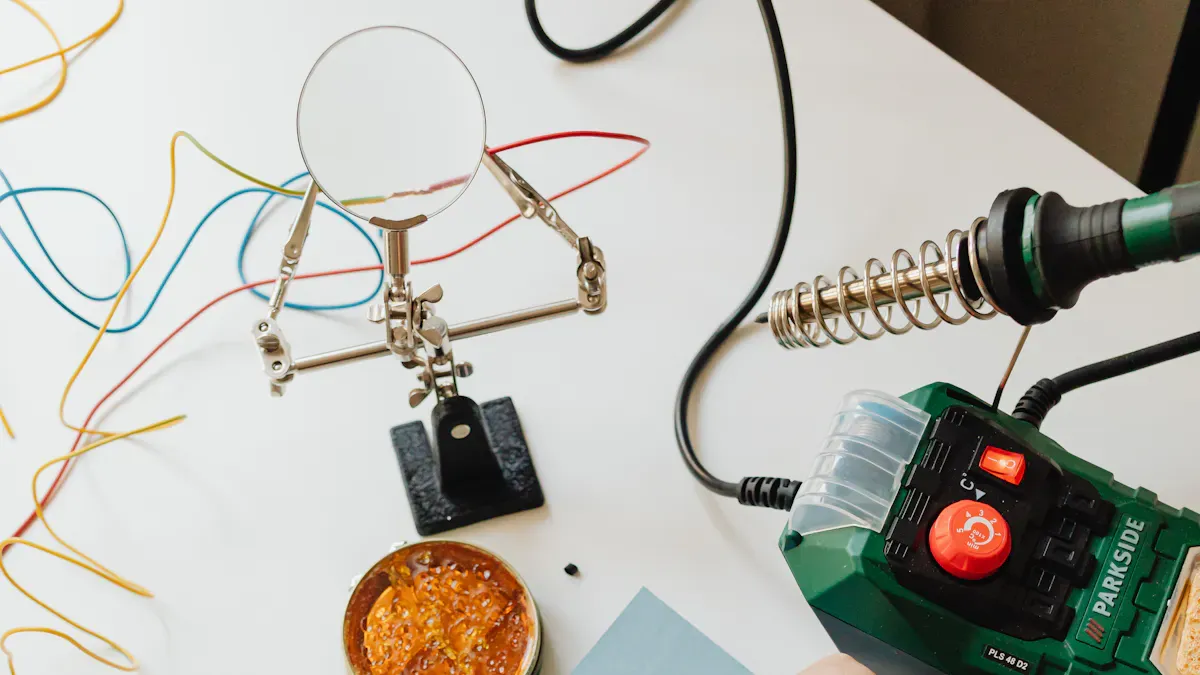
Printed circuit board assembly technologies shape the performance, reliability, and cost of your electronic products. You need to understand the main approaches—Surface Mount Technology (SMT), Through-Hole Technology (THT), and hybrid methods—to select the best fit for your project. King Field leverages state-of-the-art equipment and advanced automation to deliver precise, efficient, and flexible assembly solutions for every application.
Surface Mount Technology (SMT)
Surface mount technology has transformed pcb assembly by allowing you to mount components directly onto the surface of the board. This method uses automated pick-and-place machines and reflow soldering ovens to achieve high-speed, high-precision assembly. You benefit from smaller component sizes, higher circuit density, and faster production cycles.
Key advantages of SMT include:
- Miniaturization: You can fit more components on a smaller board, enabling compact device designs.
- Automation: SMT supports fully automated assembly, reducing errors and increasing throughput.
- Cost-effectiveness: High-speed machines lower labor costs and improve consistency.
King Field’s advanced SMT lines use precision robotics and real-time inspection systems. You receive reliable pcb assembly for everything from prototypes to large-scale production runs.
Through-Hole Technology (THT)
Through-hole technology remains essential for certain pcb assembly projects. In this method, you insert component leads through holes drilled in the PCB and solder them on the opposite side. THT offers strong mechanical bonds, making it ideal for applications that require durability or high power.
You may choose THT for:
- Power supplies and transformers
- Connectors and switches
- Industrial and automotive electronics
The following table highlights the main differences between through-hole and surface mount assembly:
| Aspect | Through-hole Assembly | Surface Mount Assembly |
|---|---|---|
| Component Mounting | Components are inserted into holes drilled in the PCB | Components are mounted directly onto the surface of the PCB |
| Component Size | Typically larger components | Smaller components allow for more complex designs |
| Assembly Process | Manual process using a soldering iron | Automated process with specialized equipment |
| Repairability | Easier to repair or replace | Requires specialized equipment for removal and replacement |
| Reliability | More reliable due to secure mounting | Less reliable, but improvements have been made |
| Space and Weight | Suitable for high power and mechanical strength | Better for smaller and lighter devices |
King Field’s skilled technicians and automated soldering systems ensure consistent, high-quality results for both THT and SMT pcb assembly.
Hybrid Approaches
Many modern pcb assembly projects require a combination of SMT and THT. Hybrid approaches allow you to take advantage of the strengths of both technologies. You can use SMT for high-density, lightweight components and THT for parts that need extra strength or heat resistance.
Hybrid assembly is common in industries such as:
| Application Field | Benefits |
|---|---|
| High-Frequency and RF Equipment | Ideal for RF and microwave communication devices, ensuring performance. |
| Automotive Electronics | Effective heat management in high-power devices, ensuring stability. |
| Consumer Electronics | Higher integration and lightweight designs for modern devices. |
| Medical Devices | High-resolution imaging quality for diagnostics. |
| Aerospace and Defense | Reliability under extreme conditions, critical for performance. |
| LED Lighting | Enhanced efficiency and longevity of LEDs. |
| Industrial Control Systems | Stability in high-temperature environments for automation devices. |
| Power Modules | Efficient operation and effective heat management in power management. |
King Field’s flexible assembly lines can handle complex hybrid projects, integrating both SMT and THT processes seamlessly. You gain the freedom to design advanced products without compromise.
Technology Selection
Choosing the right pcb assembly technology is crucial for your project’s success. You should consider several criteria to ensure the best fit:
- Type of components (through-hole vs. surface mount)
- Mechanical durability requirements
- Space constraints
- Automation needs
- Miniaturization
- Complexity of PCB design (HDI, flex, or rigid-flex)
- Manufacturing tolerances
- Component orientation
- Test points
- Assembly process compatibility (SMT, THT, or mixed technology)
- Environmental compliance (lead-free soldering)
- Inspection methods
- Specific application requirements (high power, high frequency, or compact devices)
King Field’s engineering team works closely with you to evaluate these factors. You receive expert guidance on technology selection, ensuring your pcb assembly meets your performance, cost, and reliability goals.
Note: The right assembly technology can reduce costs, improve reliability, and speed up your time to market. King Field’s advanced capabilities help you achieve the best results for every pcb assembly project.
Common PCB Assembly Challenges
Soldering Defects
You may encounter several soldering defects during pcb assembly. These issues can weaken connections, increase resistance, or even cause open circuits. Addressing them early is vital for long-term reliability. The table below outlines common defects, their causes, and prevention methods:
| Defect Type | Visual Description | Root Causes | Prevention |
|---|---|---|---|
| Tombstoning | Component lifts off its pad | Uneven heating, pad design, solder paste deposits | Symmetrical pads, thermal relief, reflow profile |
| Solder Balls | Tiny solder spheres on the board | Moisture, printing issues, pre-heat problems | Proper storage, pre-baking, controlled printing |
| Insufficient Solder | Weak or missing solder joint | Clogged stencil, contamination, coplanarity issues | Robust SPI, good solderability |
| Solder Voids | Gas bubbles in solder joint | Outgassing during reflow | High-quality paste, optimized reflow |
Soldering defects can undermine the integrity of your assembly, especially in critical industries.
Placement Issues
Component placement problems can disrupt the entire assembly process. You might see these issues due to inaccurate calibration, misaligned design files, or solder paste displacement. To reduce placement errors, follow these steps:
- Regularly calibrate pick-and-place machines.
- Use vision systems for verification.
- Keep design files accurate and current.
- Utilize fiducial markers for alignment.
- Optimize solder paste application and reflow profiles.
- Conduct thorough inspections with AOI and X-ray.
These practices help you maintain precision and consistency in pcb assembly.
Design Complexity
As your designs become more complex, you face higher manufacturing costs and lower yields. Tighter spacing and smaller drill sizes can increase the risk of defects. Reliability may suffer if plating or aspect ratios are not carefully managed. You should work closely with your assembly partner to balance innovation with manufacturability.
| Impact on Yield and Reliability | Description |
|---|---|
| Higher Manufacturing Costs | Specialized processes increase costs. |
| Lower Yields | Tighter spacing raises defect risk. |
| Reliability Issues | Complex plating and small drills may cause failures. |
Quality Assurance
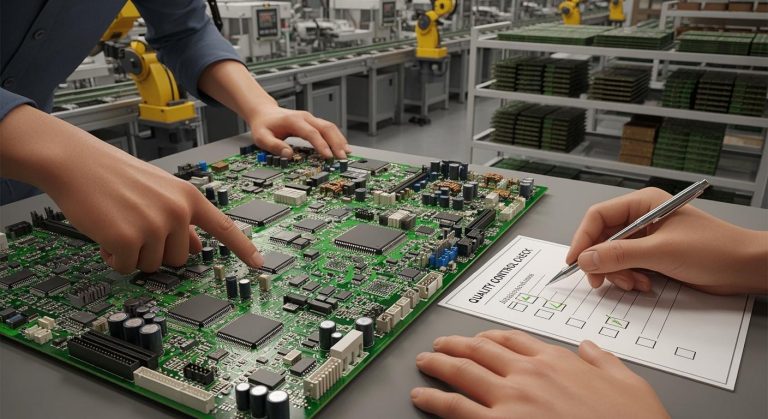
You need robust testing and quality assurance to ensure every board meets industry standards. IPC-A-610 is a globally recognized standard that sets clear criteria for electronic assemblies. It divides products into three classes:
| Class | Description |
|---|---|
| Class 1 | General Electronic Products – Focus on function, short lifespan. |
| Class 2 | Dedicated Service Electronic Products – Longer-term reliability, some imperfections allowed. |
| Class 3 | High Performance/Harsh Environment – Highest standards, critical performance required. |
King Field uses thorough testing protocols, including AOI, X-ray, and functional testing, to guarantee quality and reliability in every pcb assembly project.
Best Practices for PCB Assembly
Design for Manufacturability
You improve pcb assembly outcomes by focusing on design for manufacturability. This approach helps you avoid costly errors and streamlines production. Follow these best practices for beginners:
- Select components that are easy to source and place. This reduces delays and simplifies assembly.
- Apply industry standards and design rules. Compatibility with manufacturing processes lowers the risk of mistakes.
- Add test points and access areas to your layout. Efficient testing and troubleshooting become possible.
- Address thermal management with heat sinks, thermal vias, and proper spacing.
- Place components with assembly in mind. Proper orientation and spacing make soldering easier.
- Identify manufacturability concerns early. This minimizes design rework and saves time.
You set the foundation for reliable pcb assembly by following these principles.
Process Control
Effective process control ensures consistent quality in assembly. You can reduce defects and improve reliability by using these methods:
- Simplify designs with fewer components. This lowers the chance of errors.
- Implement thorough testing protocols, such as In-Circuit Testing and Functional Testing.
- Train employees regularly. Skilled workers make fewer mistakes.
- Use statistical process control for real-time monitoring. This helps you catch and correct issues before they become problems.
Consistent process control leads to fewer defects and higher quality in every assembly.
Material and Supplier Selection
Choosing the right materials and suppliers is critical for successful assembly. Evaluate each option using the following criteria:
| Criteria | Description |
|---|---|
| Quality | Confirm that materials meet specifications and pass necessary tests. |
| Cost | Balance cost reduction with quality assurance. |
| Delivery | Assess the ability to meet production timelines and lead times. |
| Relationships | Consider the potential for effective collaboration and synergy. |
| Material Sourcing | Verify reliability and compliance with regulations. |
| Production Capabilities | Match supplier capabilities with your production needs. |
You gain confidence in your pcb assembly when you select suppliers who align with these requirements.
Continuous Improvement
Continuous improvement drives excellence in assembly operations. Lean and Six Sigma methodologies help you minimize defects and maximize efficiency. You focus on customer value and empower employees through training and teamwork. Striving for higher quality levels, such as Six Sigma, reduces failures and repair costs. You build a culture that values ongoing improvement and adapts to new challenges.
King Field commits to industry standards, thorough testing, and RoHS compliance. You benefit from reliable pcb assembly and customer satisfaction.
Cost and Partner Selection
Cost Drivers
You must understand the main factors that influence the cost of PCB assembly. These drivers shape your project budget and affect your decisions from start to finish. The table below shows the most important cost drivers and their impact:
| Cost Driver | Cost Impact |
|---|---|
| Component Sourcing | Sourcing high-quality components may increase costs but ensures better performance and longevity. |
| Board Complexity | More complex PCBs incur higher costs due to intricate designs and routing. |
| Production Volume | Larger runs reduce per-unit costs due to economies of scale, while small batches are more expensive. |
| Testing and Quality Assurance | Thorough testing adds costs but is crucial for reliable product performance. |
| Turnaround Time | Quick-turn assembly can significantly increase costs due to expedited processes. |
You can manage your budget more effectively when you identify these drivers early. Choosing the right balance between quality and cost helps you avoid unexpected expenses.
Evaluating Assembly Partners
Selecting the best PCB assembly partner is essential for your project’s success. You should look for companies that demonstrate expertise, advanced facilities, and strong quality control. The following table highlights key factors to consider:
| Factor | Description |
|---|---|
| Expertise in sourcing and assembly | Ensures high-quality products through skilled handling of materials and processes. |
| State-of-the-art facilities | Supports the production of complex circuit boards, enhancing reliability and performance. |
| Quality control processes | Rigorous measures and inspections guarantee the integrity of every part, ensuring compliance. |
| Certifications and standards | Indicate adherence to specific guidelines, reflecting the manufacturer’s commitment to quality. |
| Customer support | A responsive support system is crucial for addressing concerns and ensuring smooth communication. |
You gain confidence in your assembly partner when you see these qualities. King Field offers advanced automation, strict quality control, and responsive customer support to meet your needs.
Tip: Ask about certifications and testing protocols. These details show a partner’s commitment to quality and reliability.
Balancing Cost, Quality, and Speed
You face trade-offs between cost, quality, and speed in every PCB assembly project. Leading providers use tailored strategies to meet your requirements. The table below summarizes how top companies achieve this balance:
| Aspect | Summary | Example Providers/Details |
|---|---|---|
| Quality | Strict quality control ensures reliability for demanding applications. | Medical, aerospace PCBs require rigorous inspection. |
| Speed | Fast turnaround times help you launch products quickly. | Providers deliver in 1-5 days for urgent projects. |
| Cost | Competitive pricing adapts to project volume and complexity. | Managing material and volume costs keeps budgets in check. |
| Service Tailoring | Custom solutions fit prototyping, low/medium volume, and high-reliability needs. | Scalable services support different project types. |
| Customer Requirements | Providers match strengths to your specific needs, balancing trade-offs accordingly. | Engineers select partners based on priorities. |
You achieve the best results when you work with a partner who understands your goals. King Field delivers flexible solutions, balancing cost, quality, and speed for every project.
You gain the best results in printed circuit board assembly by combining advanced methods, thorough inspection, and strong quality standards. The table below highlights the main advantages of each assembly method:
| Assembly Method | Advantages |
|---|---|
| Surface Mount Technology (SMT) | Fast placement, suitable for small components |
| Through-Hole Technology (THT) | Strong bonds, good for high-stress components |
| Mixed Assembly | Combines benefits of SMT and THT for design flexibility |
You should prioritize technical capabilities, quality processes, and supply chain management when selecting a provider. King Field delivers reliable printed circuit board assembly solutions with efficiency and customization. Apply these best practices to your next project for superior performance.
FAQ
What is the typical turnaround time for PCB assembly at King Field?
You can expect fast turnaround times. Prototype orders often ship within 3–5 days. High-volume production may take 7–15 days. King Field’s advanced automation helps you meet tight deadlines.
How does King Field ensure quality in PCB assembly?
You benefit from strict quality control. King Field uses Automated Optical Inspection (AOI), X-ray testing, and functional tests. These methods catch defects early and guarantee reliable performance.
Can King Field handle both prototypes and large production runs?
You receive flexible solutions. King Field assembles prototypes, small batches, and high-volume orders exceeding 10,000 pieces. You can customize your project based on your requirements.
Are King Field’s PCB assemblies RoHS compliant?
You get environmentally responsible products. King Field uses lead-free, RoHS-compliant materials. This ensures your assemblies meet global environmental standards.