 English
 Arabic
 Chinese (Simplified)
 Dutch
Dutch French
 German
 Italian
 Portuguese
 Russian
 Spanish
How to Achieve Reliable Rigid Flex Circuit Designs
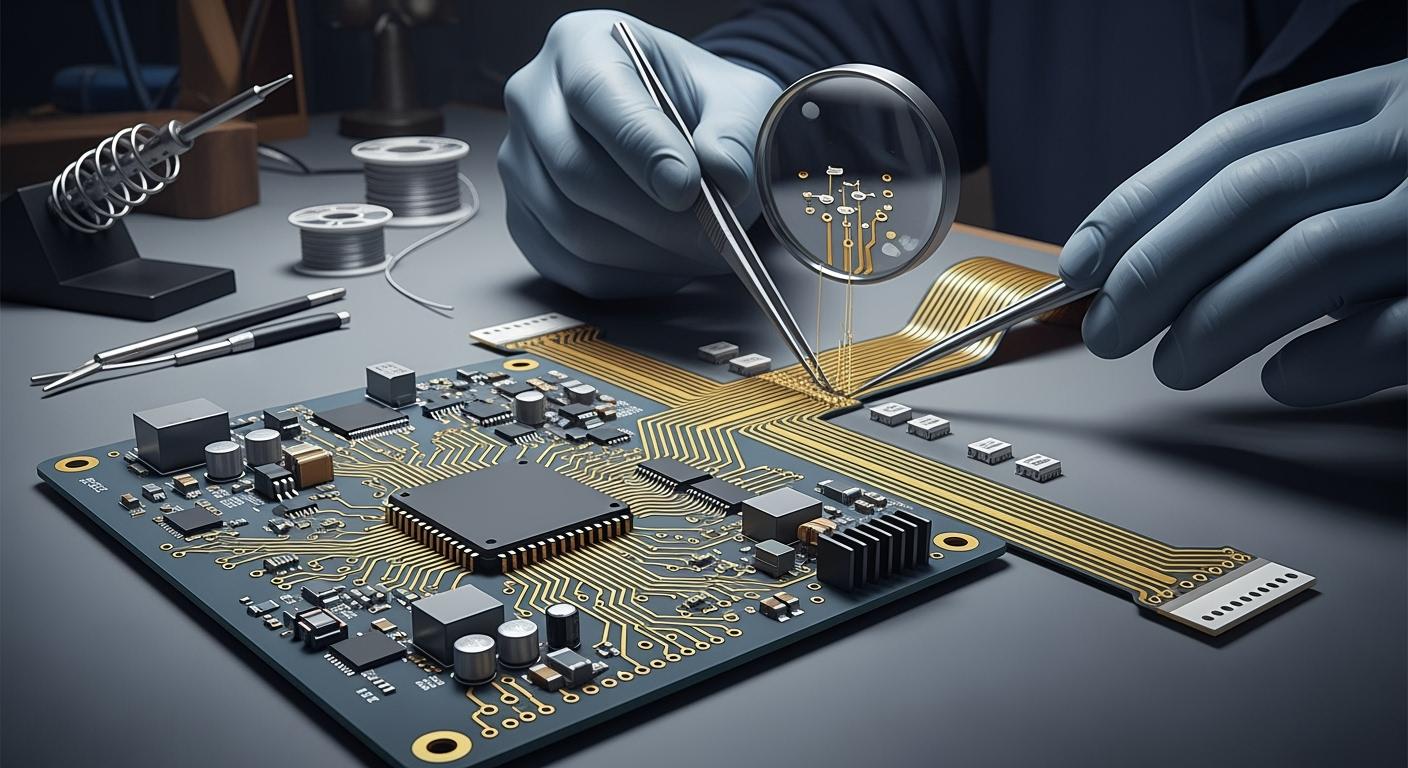
You can create a reliable rigid flex circuit design if you identify fold lines early, plan the design effectively, select quality materials, route traces meticulously, and consider costs during production. Implement effective strategies and maintain regular communication with your manufacturer to prevent issues before they arise. Surveys indicate that many problems associated with rigid flex circuit design include:
- Wrinkles and waves that can lead to early circuit failure due to improper handling or heat exposure.
- Vias in multilayer flex that may break from bending or temperature fluctuations.
- Impedance control challenges that can negatively impact signal quality in high-speed rigid flex circuit designs.
Key Takeaways
- Find fold lines and bend zones early. This helps stop mechanical problems. It also makes the circuit stronger. – Pick good materials like polyimide. These materials help the circuit bend and last longer. – Place traces with care. Use curved lines to lower stress. Do not use sharp corners because they can crack. – Work with your manufacturer from the beginning. This makes sure your design is simple to make and saves money. – Control heat and impedance well. This keeps the circuit working right and strong.
Mechanical Planning in Rigid Flex Circuit Design
Identifying Fold Lines and Bend Zones
You should find fold lines and bend zones early. This helps stop mechanical problems and makes your design stronger. Mark folding zones in your layout so they are easy to see. Use clear labels so the manufacturer knows where they are. Figure out the smallest bend radius for your material. Make sure it follows industry rules so traces and parts do not get hurt.
Here is a table that shows good ways to find fold lines and bend zones:
| Recommendation | Description |
|---|---|
| Folding Zones Definition | Mark folding zones in your documentation for easy recognition during manufacturing. |
| Bend Radius Calculation | Calculate minimum bend radius based on material and confirm it meets standards. |
| Clearance and Tolerance | Design folding areas with enough clearance to prevent stress on traces and components. |
| Component Placement | Keep components away from folding areas to avoid damage during bending. |
| Via Placement | Place vias carefully to avoid stress concentration in bending zones. |
| Trace Routing | Route traces perpendicular to bending direction and use wider traces in bend areas. |
| Alignment Features | Add notches or registration marks for accurate folding and alignment. |
| Folded State Simulation | Simulate the folded state to check for overstressed traces or components. |
| Folding Test Prototype | Build prototypes to test folding and find unforeseen issues. |
| Stress Concentration Points | Identify and modify potential stress points in folding areas. |
| Folded Area Reinforcement | Add layers or reinforcement in folded areas for support. |
| Attachment Methods | Choose methods for attaching folded sections, like adhesive bonding or mechanical fasteners. |
| Documentation | Document the folding process with instructions and visual aids for assembly. |
| Communicate with your Fabricator | Work closely with manufacturers to discuss folding requirements and assembly processes. |
If you do not find fold lines and bend zones right, you can have problems. Solder joints can get tired and break. Traces might lift up. Delamination can happen, and the circuit can fail badly. Bending, twisting, and stretching can hurt your rigid-flex circuit. You might also see glue coming out, materials sticking out, crazing, or haloing.
Tip: Always talk to your fabricator about folding needs. Working together early helps you avoid expensive mistakes.
Flex Section Length and Stress Management
Flex section length is important for stress and reliability. If flex sections are too short, they get too much stress when bent. This can cause cracks, lifted traces, or even circuit failure. Flex sections should be long enough to bend safely. Keep a bend radius at least ten times the circuit thickness for moving parts.
Here are some best ways to manage stress in flex circuits:
- Find fold lines and bend zones first to set the mechanical area.
- Make flex sections long enough so they do not get too much stress.
- Do not put parts near bend areas to lower strain.
- Plan the stackup and do not put extra copper in bend spots.
- Use adhesiveless polyimide for better strength.
- Add stiffeners under connectors to stop flexing when connecting.
- Use tear stops and rounded cutouts between rigid and flex parts.
- Do not put vias in flex areas unless they are made to not crack.
- Use 45° or curved corners on traces to lower stress.
Curved traces spread stress better than sharp angles. Stretchable designs can stretch over 315% and last many cycles. Meander patterns lower stress and make the circuit last longer. Multilayer designs spread stress across the flexible circuit.
| Case Study | Impact on Reliability | Design Strategy |
|---|---|---|
| Fitness Tracker Manufacturer | Improved reliability under mechanical stress | Used flexible PCBs |
| Automotive Company | Enhanced durability against vibrations | Employed flex and rigid-flex PCBs |
| Medical Devices | Reduced risk of failures in instruments | Improved maneuverability with flexible PCBs |
Note: Strain relief at transition points is very important. Put a flexible bead of epoxy or silicone at the flex-rigid joint to make a smooth filet.
Stackup and Layer Transitions
Stackup and layer transitions change how strong your rigid-flex design is. If the stack-up is not balanced, the board can warp, twist, or bow. This makes it hard to put together and can cause problems later. Vias near rigid-flex transitions get stressed because materials expand differently. This can make vias open, crack, or delaminate. Sharp corners in routing can focus stress and break copper over time.
Here is a table showing common problems from bad stackup and layer transitions:
| Failure Mode | Description |
|---|---|
| Unbalanced stack-up | Warping, twisting, or bowing in rigid regions, complicating assembly and risking reliability. |
| Vias near rigid-flex transitions | Stress at the via barrel due to differing CTEs, leading to opens, cracks, or delamination. |
| Sharp corners in routing | Stress concentrators that can cause copper fracture and circuit failure. |
To make stackup and layer transitions better, follow these steps:
- List what you need for signals, power, and mechanics.
- Pick rigid and flex materials that match in heat and electricity.
- Plan layers with ground planes close to signal layers.
- Use tools to check impedance and adjust for materials.
- Test with simulation for reflections, crosstalk, and EMI.
- Ask your manufacturer if the design fits their process.
- Finish the design and update documents before making it.
You should also use tear stops or rounded cutouts to stop delamination. Keep copper at least 0.030 inches from the edge of the flex zone. Leave space for strain relief fillets or glue if needed.
Tip: Always share your stackup and layer transition plans with your manufacturer. Their advice helps you avoid mistakes and makes your rigid-flex circuit more reliable.
Material Selection and Layer Considerations
Substrate and Adhesive Choices
You must pick the right material for your rigid-flex pcb. Polyimide is a top choice. It can bend over 100,000 times and still work well. It is also not too expensive. Polyester and liquid crystal polymer are good too. But polyimide is the best for both flexibility and strength. Adhesives are very important for how your board works. Acrylic adhesives are strong. They can handle heat and chemicals. Epoxy adhesives stick very well. They work in hot and shaky places. Polyimide adhesives work best with polyimide materials. They keep their shape when it gets hot.
| Material Type | Properties | Advantages |
|---|---|---|
| Polyimide | High flexibility, strong mechanical strength | Reliable for long-term use |
| Polyester | Good flexibility, moderate heat resistance | Lower durability in harsh environments |
| Liquid Crystal Polymer | Superior moisture resistance, high-frequency | Excellent for advanced applications |
- Adhesives hold copper foil to the board and stiffeners.
- The adhesive you pick changes how flexible and tough the board is.
- You need to match the adhesive to your heat and strength needs.
Layer Count and Distribution in Rigid-Flex PCB
The number of layers changes how your rigid-flex pcb works. More layers can help the board work better. But more layers make the board thicker and harder to bend. If you want the board to bend more, use fewer layers. You can also split up the flex parts for special needs. Putting circuits on different layers uses the polyimide core’s bendiness. Using more than one part helps you keep the board bendy and still meet electrical needs.
- More layers help power and EMI control.
- More layers make the board thicker and less bendy.
- Using different layers lets you fit more in a small space.
Managing Thickness and Flexibility
You need to keep thickness and flexibility balanced in your design. Adding more layers makes the board up to 40% thicker. This can make it hard to bend. Try to keep the board less than 0.2 mm thick for moving parts. Using adhesive-less materials keeps the board thinner. Some adhesives can crack when heated, so pick carefully.
Staggering traces in multilayer flexible pcbs makes them bend better and lowers stress. This helps your circuit last longer.
- Keep layers thin to lower stress when bending.
- Use adhesive-less materials for thinner boards.
- Think about how complex, bendy, and small your design needs to be.
Trace Routing and Component Placement
Trace Routing in Flex Areas
You must plan trace routing with care in flex pcbs. Good routing stops cracks and keeps the board strong. Change the circuit layout to let moisture escape. Add ports on the outside so drying is easier. Bake the board before assembly to get rid of moisture. Rounded corners in traces stop sharp turns that cause stress. Put important traces in places that do not bend much. Add strain relief where rigid and flex areas meet. Handle flex pcbs gently so they do not bend too much. Always pick materials that can handle the number of bends you need.
- Change the layout to help moisture escape.
- Add ports on the outside for better drying.
- Use rounded corners to stop sharp turns.
- Put important traces in places that do not bend.
- Add strain relief at rigid-flex transitions.
- Handle flex pcbs with care.
- Pick materials for the right number of bends.
Tip: Put traces across the bend line in flexible spots. This helps stop cracks from forming.
Curved and Teardrop Traces for Reliability
Curved and teardrop traces make rigid-flex boards last longer. Curved traces lower stress in flex areas. Wider traces and more space between them help too. Do not use right angles or sudden bends. Smooth, curved traces make bending safer. Stagger copper layers so the board does not break. Do not put vias close to transition zones. Teardrop shapes at trace ends lower stress. Rounded traces instead of sharp corners help flex circuits last longer.
- Curved and teardrop shapes lower stress.
- Wider traces and more space help the board.
- Do not use right angles or sharp bends.
- Stagger copper layers in flex areas.
- Keep vias away from transition zones.
- Use teardrop shapes at trace ends.
Note: Rounded traces and teardrop pads help your rigid-flex board survive many bends.
Component Placement in Rigid and Flex Sections
You must place components carefully on rigid-flex boards. Line up the board with the copper grain for better bending. Make sure traces curve gently in flexible parts. Do not put pads or vias on flexible areas. Put them in rigid parts if you can. Use anchors and teardrop shapes for vias in flex areas if needed. Make holes at least 10 mils wide with a 10 mil ring around them. Route traces straight and across the bend line. Use slow curves when changing trace direction. Follow IPC 2223 rules for coverlay and via spots. Keep vias at least 0.125 inches from the rigid to flex edge. Try not to switch layers between rigid and flex parts. Do not put vias in bend areas to stop cracks.
- Put components in rigid parts.
- Use anchors and teardrop shapes for vias in flex.
- Make holes and rings the right size.
- Route traces straight and across bends.
- Use slow curves for trace changes.
- Follow IPC 2223 rules.
- Keep vias out of bend areas.
Tip: Placing components with care makes rigid-flex boards more reliable and stops early failures.
Manufacturing and Assembly Considerations
Specialized Tooling and Handling
You must use special tools and be careful when making rigid-flex boards. Every step helps stop damage and keeps the board strong. Here are the main steps you should follow: First, pick materials like polyimide and FR-4. Clean and cut them so there are no mistakes. Next, use lamination presses to stick layers together with heat and pressure. Watch the alignment and transition spots closely. Drill holes with lasers in flex areas. Use regular drills in rigid parts. Plate copper to make sure connections stay good. Place parts with pick-and-place machines. Put most parts on rigid sections so flex pcbs do not get stressed. Test and check boards with special machines to find problems early.
| Equipment Type | Purpose |
|---|---|
| Lamination Presses | Stick layers together with heat and pressure. Control temperature to stop warping. |
| Laser Drilling Systems | Make tiny holes in flex areas very accurately. |
| Pick-and-Place Machines | Put parts in the right spot and handle small pieces well. |
| Reflow Ovens | Heat solder joints without hurting flex materials. |
| Automated Optical Inspection (AOI) | Find surface problems using clear pictures. |
Tip: Be gentle with flex pcbs during assembly. Bending or twisting can make cracks or mess up the board.
Design for Manufacturability in Rigid-Flex Circuit
You should think about how to build your rigid-flex design from the start. Working with your manufacturer early helps you make a design that is easy to build. When you work together, you can pick the best materials and stackup. You can find problems like bad trace routing or wrong copper grain direction before you finish. This saves time and money. You also keep the design from being too hard or too simple, which helps control costs. Making your design fit the factory’s process means faster building and better results. You get your rigid-flex boards made quicker.
Note: Share your design ideas with your manufacturer early. Their help can stop expensive mistakes and make assembly better.
Assembly Process and Reliability
You will have some problems during assembly that can hurt reliability. Solder joints can get weak and break, especially where the board bends. Polyimide can bend out of shape from heat or water, making it hard to line up layers and parts. You need to bake flex pcbs before putting them together. Use machine vision to keep everything in the right place. PI film melts at a lower temperature, so you must use special ovens that do not get too hot. This makes the process slower but keeps your rigid-flex circuit design safe.
| Challenge | Description |
|---|---|
| Solder Joint Fatigue | Solder joints in bending spots can break, so you may need extra steps and changes in design. |
| Dimensional Instability | Polyimide can bend from heat and water, so you need to bake it first and use special tools to line things up. |
| Thermal Management Difficulty | PI film needs cooler soldering, which takes longer and needs special ovens. |
Remember: Planning ahead and talking to your manufacturer early helps you fix assembly problems and makes your board more reliable.
Cost Optimization Strategies
Balancing Performance and Cost
You can save money on rigid-flex projects by making smart choices. First, check the size of your board. Smaller boards cost less, but they must fit your needs. Work with your manufacturer to make sure your design works for them. This helps you avoid extra costs. Picking the right materials can save up to 30%. Choose materials that match your budget and reliability needs.
Here is a table with ways to balance cost and performance:
| Strategy | Description |
|---|---|
| Optimize Board Size | Smaller boards cost less but must still work well. |
| Design for Manufacturability | Work with your manufacturer to lower costs and avoid mistakes. |
| Material Selection | Choose materials that give you the best mix of price and quality. |
Tip: Using fewer layers and simple shapes saves money but keeps good quality.
Reducing Complexity in Rigid-Flex PCB
Keep your rigid-flex design simple. Fewer layers mean lower costs and better results. Using less prepreg saves money. Simple designs also mean fewer mistakes when making the board. Complex designs can cause more waste and take longer to build.
| Strategy | Impact on Cost and Manufacturability |
|---|---|
| Reduce number of layers | Lowers costs and improves yields |
| Optimize material selection | Saves money and makes building easier |
| Enhance design for manufacturability | Reduces errors and scrap rates |
- Simple designs help you avoid costly errors. Fewer layers and basic shapes make building easier.
Early Manufacturer Collaboration
Talk to your manufacturer early in the process. Working together early can cut redesign costs by 10-15%. Many manufacturers give free design reviews. These reviews help you find problems before you build. Rigid-flex solutions may cost more per board, but they save money in small spaces and tough jobs. You get the best results when you share your plans and ask for advice from the start.
Note: Early talks with your manufacturer help you make better choices and avoid costly mistakes. Always think about cost and reliability when you plan.
Thermal and Impedance Considerations
Heat Sinking in Rigid-Flex Circuits
It is important to control heat in rigid-flex circuits. Good heat sinking helps your board last longer and work well. If you do not manage heat, cracks can show up in vias. You might also lose electrical connections. This happens because materials grow at different speeds when they get hot. There are many ways to help heat move away:
- Pick PCB materials that move heat well, like ceramics or metal cores.
- Make copper thicker so it spreads heat better.
- Add thermal vias to pull heat away from hot spots.
- Use thermal pads and heat sinks to move heat out.
- Spread out hot parts and give them space.
- Use stiffeners or coatings that help heat flow.
Some rigid-flex designs use metal core PCBs for high power jobs. Polyimide flex materials are good for light boards. Ceramic-filled laminates help with heat in advanced boards. These tricks lower the chance of heat damage and make your board last longer.
Tip: Always check your copper thickness and how many thermal vias you use. These choices change how well your board handles heat.
Impedance Control at Flex-to-Rigid Transitions
Impedance control is very important in rigid-flex circuits. It matters most where flex and rigid parts meet. If you do not control impedance, signals can bounce back and cause mistakes. Here are some ways to keep impedance steady:
- Change trace width or layers slowly to stop signal bounce.
- Use connectors that handle impedance changes well.
- Change line width, spacing, or core thickness between flex and rigid parts.
When you bend polyimide, its dielectric constant can change by 5-15%. This can change impedance and hurt signal quality. Tight bends can push traces closer together. This lowers impedance by up to 12% for differential pairs. Trace shapes can go from rectangles to ovals at sharp bends. This also lowers impedance.
| Impedance Challenge | Impact on Circuit | Solution |
|---|---|---|
| Dielectric constant changes | Impedance shifts | Use stable materials, gentle bends |
| Trace spacing compression | Lowered impedance | Keep enough space between traces |
| Trace geometry distortion | Signal loss, reflections | Avoid sharp bends, use tapers |
Note: Always plan your layout to avoid sudden changes where flex meets rigid. Careful planning keeps signals clear and your rigid-flex board strong.
You can get good results in rigid-flex projects if you plan early and talk with your manufacturer. Polyimide in flex sections helps your circuit handle heat and chemicals. Rigid and flexible layers together make fewer weak spots and fewer mistakes when building. You also save money because rigid-flex boards use fewer connectors and need less fixing.
| Best Practice | Benefit |
|---|---|
| Keep Bend Lines Clear | Helps your circuit last longer and bend without breaking. |
| Decrease Stress Points | Stops weak spots and spreads out stress. |
| Route Trace Placement | Makes your design stronger and lowers stress. |
| Bolster Traces | Keeps parts in place when the board bends. |
| Effects of Metal Plating | Stops cracks by making traces better. |
Use these best practices to make a rigid-flex circuit that works well and lasts longer. Try these steps when you start your next design and you will see better results.
FAQ
What is the best material for flex sections in rigid-flex circuits?
Polyimide is the best choice for flex sections. It bends many times without breaking. Polyimide is strong and lasts a long time. It does not get hurt by heat or chemicals. You can use it for lots of bends and it stays good.
How do you prevent trace cracking in bend areas?
Use curved traces and teardrop pads to stop cracks. Do not make sharp corners in your traces. Put traces across the bend line, not along it. Make traces wider to spread out stress. Keep traces away from tight bends to help them last.
Can you place components on the flex section?
It is better not to put components on flex sections. Place them on rigid parts to keep them safe. Bending can hurt parts on flex areas. If you must put them on flex, use anchors and teardrop pads for support.
How do you control impedance at flex-to-rigid transitions?
Plan trace width and spacing with care. Use smooth tapers between flex and rigid spots. Pick materials that do not change much. Do not use sharp bends. Test impedance with tools before you build the board.
What is the minimum bend radius for a flex circuit?
The bend radius should be at least ten times the flex thickness. This helps stop cracks and lowers stress. Always check the material guide for the right number.