 English
 Arabic
 Chinese (Simplified)
 Dutch
Dutch French
 German
 Italian
 Portuguese
 Russian
 Spanish
Emerging Trends Shaping Rogers PCB Materials in 2025
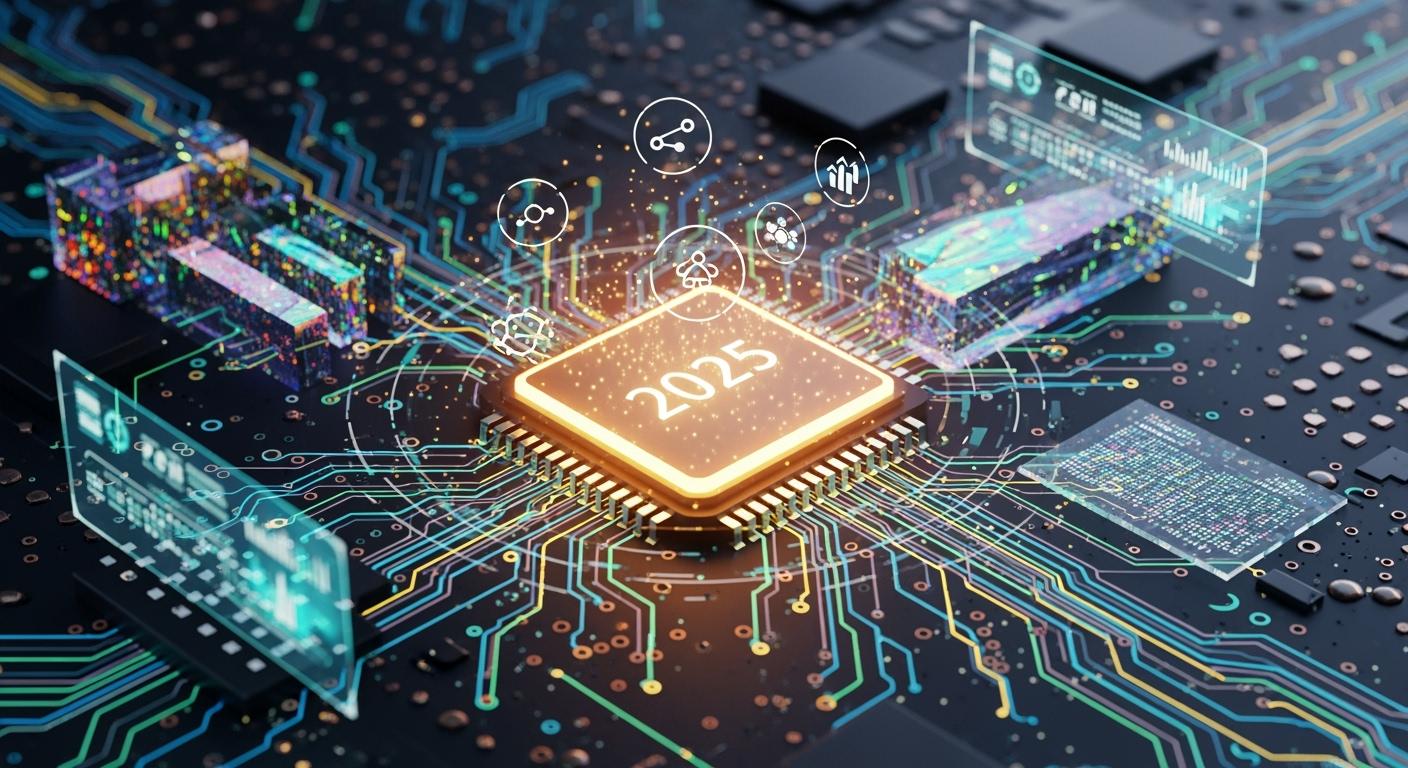
You will notice new trends in Rogers PCB materials for 2025. These trends focus on more layers, build-up technology, smaller holes, and advanced nanocomposite materials. These changes help you get better performance. They also give stronger signal integrity and better thermal management in high-frequency electronics. Manufacturers now use eco-friendly materials and renewable resources. This helps make products more sustainable. You get stable dielectric properties and low loss. These features support 5G, automotive, and IoT uses.
| Trend | Description |
|---|---|
| Layer Capability | 6 to 32 layers for many uses |
| Nanocomposite Materials | Better dielectric strength and thermal management |
| Sustainability Initiatives | Eco-friendly and bio-based substrates |
| 5G and 6G Network Support | Stable performance for fast wireless communication |
- The need for high-frequency, low-loss materials is growing.
- Smaller devices need thinner, lighter, and flexible boards.
- Many manufacturers now care more about sustainability.
Key Takeaways
- Rogers PCB materials help with high-frequency uses. They keep signals strong and reduce loss in devices like 5G and IoT.
- Being eco-friendly is important. Using green materials helps the planet and keeps things working well.
- New materials like nanocomposites and conductive inks make devices work better. They let devices be smaller, lighter, and use less energy.
- Picking the right base material matters a lot. Flexible bases work best for wearable tech. Ceramic-filled bases are good for handling heat in strong devices.
- Planning early is very important because getting materials can take longer. There are also supply chain problems. Keep up with market news and rules.
Emerging Trends in PCB Technology
Rogers PCB Materials: Key Properties
There are new changes in PCB materials. These changes affect how you design and use electronics. Rogers PCB materials are special because they have stable dielectric properties, low loss, and good thermal management. These things help you make devices that work well and last longer.
It is important to pick PCB materials that stay stable. This helps your devices work the same every time, even with high power. Low loss means signals move easily, so your devices work better and last longer. Good thermal management keeps things cool. This protects your electronics and helps them work better.
Here is a table that shows how these features help your designs:
| Attribute | Contribution to Advancement |
|---|---|
| Stable Dielectric Properties | Makes sure your device works well with high power. |
| Low Loss | Helps signals move better and makes devices more reliable. |
| Thermal Management | Keeps things cool and helps your device last longer. |
These features make Rogers PCB materials a great choice for new electronics. You get better signals and your devices are more reliable.
Low Dielectric Loss & High-Frequency Use
You use high-frequency applications more now. Rogers PCB materials help your devices work well because they have low dielectric loss. This means signals move faster and do not slow down.
- Rogers PCB materials have steady dielectric constants. This helps you control impedance and stop signal reflections. That is important for high-frequency work.
- Lower dielectric constants let signals move quickly. Your devices have less delay and work better.
- These materials are good for high-speed and high-frequency designs. They work well for telecommunications and data transmission.
- Rogers PCB materials keep signals strong. You can count on them to lower losses. This is important for 5G and other new uses.
- Stable dielectric properties help you control impedance and stop signal reflections. Your signals move well, and your devices work better.
You see that new trends in PCB technology focus on these things. More devices use advanced PCB materials for 5G, automotive, and IoT needs. You get better performance, reliability, and efficiency in your electronics.
Advanced Rogers PCB Materials
Rogers 6000 Series Overview
The Rogers 6000 series brings big changes to pcb. These materials use ceramic-filled PTFE. This helps lower signal loss and keeps things cool. You get strong results with high-speed and high-frequency work, even above 30 GHz. The Rogers 6000 series gives a steady base for new electronics. You can trust these materials to keep your devices cool and signals clear. When you build fast circuits, you need materials that stay strong under stress. The Rogers 6000 series helps you reach this goal.
If you pick the Rogers 6000 series, you get low loss and good heat control. This helps your pcb work better in 5G, radar, and satellite systems.
Nanomaterials and Conductive Inks
You can make your pcb designs better with nanomaterials and conductive inks. These new materials help you make boards that are smaller, lighter, and faster. Nanomaterials make your pcb stronger and help with heat. You get better signals and less noise. Conductive inks let you print circuits on many surfaces. This lets you make flexible and custom shapes for your devices. You can use these inks to build fast connections in small spaces. When you use nanomaterials and conductive inks, your rogers pcb materials get better. You can meet the needs of high-speed and high-frequency designs in new electronics.
- Nanomaterials help you control heat and make signals better.
- Conductive inks let you print thin lines for fast circuits.
- You can use these materials to make flexible, wearable, or curved devices.
Flexible and Ceramic-Filled Bases
Now you have more choices for your pcb base. Flexible bases and ceramic-filled bases each have special uses. Flexible bases let you bend and twist your pcb. This is good for wearable tech and small gadgets. Ceramic-filled bases, like aluminum nitride (AlN), help you move heat away in high-power devices. You can use these bases to keep your electronics safe and working well.
Here is a table that shows how these bases compare:
| Feature | Ceramic-Filled Bases (AlN) | Flexible Bases (Rogers) |
|---|---|---|
| Thermal Conductivity | 170+ W/mK | < 1 W/mK |
| High-Frequency Performance | Excellent | Very low and stable Dk |
| Cost-Effectiveness | Moderate for high power | Good for low power RF |
| Application Suitability | High power, heat management | Low to medium power RF |
You can see ceramic-filled bases are best when you need to move heat away fast. Flexible bases are good when you want light and bendy devices. Both types of rogers pcb materials help you build fast and high-frequency circuits for new technology.
Tip: Pick your base material based on what your device needs. If you need strong heat control, pick ceramic-filled. If you want to bend your board, choose a flexible base.
You can use these new materials to get your pcb ready for the future. Fast designs, high-frequency materials, and new shapes are now possible. Rogers pcb materials give you what you need to build better, faster, and more reliable electronics.
Signal Integrity and Performance
Stable Dk and Low Loss
You want your pcb to keep signals strong and clear. Rogers pcb materials help you do this. These materials keep the dielectric constant steady at many frequencies. This helps you control impedance and keep signals fast. You do not get much signal distortion or loss. Rogers pcb materials have low loss tangent. This means signals move with less energy lost. Your high-frequency circuits work better, like in RF and microwave designs. You see clear and strong signals. This is important for 5G, radar, and satellite systems.
Tip: Pick materials with a steady dielectric constant and low loss tangent. You will have fewer signal problems and better results in your pcb.
Here is a table that shows how Rogers pcb materials help with signal integrity and high-frequency work:
| Feature | Benefit |
|---|---|
| Ultra-low signal loss | Cuts down high-frequency loss, so range and accuracy are better for satellite and car radar. |
| Consistent dielectric properties | Keeps the dielectric constant steady and loss tangent low, so circuits act the same in high-frequency uses. |
| Improved thermal reliability | Works well in tough places, which is important for car electronics and other hard jobs. |
You get steady signals and good high-frequency performance. Your pcb works well in many new devices.
Thermal Management Advances
Your pcb needs good heat control. Rogers materials give you better thermal properties. These materials work well when things get hot. They have high thermal conductivity. This helps your pcb move heat away from important parts. Your signals stay strong and your device stays safe.
- Rogers pcb materials use COOLSPAN TECA adhesive film to stick heatsinks to circuit boards. This glue has thermal conductivity of 6 W/m·K. You get a good thermal connection.
- High thermal conductivity helps your pcb get rid of heat. You can add thermal vias and heatsinks for more cooling.
- You should pick high-Tg FR-4 or advanced bases like Rogers for good heat control. A higher glass transition temperature helps stop damage and breakdown.
Good heat control helps keep signals clear and strong. Your pcb stays cool, your signals stay good, and your device lasts longer. You can trust Rogers pcb materials to work well in high-frequency circuits and tough places.
HDI, Miniaturization, and Applications
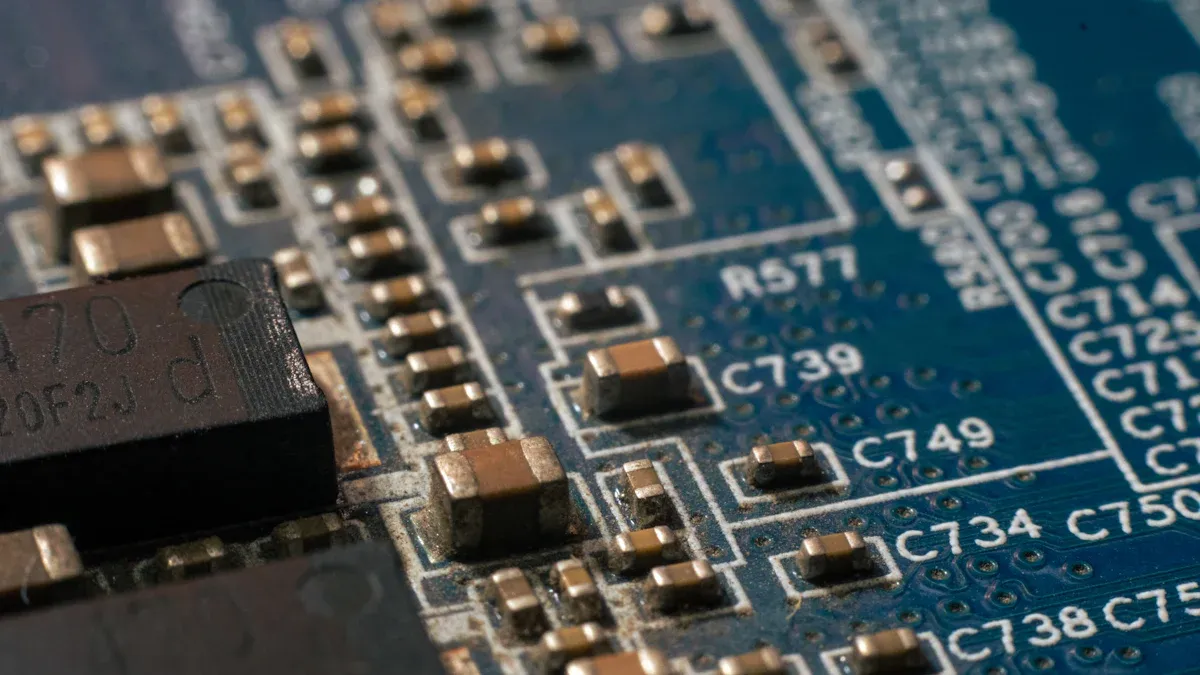
HDI PCB Trends
HDI technology is changing how people design pcb. HDI means High-Density Interconnect. This lets you make pcb boards that are smaller and thinner. You can put more parts in a small space. Phones and tablets use HDI pcb to be lighter and stronger. In 2025, almost 30% of the HDI pcb market will be for phones and mobile devices. Smaller pcb boards help add new features and keep devices easy to carry.
- Devices need tiny and smart pcb boards for new features.
- 5g networks want pcb that work with high frequencies and less delay.
- Car electronics are growing fast with electric cars and smart tech.
Rogers pcb materials help you with these new problems. They give you steady dielectric properties and better heat control. These things help your pcb work well with high-frequency jobs. You can trust Rogers materials for 5g and small electronics.
HDI pcb trends let you make devices that are thin, light, and smart. You can add more things without making devices bigger.
Applications in 5G, Automotive, IoT
You use Rogers pcb materials in many new devices. 5g technology needs pcb that work at high frequencies from 450MHz to 52.6GHz. Rogers materials have low dielectric loss, so signals move fast and stay strong. This is important for 5g phones, base stations, and smart antennas.
Car electronics use pcb for electric cars and driver-assist systems. Rogers pcb materials help send signals fast and control heat. Your car electronics work better and last longer.
You also see Rogers pcb in iot devices. These devices connect to the internet and share data. You need pcb that are small, strong, and save energy. Rogers materials help your iot sensors, smart home gadgets, and wearables work well.
- Rogers pcb materials are important for 5g because they handle high frequencies.
- You get low dielectric loss for strong signals in car and iot devices.
- 5g needs pcb that can send more data and do it faster.
- Rogers 4350 is a top pick for 5g and iot because it helps with high-speed data.
You can use Rogers pcb materials to make better devices for 5g, cars, and iot. Your electronics get faster, smarter, and more reliable.
Sustainability in Rogers PCB Materials
Eco-Friendly Formulations
More companies now care about the environment when making PCBs. Rogers Corporation is a leader in using eco-friendly materials. You can pick halogen-free PCB materials that do not have harmful toxins. These safer materials follow safety rules and protect your health and nature. You still get good performance without the dangers of old halogen-based materials.
Eco-friendly PCB manufacturing also uses less energy and makes less waste. Rogers Corporation works to save energy and cut waste when making 4000 Series materials. These materials last longer, so you do not throw away as many electronics. Rogers 4000 Series materials meet rules like RoHS and REACH. You can choose non-brominated options like RO4003C to help with flame retardant problems.
Tip: If you use eco-friendly materials, you help the Earth and make your devices safer.
Recycling and End-of-Life
You should think about what happens to PCBs after you use them. Recycling lets you get back up to 95% of metals from PCBs. You can use resin and fiberglass again in other products. This helps the planet and makes less waste.
Here is a table that shows some ways to recycle:
| Strategy | Description |
|---|---|
| Material Recovery | You can get most metals back from old PCBs. |
| Resin and Fiberglass Repurposing | You can use these materials in new things. |
| Compliance with Regulations | You must follow rules for safe recycling. |
You can find new eco-friendly materials for end-of-life solutions. JIVA Materials’ Soluboard® uses natural fibers and melts in hot water. Polylactic acid (PLA) comes from plants and works for flexible PCBs. These green materials make recycling easier and safer.
You can use Life Cycle Analysis (LCA) to pick materials that are good for the planet and work well. You design things so they can be taken apart and recycled. This helps you protect the environment.
Note: If you plan for recycling, you help the planet and make less electronic waste.
Market Drivers and Challenges
Adoption Factors and Costs
Many things are changing the Rogers PCB materials market. More people want high-frequency and high-speed electronics. You see this in 5G, IoT, aerospace, and defense. These areas need strong materials for good communication and new tech. People want ultra-low-loss substrates and better ways to make PCBs. These new ideas help devices work faster and last longer.
- You need PCB solutions that follow strict rules.
- You pick materials that help new tech talk clearly.
- Smaller devices mean you must use better materials.
Rogers materials cost more than FR4. You pay extra because making them is expensive. The price can be three to ten times higher than FR4. You must think if Rogers materials are worth the price. They save money later because devices last longer and break less. You should check cost and performance before you choose. If you need strong and reliable communication, Rogers materials are a good choice.
| Cost Factor | Rogers PCB Materials | FR4 Materials |
|---|---|---|
| Price Range | 3-10x higher | Standard |
| Reliability | Very high | Moderate |
| Maintenance Costs | Lower over time | Higher over time |
| Suitability for Technology | Advanced | Basic |
Supply Chain and Compliance
There are new problems in getting Rogers PCB materials. It now takes longer to get your order. Before, you waited 8-12 weeks. Now, you wait 20-30 weeks. You must plan your projects six to nine months ahead. Order backlogs are also 20-30 weeks. You need to change your plans and watch for supply updates.
| Metric | Previous Lead Time | Current Lead Time | Order Backlog |
|---|---|---|---|
| Standard Lead Time | 8-12 weeks | 20-30 weeks | 20-30 weeks |
| Planning Cycle | 3 months | 6-9 months | N/A |
There are also new rules for the market. You must use eco-friendly and halogen-free materials. These rules come from global efforts to help the planet. You follow laws like RoHS and REACH. You pick bio-based resins and low-emission materials to follow these rules. Tech companies now care more about the environment. You must keep up with new rules to keep your products safe and legal.
Tip: Work with your suppliers and watch for new rules. This helps you avoid delays and keep your projects on time.
You see that market needs, costs, supply chain, and rules all matter. You must balance performance, price, and the planet when you pick Rogers PCB materials for your next tech project.
You notice Rogers PCB materials are changing electronics. These changes help signals stay strong and clear. They also help devices handle heat and last longer. Using eco-friendly ways and new designs is important now.
- Better signal integrity helps 5G and satellites work well.
- Good heat control is needed for electric vehicles.
- Caring for the planet makes devices safer and greener.
| Application | Benefit |
|---|---|
| RF Transceiver | Lets you talk clearly |
| Microwave Radar | Helps you find your way |
| Medical Imaging | Gives you clear pictures |
Rogers keeps making new answers for hard problems. You will see more new ideas and better PCB technology soon.
FAQ
What makes rogers PCB materials different from standard options?
Rogers PCB materials have steady dielectric properties and low loss. These things help your devices work well at high frequencies. Rogers materials also help control heat in advanced electronics.
How do rogers materials support high-speed wireless communication?
Rogers materials keep signals strong and clear. You see less signal loss and better results in fast wireless communication. These materials help your devices send data quickly and without problems.
Can you use rogers materials for smart pcbs for iot devices?
Yes, you can use rogers materials for smart pcbs for iot. These materials help your devices stay small and work well. You get better signals and your devices last longer.
Are rogers PCB materials eco-friendly?
Many rogers PCB materials use halogen-free and bio-based bases. You help the planet when you pick these materials. Rogers also helps with recycling and safe disposal.
What challenges do you face when using rogers PCB materials?
You might wait longer to get your order because of supply chain delays. Rogers materials cost more than regular options. You need to plan ahead and think about both cost and performance.