 English
 Arabic
 Chinese (Simplified)
 Dutch
Dutch French
 German
 Italian
 Portuguese
 Russian
 Spanish
Classification and Selection of High-Frequency Laminates
Currently, cutting-edge technologies such as 5G communication, autonomous driving, satellite navigation, and millimeter-wave radar are rapidly evolving, driving the continuous increase in signal transmission speeds and frequencies. Traditional PCB substrates (e.g., FR-4) suffer from significant signal loss in high-frequency environments and can no longer meet the demands of modern technological advancements. In this context, high-frequency laminates have emerged as indispensable core materials. They serve as the “high-quality roadbed” for high-speed information transmission channels, providing a solid foundation for the efficient and complete transmission of high-frequency signals.
So, what are the specific classifications of high-frequency laminates? What criteria should we use for selection? This article will provide detailed answers to these questions.
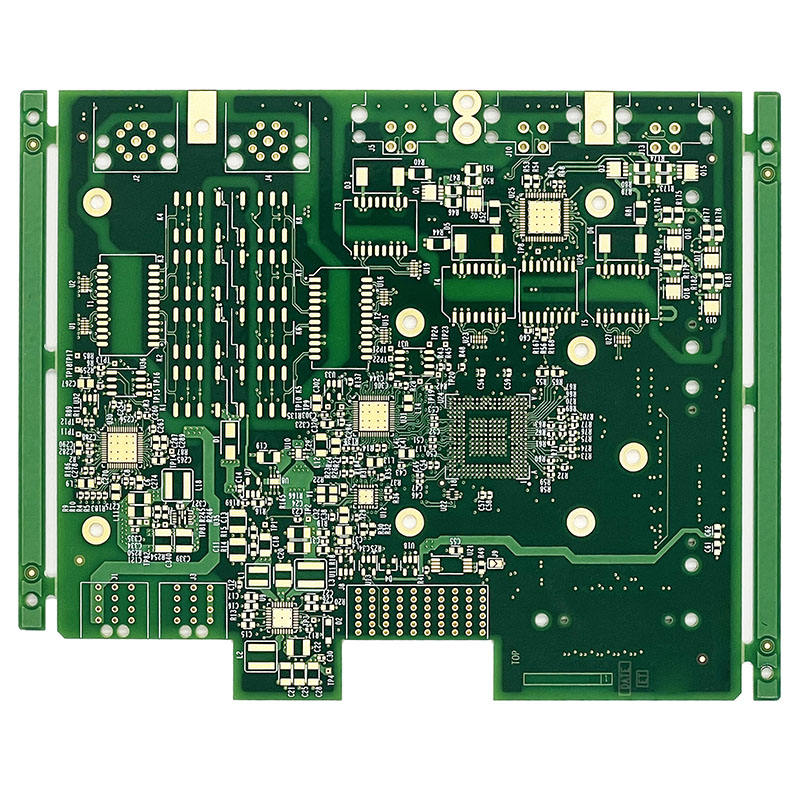
I. What Are High-Frequency Laminates and Why Are They Needed?
High-frequency laminates, as the name suggests, are PCB substrate materials specifically designed for handling high-frequency signals (typically above 1GHz). Compared to ordinary FR-4 laminates, their core advantage lies in minimizing signal loss during transmission.
Their performance is primarily determined by the following key indicators:
-
Dielectric Constant (Dk): A physical quantity that measures a material’s ability to store electrical charge. High-frequency laminates require low and stable Dk values. A low Dk facilitates fast signal transmission, while stability ensures consistent performance across different frequencies, temperatures, and humidity levels.
-
Dissipation Factor (Df): Measures the efficiency with which a material converts electromagnetic energy into heat. High-frequency laminates require extremely low Df values. A low Df indicates minimal energy loss and less signal distortion during transmission.
-
Coefficient of Thermal Expansion (CTE): Higher CTE matching with copper foil improves the board’s reliability during thermal cycling, preventing via wall fractures.
-
Moisture Absorption: Lower moisture absorption is preferable, as water content can significantly affect Dk and Df, leading to performance degradation.
II. Core Classifications of High-Frequency Laminates
High-frequency laminates can be classified in various ways, with the most mainstream and practical approaches being based on reinforcement materials and resin systems.
1. Classification by Reinforcement Material
This is the most intuitive classification method, determining the mechanical strength and basic structure of the laminate.
-
Glass Fabric-Based Substrates
The most common type, using glass fiber fabric as the reinforcement material. Its advantages include high mechanical strength, good dimensional stability, and mature processing techniques. Based on the type of glass fiber, it can be divided into:
-
Standard Glass Fabric: Such as commonly used specifications like 7628, 2116, etc.
-
Low-Profile/Flat Glass Fabric: Specifically developed for high-frequency applications, with flatter glass fiber bundles that effectively reduce signal reflection and loss at the glass-resin interface, making it more suitable for millimeter-wave frequencies.
-
-
Ceramic-Filled Substrates
Composite materials filled with ceramic powders (e.g., silicon dioxide, aluminum oxide) in the resin system. They lack glass fabric, thus completely avoiding the “glass weave effect.” Their advantages include:
- Isotropy: Dk and Df are consistent in all directions.
- Smooth Surface: Beneficial for fine-line circuit processing.
- Higher Thermal Conductivity: Some ceramic fillers can enhance heat dissipation.
-
PTFE Soft Substrates
Primarily composed of polytetrafluoroethylene (PTFE), typically filled with micro-glass fibers or ceramics. Due to their soft texture, they are often used to manufacture flexible circuits or coaxial cables for microwave frequencies.
2. Classification by Resin System (The Technical Core)
The resin system is the soul of a high-frequency laminate, determining its electrical performance (especially Df).
-
Polytetrafluoroethylene (PTFE)
Undoubtedly the “King of High-Frequency.”
Advantages: Extremely low Df values, among the lowest of all commercial polymer materials, making them ideal for millimeter-wave applications.
Disadvantages: High cost; poor rigidity; large CTE; requires special via metallization processes (e.g., sodium naphthalenide activation), making processing challenging.
Representative Brands: Rogers’ RT/duroid series, Taconic’s TLX series, Arlon’s CuClad series.
-
Hydrocarbon/Polyphenylene Ether (PPE)
Currently the most widely used, cost-effective mainstream high-frequency material.
- Advantages: Very low Df values (though not as low as PTFE, significantly better than FR-4), stable performance, good compatibility with traditional FR-4 processing techniques, and relatively lower cost compared to PTFE.
- Disadvantages: Slightly inferior heat resistance compared to PTFE.
- Representative Brands: Rogers’ RO4000 series, Isola’s IS680 series, Panasonic’s Megtron series.
Modified Epoxy/Bismaleimide Triazine (BT)
Can be considered an “enhanced version of FR-4.”
Advantages: Processing characteristics identical to FR-4, lower cost, and good performance in the 1-10GHz frequency range.
Disadvantages: Higher Df values compared to PTFE and hydrocarbon materials, not suitable for extremely high-frequency applications.
Representative Brands: Mitsubishi Gas Chemical’s BT resin laminates, Panasonic’s R-15 series.
Liquid Crystal Polymer (LCP)
An emerging high-performance thermoplastic material.
Advantages: Extremely low moisture absorption, natural flame retardancy, very low Df values, suitable for manufacturing ultra-thin, high-density flexible circuits, and compatible with plastic-like lamination processes, offering significant cost potential.
Disadvantages: Processing techniques differ from traditional thermosetting resins, requiring supply chain adaptation.
Applications: Gradually being adopted in high-speed connectors and millimeter-wave antenna modules.
III. How to Choose the Right High-Frequency Laminate? — A Selection Guide
Faced with a wide array of materials, selection requires comprehensive trade-offs, adhering to the principle that “the most suitable is the best.”
-
Consider Frequency:
-
<3GHz: Modified epoxy/BT resin or low-loss FR-4 can be considered.
-
3GHz – 20GHz: Hydrocarbon resin offers the best cost-performance ratio.
-
>20GHz (Millimeter-Wave): PTFE or high-performance ceramic-filled hydrocarbon laminates are the first choice. For applications demanding extremely high phase consistency (e.g., phased array radar), PTFE remains the preferred option.
-
-
Consider Loss:
-
For scenarios with extremely high signal integrity requirements (e.g., 400G optical modules, radar cores), choose PTFE or LCP with the lowest Df values.
-
For applications requiring low loss but cost control, hydrocarbon materials offer the best balance.
-
-
Consider Processability and Cost:
-
If a factory lacks the capacity to process PTFE, forcing its use will lead to a sharp drop in yield. Hydrocarbon processes compatible with FR-4 can significantly lower manufacturing barriers and costs.
-
When project budgets are tight, choose lower-cost materials within acceptable performance limits.
-
-
Consider Reliability:
-
Large temperature variations in the operating environment? Pay attention to the laminate’s Tg (glass transition temperature) and CTE.
-
High humidity environments? Focus on the material’s moisture absorption rate. LCP offers significant advantages in this regard.
-