 English
 Arabic
 Chinese (Simplified)
 Dutch
Dutch French
 German
 Italian
 Portuguese
 Russian
 Spanish
Why High-Frequency PCB Boards are Indispensable for High-End Antenna Arrays?
An In-Depth Analysis of Three Core Reasons
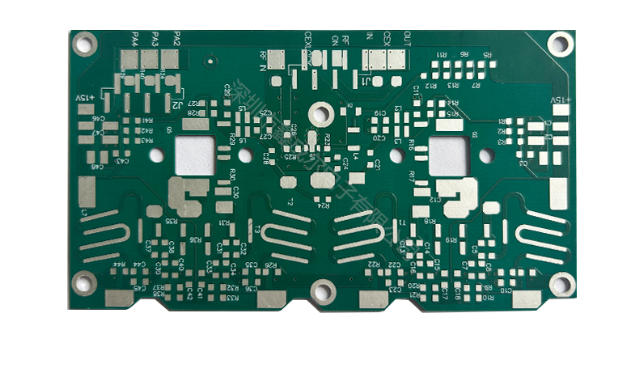
With the rapid development of technologies such as 5G communication, satellite navigation, and millimeter-wave radar, antenna array design is increasingly demanding higher frequencies, greater density, and lower loss. In this context, high-frequency PCB boards have become an indispensable core substrate material in high-end antenna array design. Why are standard PCBs inadequate for these requirements? What irreplaceable technical advantages do high-frequency PCBs offer? This article will provide an in-depth analysis from three dimensions: technical principles, performance, and application suitability.
Reason 1: The Rigid Need for Low-Loss High-Frequency Signal Transmission
The core task of an antenna array is the efficient transmission, reception, and beam control of high-frequency signals. Standard FR4 laminates suffer from sharply increased dielectric loss (Df) and dielectric constant (Dk) at high frequencies (e.g., above 24GHz millimeter-wave), leading to severe signal attenuation and phase distortion.
Advantages of High-Frequency PCBs:
-
Low Dielectric Constant (Dk): Superior dielectric stability (e.g., Rogers RO4350B has a Dk of 3.48±0.05), reducing signal propagation delay.
-
Ultra-Low Loss Factor (Df): Df values as low as 0.0009 (e.g., PTFE materials), over 80% lower than FR4, ensuring millimeter-wave signal integrity.
-
Precise Impedance Control: Low copper foil surface roughness (≤1μm), minimizing additional losses from the skin effect.
Reason 2: The “High-Density Integration” Challenge of Complex Antenna Structures
Modern high-end antenna arrays (e.g., phased array radar) need to integrate hundreds of radiating elements within a limited space, supporting advanced processes like multi-layer stacking, blind/buried vias, and microstrip line routing. Standard PCBs struggle due to:
-
CTE Mismatch: Copper layers and substrate are prone to delamination at high temperatures, affecting multi-layer reliability.
-
Insufficient Processing Precision: Poor compatibility with processes like laser drilling and plasma etching, leading to low yield.
-
Poor Thermal Management: Local temperatures can exceed 80°C during high-power operation, causing deformation in standard boards.
Solutions from High-Frequency PCBs:
-
Stable CTE Values: Ceramic-filled substrates (e.g., Rogers TMM) match the CTE of copper foil, ensuring multi-layer board durability.
-
High Process Compatibility: Supports 0.1mm micro-vias and 3mil line width/spacing, meeting high-density routing needs.
-
Excellent Thermal Conductivity: Thermal conductivity ≥1.5 W/m·K (e.g., aluminum-based high-frequency boards) for efficient heat dissipation.
-
Case Study: Using high-frequency PCBs in 5G base station antenna arrays reduced element spacing by 40% and overall volume by 25%.
Reason 3: The “Long-Term Reliability” Requirement in Harsh Environments
High-end antenna arrays are often deployed in harsh environments like outdoor base stations, aerospace, and automotive radar, enduring extreme temperatures, humidity, and vibration. Standard PCBs are prone to:
-
High-Frequency Performance Drift: Dk fluctuation due to temperature/humidity changes, affecting antenna resonant frequency.
-
Copper Foil Delamination: Metal fatigue in high-vibration environments causing circuit fractures.
-
Chemical Corrosion: Copper layer oxidation in salt spray/acid rain, increasing signal loss.
Reliability Design of High-Frequency PCBs:
-
Wide-Temperature Stability: Dk fluctuation <2% within -50°C to 150°C (e.g., Arlon 25N).
-
High Peel Strength: Copper bond strength ≥1.0 N/mm (standard boards are only ~0.6 N/mm).
-
Anti-Corrosion Coatings: Surface treatments like ENIG or OSP extend outdoor service life.
-
Data Comparison: A satellite communication antenna’s lifespan in humid/hot environments increased from 5 to 10 years after switching to a high-frequency PCB.
From low-loss transmission and high-density integration to environmental resilience, high-frequency PCBs have become irreplaceable core components for high-end antenna arrays, thanks to breakthroughs in both material science and process technology. For enterprises, choosing the right high-frequency PCB supplier (such as customized solutions offered by [KINGFIELD Electronics]) directly determines the performance ceiling and market competitiveness of antenna products.